Fractal Fields of Lightning

Lightning Fields 128

Lightning Fields 128 by Hiroshi Sugimoto

I learned to capture the lightning shock…
Roger McGuinn, “Lover of the Bayou”

The fractal properties of lightning have long been evident in dramatic photographs of self-similar jagged bolts caught in a split-second of illumination.  But few have pursued lightning so deeply “to its hiding place,” as Victor Frankenstein once put it, than Japanese artist Hiroshi Sugimoto.

Armed with a camera, a metal table, and hundreds of thousands of volts, Sugimoto freeze-frames the fractal zing of electrical charges in his “Lightning Fields” series.

Lightning Fields 138

Wired outlines Sugimoto’s process:

He wields a Van de Graaff generator to send up to 400,000 volts through film to a metal table. The resulting fractal branching, subtle feathering, and furry whorls call to mind vascular systems, geologic features, and trees. “I see the spark of life itself, the lightning that struck the primordial ooze,” Sugimoto says.

Lightning Fields 147

Lightning Fields 147

In describing his work, Sugimoto reminds us of of the historical connectedness between scientific experimentation with electricity and photography:

In 1831, Michael Faraday’s formulation of the law of electromagnetic induction led to the invention of electric generators and transformers, which dramatically changed the quality of human life. Far less well-known is that Faraday’s colleague, William Fox Talbot, was the father of calotype photography. Fox Talbot’s momentous discovery of the photosensitive properties of silver alloys led to the development of positive-negative photographic imaging. The idea of observing the effects of electrical discharges on photographic dry plates reflects my desire to re-create the major discoveries of these scientific pioneers in the darkroom and verify them with my own eyes.

Lightning Fields 119

Lightning Fields 119

The romantic notion of suffering for one’s art appears to literally be true in Sugimoto’s case.  ArtInfo reports that Sugimoto’s creative process can be, well, shocking at times:

The practice is not without its risks (the generator is ominously labeled “Danger High Voltage”). When I ask if he’s ever electrocuted himself, Sugimoto chuckles. “Quite often. Sometimes the spark comes to my belly. It hurts. It’s hard to describe — it’s just shock, it’s like cutting yourself, twisting.”

Self-Portrait

Self-Portrait by Hiroshi Sugimoto

Genevieve Quick, writing in Shotgun Review, sums up Sugimoto’s achievement as follows:

By essentially establishing a micro-environment in the dark room akin to the conditions of an electrical storm, Sugimoto creates lush large-scale black and white prints that resemble botanical and biological images, landscapes, high-power microscopic magnifications, and lightning itself. This richly layered process creates works that, in the tradition of Talbot before him, elegantly blur the boundary between science and photography.

The fractal properties evident in Sugimoto’s work are simply stunning.  If I didn’t know better, I’d swear these images were rendered in a program like Tierazon.

~/~

Tags: , , , , , , , , ,

Fractal Animation: Reel #2

Allow me to play Film Class Professor.  Before we dim the lights and roll the film I will give a short lecture which hopefully will enlighten our understanding of these short animations posted below, or, at the very least, become the price of admission you will pay to sit in a comfortable seat and watch films and get a university degree at the same time.

I went to YouTube and searched on “Apophysis Animation“.  About three hundred links came up.  I sorted them by viewer ranking (number of stars) and then shortened the list by including only those less than a month old because I was interested in seeing the more current stuff.  This came to 18 and I looked at almost all of them.  Not all of them I watched to the end, mind you.  Judging animation is more time consuming than still image art.  A better review of course would have included a much wider time frame than just the last month.  But let’s talk a bit about fractal animation and where I think it’s going and why.

Jock Cooper, a fractal animator whose work I reviewed a year ago and who had a short work that I particularly liked, in part due to it’s spectacular fractal music accompaniment (which he also composed) left a comment to my last posting on fractal animation where he said, “Yes fractal animations are basically boring. But I don’t know what can be done about it. It’s not like you can add characters and a plot.”  An artist of Jock’s stature is worth listening to and taking seriously.  If he’s not the best Ultra Fractal animator, he’s certainly one of them, as well a being a superb creator of non-animated fractal artwork.

And he’s absolutely right in what he’s said.  What can be done about it?  I salute those, who like him, have spent a good deal of time in mastering the technical complexities of Ultra Fractal animation.  If most non-animated fractal artwork had that much effort put into it, the whole genre would be that much better for it.  But fractal animation is a tough job and folks like him face some really serious challenges because you can’t simply make high tech cartoons with “characters and a plot” with fractals like you can with other forms of computerized animation.  All of the good fractal animations I’ve seen have been multimedia presentations with carefully chosen musical scores that complement the moving images.  Perhaps because fractals are so abstract, they need sound to help take up the slack that characters and a plot does in other kinds of animation.  And even creating one minute of such a combination of engaging visuals and sound is no mean feat.  It’s not something one can just pick up and play with for a few months and then win a contest create something impressive.

Part of the problem, as I’ve suggested, may be that good animation isn’t really about good graphics. What makes a short film interesting is what happens in it. It’s different than making still images which are intended to be stared at and focused upon. When someone tries to animate that in the form of a parameter sweep, deep zoom or fly-by, the viewer instinctively expects something to happen, some significant change to what they’re looking at to occur. Strangely enough then, fractals that look good as still images may not have any animation potential to them.

And still images that don’t look so great may have a lot of animation potential to them.  Daniel White’s Into the Heart of the Mandelbulb which I discussed in my last post is a typical depiction of the Mandelbulb, 3D mandelbrot formula, which really isn’t all that exciting, visually, when compared to most renderings of the common, 2D mandelbrot formula.  But what made Daniel’s short animation interesting was the sound and the sci-fi/horror theme of venturing into the unknown.  He used sound dramatically as well as editing in a dark, blacked-out segment in which to build suspense.  Those graphics wouldn’t impress too many in the fractal art world, but he used them to tell a short and simple “story”.  What looks good in animation doesn’t seem to match what looks good in still fractal artwork.

This shouldn’t be so surprising though. Consider photography. Many exciting still images are actually snapshots of athletes or other people engaged in vigorous activity frozen in time and presented in a completely different context than the moving image clip they would be a part of if they were animated, that is, presented as a short film clip.

Or how about landscape photography? How many breath taking panoramic vistas would be more appealing as short video takes from an airplane? There are some. I’ve seen some clips taken from airplanes flying low over African grasslands while herds of antelope race along or as flocks of birds take off from lakes or rivers. But the subject of interest is the movement of the antelope or the birds and not really the landscape which forms the background. The background is more photogenic as a still image than a moving one. And I think fractals are, for the most part,  more like backgrounds than animals.

I hate to say it, but I think fractal animation is going to be short-lived and merely something of a fad. Abstract animation is a hard sell to any audience and today’s audience has been spoiled by a steady diet of 21st century Hollywood CGI and computer animation. Audiences aren’t wowed by moving fractals as much as they are by a gorgeous still image of one. Fractals look best when they can be stared at and studied. That’s why people paint sunsets. They want to stop the sun right where it is and savor that moment and then be able to come back again and again to look at that perfect and unmoving sunset.

Having said all that…

Now it’s time for the fun part.  Fortunately, in this online classroom, we don’t have to wait for the lazy graduate student in the projector room to come back from his smoke break before we can get started.  We can start right away with a mouse-click.

(Apophysis Animation)  Has a nice soundtrack.  That spacey, techno-dub, drifting thing has an abstract quality that fits in well with abstract graphics.  This is not a bad music video, but that’s not saying much since most music videos incorporate imagery and music that blends together like oil and water.  This one isn’t like that at all.  I watched this one more than once.  That pretty well says it all.

(Apophysis Flying Bird Anim…) I love it.  But why do I love it?  It’s a pretty, um, elementary use of Apophysis 3D (is that 3D?).  The music is wonderfully retro, but I’m 44, so my idea of retro might not be yours.  I’m thinking old Kraftwerk.  This bird is timeless and almost a fossilized animation.  And yet it’s not terribly old is it?  It’s got a neat style to it.  A good example of how animation follows a whole different set of rules than still imagery does.  As a still image, this thing would not be too impressive, to put it politely.  The guy made the graphics and the music.  A fairly talented man, I’d say.

(Julia’s Revenge)?  Well, it’s just a title.  A few things to note.  It starts and ends nicely and not just when they music cuts out.  Again, the dreamy, spacey, driftin’ to alpha centauri on the old man river of the milky way music seems to be suited to all sorts of fractal animation sequences like this one.

I found this one to be like “geometric ballet”.  In fact, near the middle when the camera pans out over a surprisingly flat panorama and the golden bubble appears, I was reminded of ballet dancers and point shoes and some very expensive scenery changes.

(The living fractal apophysis…) Spooky music, eh?  Works nicely with the octopus-o-saurus.  Some bits were a bit jagged, at least when I viewed it on my computer, but the attempt to present an ancient sea creature swimming through a vast, dark sea came across pretty well.  Finding an animal-like image that looks good and animates well is a tricky thing, I’m sure.  At times I was confused by whether the creature was turning around or swimming backwards, or what.  But that also added some mystery to the scene.  After all, it’s supposed to be something we’ve never seen before.

(Alien Space) This one’s probably the most well executed one from a professional standpoint.  It’s got some rather good editing in it.  The author obviously has gone to some effort to make sure the graphics sync reasonably well with the changes in the music.  Once again we have the dreamy, dub-like soundtrack that fits with almost any kind of abstract animation.  The narration is an interesting aspect.  Of course, that’s all done by the musician and the animator has simply worked their stuff in around it.  Perhaps narration is a good trick to remember and even a simple voice-over by any animator describing how the imagery was made or adding in poetry or quotations would complement fractal animation as well as music seems to.

I don’t know if the Sun sequence was made in Apophysis (it looked awfully realistic) but Apophysis 3D seems to excel in making all sorts of spherical things.  There’s a lot of layering and combining of imagery in this one.

It gets a bit repetitive in spots, but then the whole thing is 9 minutes long.  9 minutes is a pretty long time to animate without repeating something.  Still, this one is very good and explains why it was so highly rated on YouTube.

(My Best Apophysis Animation Yet) Although this one probably looks a little plain after seeing some other ones like it, I think it’s not too bad since it syncs well with the soundtrack and ends (fairly) well, although a little off-time with the music.  I particularly like the laser light appearance in this one and how in one of the pans where the camera pulls off backwards into space the animation really uses the 3D architecture of the imagery to it’s greatest advantage.

(You Appearing) Hmmmnn… This posting is almost becoming a review of Apophysis music videos.  The fractured imagery in this one at the beginning blends perfectly with the reverberated piano.  Perhaps that’s what made me include this one: it’s got some very good moments in it as far as the use of fractal animation goes.  Some of the “dissolution” sequences (where the element are moved apart) really shows how complex some of the IFS imagery can be.  There’s squares, rolled up scarves, and wispy curly-cues all from the same image and each with different coloring.  It’s viewable in higher resolutions but I didn’t try it as I’ve got an 8 year old computer with a fairly basic integrated video card.  Resolution could be an important factor when viewing fractal animation I suppose, since a lot of detail is lost in the video compression used to create the lower resolution streams (smudges and stuff).  And how good would most movies look if you viewed them through a smudgy, foggy window?

(3D IFS Fractal:  Inside the Sierpinski Temple) A silent movie, for a change.  I can’t quite figure out what makes this one so appealing.  It really shouldn’t be any more impressive than any 3D environment from a video game, but it’s got a style or mood –or something– to it that makes it interesting.  There’s a simple video of the outside of the temple which although it has the same Sierpinski structure, isn’t anywhere near as interesting as this little drive around on the inside is.  Who would ever have thought the inside of a Sierpinski “temple” would be so much more interesting than the outside?  Maybe it’s the lighting and shadows that gives the impression of exploring a secret, forbidden place, flashlight in hand in the middle of the night.  Or it could just be that the Sierpinski architecture (from the inside) is of itself something of interest .  Anyhow, it’s short and silent which suggests that plain fractal animation on it’s own can still be interesting.

(Fractale) I apologize.  I threw this one in for laughs.  It’s got to be the worst fractal video I’ve ever seen.  I believe the initial cover image (which is the only good point) is by Kerry Mitchell.   I doubt he gave permission for it to be used as no self-respecting artist would allow their work to be abused like this (except for thousands of dollars, of course).  Inside there’s probably even more examples of copyright infringement.  See any else you recognize?  But worst of all it’s just a slide show.  Yaaaaaaaawn…  And the music?  Why do people even bother to make stuff like this?  Hopefully whoever made this one gave up making videos after this.  Don’t tell your friends about this one; we don’t want this sort of thing going viral.  It’s not likely to.

Well, that’s it, class.  Congratulations on finding the easiest and most agreeable way to get a course credit in your entire college career.  After viewing these examples does fractal animation have a future?   Sorry, does that sound like an exam question?  I didn’t mean to frighten you.  Come back next week when we “study” Sam Peckinpah’s The Wild Bunch in cinemascope.

The Big Flat Plateau of Fractal Animation

A few years back I was excited about the possibilities of fractal animation.  Fractal animation, as I saw it, would be literally living and moving fractals.  Fractal artists were about to become fractal film makers and the art form would take on a whole new dimension.  And after seeing a couple of very exciting algorithmic but not strictly fractal animations, I was, yes, excited.

These days I’m bored with fractal animation.  It started out with a very rapid ascent and then, equally rapidly,  reached a plateau where it is now, languishing in endless variations of  oozing parameter transforms and deep zooms into nothing and nowhere.

It’s not for lack of hard work, though.  Fractal animation takes a lot of time and processing because, in the same way as traditional films are made, the movement is produced by sequencing many still images together to give the impression of movement.  I mention that because some may think that digital animation is different.  Animation is resource hungry and multiplies the work required even to the point of making thirty images for a single second of animation.  Those brave pioneers who have been dabbling in fractal animation are hard-working and dedicated individuals.  You have to be to take on something as intensive as animation.  Fractal animation takes as much work as still image creation does as well as requiring a few things that still images don’t.

Here’s where fractal animation gets bogged down: film making is more than just a complicated, high tech  slide show.  For instance, something has to happen.  Still images only have to look good, but animation requires some sort of progression and  development of an idea.  People just look at still images and everything is all there all at once to be studied –nice and simple.  But with moving images one has to engage the audience and move them along some sort of story line without leaving them all behind or without making the message so simple as to bore them.  With more abstract content of course, the messages or ideas in the animated sequence become less of a story than simply a visual experience, but the need for some progressive, development which will engage the viewer isn’t any different than it is with producing an animated cartoon.

In short, I believe that fractal animation is just too different for the old, still image visual techniques to work.  Artists who have been successful in the still image area will not necessarily have any advantage in the area of fractal animation other than the software skills necessary to operate the program.  What looks good as a still image can easily appear flat and boring when animated because transforming the parameters of pretty graphics to make them flow between one shape and another, while it may be a good start to an animated sequence, on it’s own is really nothing more than a demonstration of animation and not the use of it.

An artist can get away with work of a purely ornamental character in the realm of still images, but with animation the lack of expression or message sticks out like a sore thumb –nothing is happening.  Instead I think animators should concentrate on simpler imagery with regard primarily to interesting shapes and structures.  It’s a different game than the still image thing; animation is all about action.

Fractal animators need to make their own rules and be prepared to pioneer their own styles.  It’s all crap right now.  So go ahead and experiment and do outrageous things that only you would do and have never been done.  Cross boundaries and mix fractal imagery with everything you’ve got in you animation spice cupboard.

And now, having said all that, here’s a cool zooming/fly-by with orchestrated soundtrack of the late, great Mandelbulb by none other than Daniel White who I now declare to be the first recipient of Orbit Trap’s Fractal Hitchcock award.  Get ready to scream…

Into the Heart of the Mandelbulb

Directed by Daniel White, Starring “The Mandelbulb”

MMX

More at TwinbeeUK’s YouTube page

Janet Parke’s Ultra Fractal Courses Available as Ebooks

So you want to be a fractal artist?

The well-known fractal artist Janet Parke recently stopped teaching her highly popular Ultra Fractal courses at the online  Visual Arts Academy.  But just this week she has released them in downloadable ebook form for self-study.  You can read all about them here on her website.  The ebooks contain the text of the courses and are packaged as standalone Windows programs (.exe file) with a browser-like interface.  They  can be purchased from her website for download:  $20 for one; $35 for any two; and $50 for all three.

I’m sure this is all good news for Ultra Fractal fans because it seems to me that Janet’s UF courses have been very popular with a wide range of UF users and highly recommended by those who’ve taken them.  Although I’m sure many more students would have liked to have taken them while they were being offered at the VAA, this ebook release will at least make that possible for them in a self-study format.  From her website:

My beginning courses were always sold-out before each semester started, and a majority of the students continued through the 2nd and 3rd courses. Unfortunately, the demands of my full-time job have increased and I no longer have time in my life to give the personal attention that VAA students came to expect. So, after more than four years and nearly 400 students, I needed to find an alternative to teaching the courses online.

The recommendation of former students is probably the best praise any course of study can get and Janet’s UF courses have plenty of that.  You can read some testimonials on the Ultra Fractal Course page on her website, but I’ve seen similar things said on the UF list and on blogs and forums.  In fact, I don’t think I’ve ever seen anyone say anything negative about Janet’s UF courses.

According to her website, the course materials that Janet put together for all three VAA courses was quite substantial:

By the time I’d finished writing the third [online] course, the series comprised 1000 pages (if printed), illustrated with over 900 images, containing pretty much everything I’ve learned and the techniques I’ve developed since I began working with Ultra Fractal in 1998.

As I said in a previous posting about the VAA the formal instruction offered by courses like Janet’s is a real benefit to the fractal art genre and the beginning of the development of a professional aspect to what has pretty well been an art form defined by hobbyists (like me) and lacking any serious study and refinement.  Fractal art needs more teachers like Janet and not merely more places where artists can post artwork and get casual community feedback.  The community feedback of friends and fans is almost entirely composed of shallow compliments punctuated, whenever a contest arises, with binges of vote spamming.  That kind of attention doesn’t help artists and may even hurt them by making them think everything they do is good and never needing any improvement.  Worst of all, the art form never seems to expand beyond the common and the cliche.

As much as I’d like to see Janet reap a reward for all her hard work in compiling these three popular courses into self-study ebooks, I’m doubtful that students will get as much out of these self-study courses as they did from the online, VAA courses that included advice and commentary from Janet herself.  The ebooks may contain all the written course materials, but they don’t include Janet!

I’ve never taken any of Janet’s VAA courses but I’m sure the feedback students got from Janet on their coursework was a big part of the learning experience and must have had something to do with the enthusiastic recommendations they gave to other students to take the same courses.  I don’t want to discourage anyone from purchasing these ebooks.  After all, at the price of $50 for all three you’re getting all of the texts for the three online courses at less than half the price you would have paid if you’d taken the courses through the VAA.  That alone makes the ebooks a great deal for anyone who wants what those courses had to offer but unfortunately can’t take them now because they’re no longer offered.

What I’m saying is, while Janet’s self-study ebooks are a great way for her to continue to offer the basic content of her UF courses to an unlimited number of students, what the fractal art world really needs is another Janet Parke to take over teaching those courses and give the sort of formal feedback and advice that only a seasoned professional like Janet could offer. It might take more than one person.

There’s a big opportunity for a fractal artist out there with some teaching experience and technical ability (software skills) as well as some understanding of artistic principles (composition, design, color…).  Well, even if you don’t have the art stuff, teaching Ultra Fractal skills is what I’d guess would be the most popular fractal art course offering that someone could get started with and right now that position is completely vacant.  Sure, Janet will be a tough act to follow, but she’s also cleared a fine path for you and established a high level of student satisfaction.  I’d bet you’d get a good number of students signed up from the start.  Also, I guess you’ll need to really love fractal art and teaching others about it because I don’t think you’re going to get rich doing this sort of thing.  The way I see it, the fees are really just a modest compensation for your efforts and not what actually motivates people to do this.  Give it some serious thought.  Travis Williams is doing it.  And so is Joseph Presley.

Some of you already spend all your free time giving advice about fractal art to people over the internet.  Why not go professional?

Selected Shorts

Casual Friday?

[Photograph seen on Manshion.]

Here are some selected shorts. Apparently, I have no grand vision to impart to start the New Year.

~/~

Orbit Trap has published several recent posts exploring the nature of fractal art, and Tim explicated an image by Guido Cavalcante and analyzed its artistic expression.  In response, several commenters wondered why we haven’t provided more examples of work we consider to be fractal art rather than fractal craft.

But a quick trip through OT’s archives will show many positive reviews.  I think it’s safe to assume that if we complimented someone’s work, then we probably felt that work was an example of fractal art we admired.  Here is a short list of fractal artists whose work we have praised in the years we’ve been blogging:

Morgen Bell, Tamrof Boynton, Guido Cavalcante, Jock Cooper, Paul DeCelle, Manas Dichow, Stephen Ferguson, Terry W. Gintz, Earl L. Hinrichs, Rich Jarzombek, Simon Kane, Maria K. Lemming, Jos Leys, Elizabeth Mansco, Kerry Mitchell, Samuel Monnier, Philip Northover, O, Stacy Reed, Jürgen Schwietering, Bryan A. Smith, Fernanda Steele, Mark Townsend, Harmen Wiersma, and Dan Wills.

As I say, this is an incomplete list, and OT’s archives contain more examples.  So, I wish our adversaries, like Ken Childress, who persists on whining that we are whiners who mostly wallow in negativity, would finish their reading before beginning their writing.

~/~

Last year, I said my favorite fractal art image of 2008 was one of Paul DeCelle‘s UF renditions of Lars-Gunnar Nordström.

I think my favorite image of 2009 was this one:

The Google Search Engine by Garth Thornton

The Google Search Engine by Garth Thornton

Orbit Trap also named Thornton our “Man of the Year” for the moral courage he showed over his resignation as a judge from the 2009 Benoit Mandelbrot Fractal Art Contest.  Unlike two other fractal software authors, Thornton understood serving as a judge would create an inherent conflict of interest.

~/~

The Ultra Fractal Mailing List was offline for over two weeks at the end of 2009. Naturally, given his customary penchant for secrecy, there was no explanation for the outage from the list manager. No one on the list had the temerity to ask why everything went dark; instead, once service returned, users blithely exchanged New Year’s greetings as if nothing had ever happened.  I suppose one analogy would be to the power company.  When the juice cuts out, you just sit tight semi-patiently for the lights to come back on.  Either that, or UF List participants have read their Old Testament and know that questioning their provider-god tends to just annoy him and make him more prone to vengeance.

~/~

Ice Cream from Neptune

Ice Cream from Neptune by Daniel White

The latest “it” sensation in Fractaldom seems to be the 3-D Mandelbulb.  Like the Buddhabrot craze of a few years back, the 3-D Mandelbulb doesn’t much excite me as it maybe should — probably because I’m more interested in processing fractal images than I am in rendering them.  Still, it’s clear that many of the images of the Mandelbulb’s extrusion of the classic Mandelbrot set are impressive — especially these seen at Skytopia.

For more information about the 3-D Mandelbulb, check out this discussion area of Fractal Forums.

~/~

Tags: , , , , , , , , , , ,

Fractal Land has seen the Light!

Here at Orbit Trap we’ve been accused by some of being too “preachy”.  Maybe it’s true.  Consider this:  A recent reader and veteran fractal artist, Marcos Napier, has credited Orbit Trap with helping him to usher in “A New Era” for his fractal artwork and his website, Fractalland.com.

Somehow inspired by things like what has been said in this post (and many others) at the Orbit Traps Blog (“Make the art that pleases you rather than the art you think other “good” artists want to see.”), I decided it’s time for a facelift here and to go back to the fractals. For a while, the galleries will stay as they are now but they will change soon.

Yes, Orbit Trap helped him get straightened out and see things more clearly.  Especially to see those “good artists” more clearly.  Now he’s back on track and excited about fractal art again, thinking for himself instead of looking to the “great artists” for inspiration.  Marcos isn’t about to retreat into a life of narcissistic, self-admiration, though.  In fact, Marcos, I would say, has embarked on a much more exacting and professional approach to making fractal art than he did in his previous “life” where he devoted himself to the imitation of “good artists”  –the false gods of fractal land.  Imitation is hard because it’s unnatural.  It does offer some comfort, however.  One can feel content and confident about their work when they’ve managed to replicate the style and substance of the “good artists” –because everyone will say so.

Doing your own thing, that is, being creative, has no such comforting herd of admirers to make you feel good and give you a false sense of accomplishment. In fact, the fractal art world today is a rather hostile place for creative people.

…unless you’ve developed the self-discipline required to judge your own work.  Only then will you be truly independent and free to pursue the art that excites you.  To do that though, you need to know yourself well enough so that you can avoid the tempting lure of self-deception that makes one think that everything they make is great.  Some serious self-reflection and careful analysis of one’s opinions about their own work will soon educate you enough so that you will not be fooled by the tricks and constant flattery your ego keeps filling your mind with.  Focus on the art, not who made it.  That at least is a start.

After that I started to update my fractal pages not really often or thinking to keep a “fractal gallery” always active but according to whatever good work I thought I was making. At some point, I found UltraFractal, and even though I didn’t like it much at first (I was a Fractint addict!) I started using it and started to produce things like mad with the new possibilities. Soon… the first invitation to an exhibition happened. I started to look at things more “professionally” so to speak. And this is what made me stop, after some time.

Yes!  Did you see that?  Critical acclaim destroyed him.  Or rather, destroyed his creativity.  Marcos though he ought to act differently and work differently once he had attracted an audience even though, ironically, it was his previous, freewheeling attitude and approach which had probably attracted his audience to begin with!  It’s probably a very natural reaction to the attention of others: we shift our attention to the audience forming around us and away from our art.  Naturally, the art suffers and the audience either drifts away or becomes populated with people who like what “good artists” and “professionals” make.  But for the artist, they’ve alienated the only fan they most desperately need.  I’m not talking about your Mom, I’m talking about you –the artist.  When you lose your own interest, your work withers and so do you.

As time went by, I started making fractals like crazy, zillions every day. And I started to look at my images with a different approach than when I started making them. It was no longer fun – I guess I was trapped in the Guild (or by the Guild?). I started to get more and more frustrated with what I was doing, thinking everything was boring and ugly (and it was!) and that I would never be able to make such good art as these people from Renderosity (that was the hit of the moment). Despite having 1200 images posted here, I was not interested even in looking at them again. Then… suddenly I stopped making fractals.

Yes, Renderosity and Deviant Art are good places to become disillusioned with fractal art.  You know you’ve hit rock-bottom when you’ve piled up a big collection on Renderosity or Deviant Art like some drunken vagrant lying in a pile of garbage in a dark alleyway.  Trapped in the Guild?  That’s the Ultra Fractal Guild, as any avid reader of Orbit Trap will know.

I’ve decided to send the images I didn’t like to the fractal heaven, and some images are now gone. I’ve kept those that really interest me, who cares if it’s a simple spiral, or a 256-colour image made in Fractint? I am the first person that must like my work. I don’t work for the masses, I don’t work expecting public admiration (although I must say it’s quite nice when you’re invited for an exhibition at the Lincoln Center as I was…), I don’t make fractals based on how many comments they will get at some community site. I just do this to please me.

How many of you out there have the guts to make 256-color images!  I’ve included a link to the Wikipedia article for those of you who don’t know what that is.  Art is a funny thing; sometimes simpler methods have more sophisticated results.  But you won’t find that out by following the herd or clinging to your membership in the Guild.  You’ll have to experiment.

But, take heart, unlike imitation, experimentation is a natural thing.  That is, it’s natural for people like Marcos who love art more than they love online socializing and a false sense of accomplishment.

Assumptions About Art

I was reading a very erudite New York City art blog a few months ago. One of its postings came up in the results of a Google search I made. As is often the case with websites like this, after reading the initial posting that my Google search had brought me to I checked out the rest of the site and soon lost interest. It’s just that I seem to find a lot of discussions about art to be merely high-brow gossip, revolving around artists and having little relevance to actual artwork.

The posting that eventually turned me off the whole site was one in which the mayor of New York had complained “in the media” that a recent, publicly funded art exhibition was offensive to most New Yorkers and wasn’t fit for public display. The posting went on and on, and I never reached the bottom, but one sentence the author wrote still sticks in my mind to this day, months later.

“Why do people assume that art is always something intended for public display?”

Amongst all the highly refined commentary on the various participants in the New York art scene and the fragile opinions that they seem to hold, this statement stood out like a brick crashing through a window. “Yes,” I thought, “why do we assume those things?”

Over the weeks afterwards, whenever I was thinking about art things, I would occasionally stop and rephrase a question from the perspective of assumptions. Why do you assume that art should be intelligent? Why do you assume that art should be: explainable? collectible? interpreted without context? intended to impress? not purely self-indulgent? Or basically, why should I assume that art has any particular consistent and persistent qualities at all?

Why do you assume that art should be art?

I think the advantage of listening to art critics once in a while is that they often have sharp insights into what this thing called art is that we have so much interest in –an interest which they also share– but which is so often obscured by their over active interest in jargon, crackpot social theories, and, of course, the eccentricities of individual artists.

Why do you assume that serious art, which is applauded by millions of people, has more significance or greater value than a cheerful squiggle which only you seem to appreciate?

Why do you assume that art is something that can be defined?

I came to this thought: Everything is art and nothing is art because art is what we chose to call art. The stuff of great paintings appears in our everyday world but we don’t recognize it because it doesn’t have a frame around it. If we would only observe more carefully the events and objects of everyday life and have the expectation of art, like we do when we enter a gallery or open an art book, we would be confronted with so much art that even closing our eyes would not stop this river of art. And then art would be a label that we would apply to nothing because it will have become as meaningless and trivial as labeling every tree in a forest.  And the term, artist, would be equally meaningless because everyone who can see would be some sort of artist with a vast collection of work in their memory cells.

Another thought:  Why do you assume that popularity is the ultimate indicator of good art when it has already so often conflicted with your own tastes in art?

Why do we assume a blog posting has to have a coherent theme and a logical ending?

E-hell – enough, Guido!

Good evening, and welcome to This Week In Opera.  Tonight’s special offering comes from the world of fractal art, an email list for the fractal program, Ultra Fractal.  What makes this opera so avante garde is that the performers believe they are actually participating in a online discussion, while only the audience knows they are in fact starring in an opera.   Even I was not so quick as to realize what was happening and before I realized it, had deleted half of the libretto.

However, I salvaged a few of the highlights from this opera verite, and can only hope, gentle viewers, that they will please you as much as the other great operas we have shared, here on This Week In Opera.

As always;  my apologies to Verde.

You have mail.  And thus the curtain rises...

You have mail. And thus the curtain rises...

Listen!  Woman are raped to make cellphones!

Listen! Woman are raped to make cellphones!

Now I have a good reason not to buy a cellphone.

Now I have a good reason not to buy a cellphone. Thank-you!

Scoundrel!  Will you expose your mind like this before the la-dies!

Scoundrel! Will you expose your mind like this before the la-dies!

There's more!  Children harvest the organs of our  computers and toil amidst the graves of our machines.  Look!

There's more! Children harvest the organs of our computers and toil amidst the graves of our machines. Look!

Enough!  Guido!  E-hell!  Stop it!

Enough! Guido! E-hell! Stop it!

Yes!  Oh Yes!  Yes, YES!!

Yes! Oh Yes! Yes, YES!!

Brothers!  Listen to what he says.  I also see the Earth is melting and besides we can always use the label "OT" for filtering purposes.  Figaro!

Brothers! Listen to what he says. I also see the Earth is melting and the moon has now been defiled; besides we can always use the label "OT" for filtering purposes. Figaro!

Enough!  Guido!  E-hell!  Stop it!

Spam! Spamming the list! Spam! Spam! Stop the SPAM!

you can always...

I suggest maybe join Facebook and join (or create) a group there specifically to highlight your concerns. Oh, what a beautiful mornin', Oh, what a beautiful day! I got a beautiful feelin' Everything's goin' my way!

Listen!  Woman are raped to make cellphones!

You see, all these complaints about nothing are giving an extraordinary value to things that balanced people never would argue. From time to time somebody show up with a new orientation as if the aesthetical choices would break the peaceful order of the list. In the very examples of today´s messages you can see that some are fractalizing, others are presenting questions about hardware, looking for the benchmarking address... So life continues like every other day. Go ahead and make a good fractal instead to play as a corner policeman.

Was there a vote? Did I miss it?

Was there a vote? Did I miss it? WHen did this group stop being about Ultrafractal?

Ciao, ciao, CIAO!  Don't misunderstand me. Ciao!  The leucocytes! The heart!  The Ciao!  The Fora!  The Fora!  The fora for-a you!  Figaro!  Bully!  Netiquette!  Ciao, ciao. But then you must also accept the consequences.  Ciao!  Ciao!  C-I-A-O  --Ciao!!!

Ciao, ciao, CIAO! Don't misunderstand me. Ciao! The leucocytes! The heart! Ciao! The Fora! The Fora! The fora for-a you! Figaro! Bully! Netiquette! Ciao, ciao. But then you must also accept the consequences. Ciao! Ciao! C-I-A-O --Ciao!!!

Enough!  Guido!  E-hell!  Stop it!

There seem to be no consequences! Just like in the Jos Boogen Era! I fear that the same is happening again now! Where are you, Damien, when you are needed?? Where? Where! WHERE!!!

Figaro!  Script-aro!  Why are you all, ta-alking so?  I don't run the list, but I wil fix it -yo!  Who's Guid-o???

Figaro! Script-aro! Why are you all, ta-alking so? I don't run the list, but I wil fix it -yo! Who's Guid-o???

beting

Hi, all friends of the list! Stop the problems! Every thing has its time! In this festive season forget your problems and your difficulties for a short while: Enjoy, have a merry christmas and a h e a l t h New Year. "Today is my day!" I have posted the follow image last year. A friendly gentlemann, Erhard Waschke, member of this list, has told me, how to put my own name and othergood things (helps). I say "thanks" to all, who had help me! With heartly greetings!!!

How long shall The Consequences wait!  Am I nothing more than a phantom of the UF List?  Ha!  My head is burning.  Always burning!!!

How long shall The Consequences wait! Am I nothing more than a phantom of the UF List? Ha! My head is burning. Always burning!!!

The End! This thread is now closed!

The End! This thread is now closed!

Bravo!  Bravo!  All is opera/ nothing is opera.  Master, is this not the way of The List?

Bravo! Bravo! All is opera/ nothing is opera. Master, is this not the way of The List?

On Making Prints

Framed Print of To the Joust

A framed print of To the Joust.  My cat studies its intricacies for hours.

I’d like to talk about my experience with making prints.  Let me begin by making clear that I’m not claiming to be any kind of expert in this area.  There are plenty of professionals who know more about the ins and outs of printmaking than I.  So, to show good faith, I’ll provide some links to a few more learned people at the end of this post.  My purpose in writing about making prints is simply to give an account of my own experience — and to try explaining why the decision to make prints has re-shaped the way that I see and create art.

What first set my dials to printmaking?  Thinking about presentation methods was the initial baby step — and then beginning to explore various ways in which fractal/digital art could be showcased.  All artists (with a capital A) have multiple means of presentation.  A musician’s song can be recorded, played live, played “unplugged,” be utilized as background music in a film, be transformed into a visual narrative using video, and so on.  Likewise, a poem has similar possibilities for being displayed — read privately, read aloud, performed, slammed, audio recorded, video recorded, inserted into multi-media, and so forth.

Fractal/digital art is no different.  Such art can be viewed on a  home monitor, be uploaded to a Fractalbook repository to take its place amidst the socializing and tabulating, be printed (on either paper or canvas) and hung in a home-business-museum, be displayed digitally on a hi-def, large-screen state-of-the-art television, be printed in a book, shared as a par file, reduced to a navigational thumbnail, and — as we’ve seen from past OT posts about Phase Two thinking — be sculpted or painted or blown or constructed or imprinted on t-shirts, mugs, balloons, frisbees, and thongs.  The paradigm shift for me occurred when I made a conscious decision to present my work offline as well as online.

The first thing I vowed to do was to take presentation seriously — as seriously as I do my own art.  I began to research and quickly discovered that to make decent prints I’d have to render images at much larger sizes — and so I did.  I found it was not too difficult to render fractals at larger sizes, at least in the fractal software I use, but the extensive post-processing I commonly do could be a problem.  I began to experiment pushing the size constraints of my “studio” to discover the comfort boundaries of the computer I use to make art.  Each time I can afford to build a new machine, I try to make sure it packs affordable maximum firepower to enable me to work larger and faster.  I first stepped up to images sized at 1800 x 1200 pixels, and now I can work and post-process at the notorious BMFAC-required sizes of 8000 x 8000.

But not quickly.  Everything slows down considerably once you go large.  Render times drag.  Working in graphic programs like Photoshop take patience and medication/meditation when effects and adjustments slow to a snail’s crawl.  One side effect, although not necessarily a bad one, is that the time lag corresponds to less output.  I probably (mercifully?) now produce 1/4th the amount of work than I did in the same time frame when I first discovered fractals.  Although I hope I’m more discerning about the work I now make public, it’s also true that it takes me substantially longer to finish individual pieces.

There is another side effect.  My canvas is now six to eight times larger than it used to be — and, consequently, I’ve become much more particular about how that space is filled.  Artistic concerns — like texture, balance, highlights, dominance, unity, overall composition, and (especially) perspective — become more integral (and more time-consuming) in the process of shaping and finishing a given work.  In fact, in previous OT posts I’ve described the effect of increasing the digital canvas as a significant mental shift moving from perceiving work in “monitor mode” to perceiving work in “wall mode.”  In other words, all through the composing process, I envision a work displayed large (wall mode) rather than small (monitor mode).

Once I made the conversion to wall mode, I then began searching for a professional Printer (I’m using the capital “P” to designate a person and not a machine).  Finding a good one turned out to be a difficult, hit-and-miss journey.  I’ve had no experience with places like Zazzle or the printing services provided on some Fractalbook sites like deviantART, but my experiences with online printing sites were frustrating.  The prints just looked funky — colors appeared over- or under-saturated, depth seemed washed out, and one image even came back exploded and reassembled as a neo-cubist collage.  Even several local print shops could not reproduce images to my satisfaction, although the turnaround time improved.

Finally, one afternoon, I saw a series of prints of nature photographs in a local museum.  The prints were breathtaking — exhibiting a clear sense of depth and a stunning clarity.  I called the artist for information, and he told me that he did the prints himself, and that he ran a print shop as a commercial venture.  I asked if he’d work with me, and he agreed — mostly, I think, because he’d previously worked exclusively with photographers, and he wanted to get some hands-on experience printing original, “pure” (his term) digital art.

I believe having a proficient, trusted Printer — one with an artistic eye — can make a noticeable difference in the quality of prints.  My Printer is exacting and takes pride in his work — making small test prints to see if color and resolution look right, or trying trial runs on various grades of paper to better obtain an ideal reproduction.  Again, taking your printing endeavor seriously is non-negotiable.  I insist on using the highest quality, archival inks and papers to try to produce professional Giclée (ink-jet) fine art prints. I was fortunate to find a Printer who is also an artist — and one capable of skillfully pulling off the sizable magic trick of bringing a digital image into the physical world.

You also have a decision to make at this point.  Should you use paper or canvas for a background?  In general, paper is the preferred choice for making archival, museum-quality, Giclée fine art prints.  Paper prints are de rigour for galleries and collectors, but they also come with their own set of problems.  They are delicate and can be easily damaged.  Smudging and sun-fading can occur, and liquids are their mortal enemy. So, paper prints must be matted and framed under glass to keep them safe — and, depending on the size of the print, the glass and frame can quickly become quite heavy.

Your other option is to print on canvas — although such prints seem to be less desirable for collectors and regarded by museums to be near-gauche.  Canvas prints, not surprisingly, are much more like a painting and are even stretched and mounted on a wooden frame — which means even large canvas prints are considerably lighter than small glass-enclosed paper prints.  Canvas prints, especially if covered with a protective lacquer, are certainly much more durable.  To my eyes, canvas prints tend to flatten out an image and degrade texture, but they retain more color richness and hue.  Paper prints, on the other hand, tend to lose bright colors a bit, or start to develop watercolor-like traits if the paper isn’t well suited, but they preserve both texture and depth far better.  In a good paper Giclée, textured forms can become visibly embossed and take on distinctive 3-D qualities.

So, now you’ve worked large and made your print — what next?  Admit, as a digital artist, you are working with a generally agreed upon disadvantage.  You have no original — no concrete, tangible masterwork — no unique physical object, like a painting or sculpture, that can be shown or sold.  A painter, too,  can make high-quality fine art prints — but she or he also possesses the original painting — the mold from which copies, even Giclée prints, can be made.  Naturally, as a fractal/digital artist, you also have a master, as does, say, a digital photographer.  But such masters cannot function in the same ways as do paintings or sculptures.  (Or can they?  More on that later.)  Therefore, facing such an inherent shortcoming, how can you try to insure that your prints will have value?

You limit the number you make.  From what I can tell, practices on limited-edition prints vary widely.  You’ll have to decide what idiosyncratic approach and commercial specifics best serve your needs.  What I eventually settled on doing was limiting each image of mine to a Variant Edition (V.E.) of 25 prints of any type or size.  That means only 25 prints — large or small, canvas or paper — will be made of any given image.  Once the 25th print of an image is made, I ask my Printer to delete the “master” file of that image from his computer.  I also allow making up to 2 “artist’s proofs” per image — that is, running off a small number of prints for the artist’s use that are set aside from the edition prints.  Artist’s proofs, because they are more scarce, tend to be more valuable.

To further insure the legitimacy of the print edition, I sign, number, and date each print — and, of course, keep records of the printing history of each image.  I also provide a “certificate of authenticity” to be included with each print.  These are made using my production company stationary and include background information on the print — title, year it was made, edition number, Printer info, Framer info (if applicable), ink and paper stock information, caring for the print notes, process/composition notes, and background notes (when appropriate).  Some artists go further and take the step of having their print certificates notarized to further bolster authenticity.  I even saw one artist display and discuss his prints while wearing white gloves.  That might seem like overkill, but the gloves made an impression that stuck with me.  It was obvious he considered his work to be valuable and acted accordingly.  I stress again, there’s no point in undertaking making prints unless you do so in a professional and earnest manner.

I have a challenge for you.  Work on an image you want to print.  From the start, make it larger than you usually would.  Reflect carefully about texture.  And perspective — squint at the image with your nose to the monitor, then stand across the room and see how it looks in complete darkness.  Take your time until you are satisfied with every detail.  You aren’t making this image for a desktop background.  You aren’t making this image to upload to a social networking site.  You’re making this image for a physical space in your home.  When it’s done, print it.  Print it — seriously.

Seriously — as in not at home on your PC’s HP deskjet or whatever.  No, take it to a shop.  Print it at a larger size than your home printer can handle.  Choose paper carefully.  Use archival materials, if available.  Title, date, and sign your print using a graphite pencil.  In fact, make it an “artist’s proof” (it is, after all, isn’t it?).  Then, frame it — seriously.  At a minimum, buy a frame set that includes glass and a functional matte.  Better yet, have your print professionally framed.  Carefully choose the frame and style and color of matte.  Take your matted and framed print home.  Find a suitable space.  Hang it.  Let it be.

For at least a month or two.  And see what happens.  See if you don’t develop a different relationship with your image — or come too see it in a new way.  Does it fill space in a manner unlike viewing it on your monitor?  Do the other surroundings in the room help determine its effect or shape its meaning?  Do guests or family members react to it?  Take my challenge and see if changing the way your work is presented changes the way it is perceived — by you and by others.

Making prints has certainly changed my own perceptions — both of my work and my process.  As I said earlier, I am only relating my own experience of making prints — but I hope you can tell it’s been exciting and pleasurable.  I have many prints nestled in around my home, and I have also been fortunate to place some into shows, as well as to sell some.  But, again, I’m not claiming any high level of expertise.  So, if you’d like to know more about prints and printmaking, you might want to check out these knowledgeable folks:

Here’s an interesting conversation from MOCA on “Printmaking: Traditions and New Trends” between Professors John Antoine Labadie and Ralph Lee Steeds of the faculty of the University of North Carolina at Pembroke.

Thinking of doing your own professional printing?  Also from MOCA, you might consider following the example of J.D. Jarvis and his account of printmaking in his three-part essay entitled “From the Box Up: Life with a New Printer.”

About.com has articles defining Giclée prints, explaining how they are made, and advice on how to sell art prints.

Wikipedia on Giclée prints.  Authoritative as written by who knows who can be.

There are, of course, numerous books you can buy on this general subject — like Mastering Digital Printing by Harald Johnson and (for those with Phase Two leanings) Digital Art Studio: Techniques for Combining Inkjet Printing with Traditional Art Materials by Karin Schminke et. al.

~/~

And, yes, I know what some of you are thinking.  I can hear you clearly across the vastness of cyberspace.  Fractal art is a digital medium.  It’s an art of light and code.  It is best presented and viewed digitally.  If it’s not, so much is lost.  Colors dry up.  Depth is scuttled.  Distinctive elements, like lighting features, evaporate when placed outside a digital environment.  Moreover, there’s no quarter given on this point of view.  Intrinsically, it’s a disservice not to display and view fractal art in a digital milieu.

Well, I agree.  Digital art does become something else removed from digital space and reconstituted in physical space.  But, remember, I’m not advocating one presentational method is preferable to another.  I’m only pointing out that there are various avenues from which to present one’s work.  Each has advantages and disadvantages.  Frankly, I think the future looks promising for digital purists.  That’s probably because I had another eye-opening experience recently.  I took the master copy of one of my images, burned it to a DVD, and carted it over to a friend’s house in order to view it on a high-def, 65 inch, flat screen TV.  And, yes, its pixels jumped and buzzed in a visceral way that no print I’ve ever made could match.

So, don’t lose hope, digital true believers.  The days of Total Recall, wall-sized, high-definition, digital screens or “frames” are not science fiction.  I think museums and collectors will soon have to come to terms with the imperative of sometimes presenting digital/fractal art in digital space.  They’ll feel compelled to invest in high-end screens and to meticulously set the ambiance for an optimal viewing experience.

I only have one caveat for digital experience enthusiasts.  Be consistently serious.  Treat each image of yours as an individual work — a work deserving its own screen/frame.  If you’re thinking of just sticking a flash memory card into a digital frame and rotating through 1000 of your images with overly busy wipes and squiggle special effects, you’ve already cheapened yourself as an artist by settling for a screensaver on steroids.  Worse, by suggesting that your work is obviously disposable and replaceable — a Fractalbook mindset that implies today’s mass-produced “masterpiece” is as awesome as yesterday’s — you lost the war being fought to present your work as fine art.  In the end, after your many labors and tears, doesn’t your vision deserve better than a hokey digital billboard?

~/~

Tags: , , , , , , , , , , , ,

Java Applets: Superintelligent Shades of the Color Blue

jhlabs01

“Somewhere in the cosmos, he said, along with all the planets inhabited by humanoids, reptiloids, fishoids, walking treeoids and superintelligent shades of the colour blue…
–Douglas Adams, The Hitchhiker’s Guide to the Galaxy

What could be more intelligent and etherial than a clever java applet like this one made by Jerry Huxtable.  It’s creative and I don’t know why.  Applets by their very definition are tiny, but clever programming seems to be able to give Herculean strength to those little pieces of interpreted java code.  In fact, this applet has no buttons or sliders whatsoever; it starts automatically when you visit the page and the only way to turn it off is to leave.  You can’t save anything or load anything, the only thing the applet needs from you is a mouseclick.  This is almost as minimal as a screensaver.

I had to push the zoom button (oh, there’s a button) and then take a screenshot of the zoomed image.  I had a lot of fun with this thing.  Jerry, the author of the applet says, “At present there is too much variation in the child images – they often don’t bear any similarity to the parent.”  But I found that to be good thing.  One click and you could be jumping from one branch to another in the animal kingdom of genetic art.  Other similar genetic art programs I’ve tried like Kandid suffer from the opposite problem: imagery is too monotonous.  But I’m the kind of person who likes to push all the buttons and move the sliders to the very end, so a genetic art program that hops rather than walks is fine with me.

For those of you wondering what genetic art is:  genetic art is imagery made by a process of combining the graphical parameters of  other images to make new, hybrid ones.  You breed images.  If you ever wanted to grow up and live on the Island of Doctor Moreau and create a world of hideous monsters and reign supreme over them, laughing madly during the day and barricading yourself up in a fortress during the night while your insane brood prowls and parades their grotesque and abominable lives to the accompaniment to a bloodchilling symphony of  screams beneath the light of the moon…  Well, try playing with genetic art instead.

These are rough hewn images; torn from the Earth and spilled from the test tube.  I like them.  There’s an artyness to them.  Good art doesn’t have to be great art.  There’s the smell of flowers and then there’s the smell of old air freshener.  Which one is more provocative?  More suggestive of genetic speculation and mutative properties?

jhlabs12

What about the applet?  How does it work and what’s it all about?  In Jerry’s own words (and the site is offline at the moment):

This applet lets you create art using a genetic algorithm. It generates a random mathematical function and displays an image representing the function in the centre square. It also generates twelve random variations on the image, displayed in the squares around the outside. Click on the centre square to create new variations, or on one of the small images to move that image to the centre and create variations on it. Press the “Zoom” button to see the centre image displayed larger in a new window. Press the “Tree” button to show or hide the function tree (or at least as much as will fit) of the centre function.

See a gallery of pictures created with this applet.

This applet is (like all my stuff) still under development. At present there is too much variation in the child images – they often don’t bear any similarity to the parent. There’s a lot of tweaking of parameters to be done to get the mutation rate right. Other things which need to be done are to implement crossover between images and determine a good mix of mathematical functions to choose from. There should also be a way to save your art.

How does it work?

The applet builds a tree representing a mathematical function, with one node per function, leaf nodes being variables such as X, or Y, or numbers. This function is then randomly called to determine its probable range and then normalized to that range so you actually get valid colors. The function is then called for every pixel in the image to calculate the color of the pixel. There are two sorts of node: color nodes and numeric nodes. A color node returns a color when evaluated, a numeric node returns a numeric value. The root node is always a color node, but nodes below this will usually be numeric. For example, one sort of color node calls three numeric nodes to determine the red, green and blue components. Another calls a single numeric node and looks the result up in a color map. The mysterious “N” function you may see is a normalising function which samples its child function to determine its likely range and normalises it to between 0 and 1.

Mutation is done by traversing the tree and probabilistically changing parameters or type of a node or by pruning the tree at any point and replacing the pruned part with a new random subtree.

All you need to know is click on something.  Even the current image in the center can be clicked on to, uh, –breed it with itself.  See how weird this gets?  If things start to get really ugly then just click on any of the outer images that look completely unlike the center one, or just refresh the page in your browser which will re-initiate the applet, kill all it’s children, clean up the lab and allow you to start all over again.  C’mon, it’s not murder if you’re wearing a lab coat.  I forget who said that.  Doctor somebody…

Enough of that.  Let’s get to the art.  Here are a few of my favorite things…

Mount Java Applet Sinai

Mount Java Applet Sinai

Red Land

Red Land

Also Red Land

Also Red Land

Skybolt

Skybolt

Dissolving Seascape

Dissolving Seascape

Horizon

Horizon

Arctic Horizon

Arctic Pathway

In for landing

In for landing

It worked for Rothko

It worked for Rothko

Why won't it work for me?

Why won't it work for me?

What else?  I would like to thank “Talfrac” Rafael La Perna from Italy, the home of art, for unknowingly tipping me off to this java applet via his Flickr gallery.  Would you like to view his DNA?

Beauty Is Not Enough

La Pietà (1499) by Michelangelo

Michelango’s statue is beautiful and well-crafted.  But it is also a widely recognized example of representational art. It can also be interpreted as meaningful.  Even Wikipedia gets it:

The Madonna is represented as being very young, and about this peculiarity there are different interpretations. One is that her youth symbolizes her incorruptible purity, as Michelangelo himself said to his biographer and fellow sculptor Ascanio Condivi:

Do you not know that chaste women stay fresh much more than those who are not chaste? How much more in the case of the Virgin, who had never experienced the least lascivious desire that might change her body?

Another explanation suggests that Michelangelo’s treatment of the subject was influenced by his passion for Dante’s Divina Commedia: so well-acquainted was he with the work that when he went to Bologna he paid for hospitality by reciting verses from it. In Paradiso (cantica 33 of the poem) Saint Bernard, in a prayer for the Virgin Mary, says “Vergine madre, figlia del tuo figlio” (Virgin mother, daughter of your son). This is said because, being that Christ is one of the three figures of Trinity, Mary would be his daughter, but it is also she who bore him.

A third interpretation is that suggested by Condivi shortly after the passage quoted above: simply that “such freshness and flower of youth, besides being maintained in by natural means, were assisted by act of God”.

Yet another exposition posits that the viewer is actually looking at an image of Mary holding the baby Jesus. Mary’s youthful appearance and apparently serene facial expression, coupled with the position of the arms could suggest that she is seeing her child, while the viewer is seeing an image of the future.

Finally, one modern interpretation suggests that the smaller size of Christ helps to illustrate his feebleness while in his state of death; no longer living, he now appears small in his mother’s arms.

Charlene (1954) by Robert Rauschenberg

Rauschenberg’s mixed-media work is beautiful and well-crafted.  But it is also a widely recognized example of nonrepresentational art.  It can also be interpreted as meaningful.  Dorthea Rockburne and Nan Rosenthal explain why:

Rauschenberg reinvented collage, changing it from a medium that presses quotidian materials into serving illusion to something very different: a process that undermines illusion and the idea that a work of art has a unitary meaning.

[…]

An overly scrupulous group of de Kooning followers had allowed Abstract Expressionism to become uninventive and Phillip Pearlstein and Alex Katz hadn’t yet succeeded in reinvigorating representation. Then along came Bob and, making it look easy, started assembling the things he saw around him, one next to another, always including aspects of nature, and setting it all off with a whole new approach to painting. Everyone in those days was talking about movement and color, a lot of very formal considerations. Rauschenberg took a striated, colored umbrella, attached a motor to turn it, stuck it in a collaged mass of paint, wood and photographs and called it “Charlene” (1954). That was what he had to say about color theory and formal art making.

Dreamcatcher

A dream catcher made by Healings of Atlantis

The dream catcher above is beautiful and well crafted.  But it is not an example of art.  Although it is decorative, it is not particularly meaningful.  To become a work of art, the dream catcher would have to do more than just catch dreams.  It would have to put some dreams into our heads and our hearts.

~/~

I believe that algorithmic art must now engage in activities that have been “not appropriate” for the medium until now, during those times when it was still trying to find its own aesthetic. But now algorithimic art is finally ready to serve “non-artistic” purposes. It’s not a problem, of course, if some prefer to continue on creating purely aesthetic and visually intriguing objects. There is nothing wrong in doing that, although doing so does not constitute the same “heroic” accomplishment that it once did when algorithimic artists were struggling to break away, and give birth to a new medium.
–Guido Cavalcante, Orbit Trap

I was surprised to read on OT’s comments that I don’t think art can be beautiful.  I don’t recall ever saying such a thing, nor do I hold that belief.  Art can unquestionably be beautiful, as I illustrated above.  In fact, it was the beauty of fractals that first (strangely?) attracted me to them as a potential source for artistic expression.  I remembered how thrilled I was to discover algorithms could be employed to create visual forms illustrating concepts like harmony, balance, and order.  The resplendent forms that unexpectedly pop up in fractal generators can still take my breath away.

But I agree with Guido, and I agreed back on one of Orbit Trap’s first posts in 2006 when he found the words to give shape to what I had been thinking for some time. There’s nothing wrong with continuing to create and value visually pleasant works — unless it matters to you that our discipline move out of the craft fairs and into the museums.  The prevailing aesthetic in our community is beauty, and nearly all fractal images currently made do not transcend to much more than decoration and ornamentation.  Fractal art will never become a widely accepted fine art until more of us start making works of artistic expression and stop pretending that aesthetically pleasing works, however well crafted, rise to the level of art.

There’s also nothing wrong with creating beautiful images — and doing that well is a considerable achievement.  And I think it’s generally a good idea that artists learn as much as they can about their tools in order to practice and refine technique.  But if you’re merely honing your Ultra Fractal skills to produce a more technically accomplished, a more shiny and burnished spiral, then you may be perfecting your craft, but you’re no more close to making art than you were on the first day you ever used the program.

The problem in our community is that most of us seem to feel that making visually pleasing work is still “heroic” and get defensive when some people, like Orbit Trap, find such a state of affairs to be questionable — even destructive.  One reason I am “obsessed” with the Benoit Mandelbrot Fractal Art Contest is that it is a mirror of the state of our discipline.  It has a stated objective of presenting to the world the very best in contemporary fractal art, but it actually showcases highly crafted work that is visually striking but little else.  With several exceptions that I noted in my initial review of the 2009 BMFAC, nearly none of the winning images suggest any meaning beyond themselves.  They say nothing to me about my life — or about life in general.  They provoke no thought.  They raise no ideas.  They stir no emotions.  They put no dreams in my head or my heart.

Now visit any of those thriving “art” communities OT calls Fractalbook, open up the fractal “art” gallery, apply the standards I used in the last paragraph, and honestly tell me what you see.  Are you deeply moved — or are you let down?  Do you feel like you’ve seen much the same work many times before?  Do you get more satisfaction from watching a good movie or listening to good music — you know, interacting with art — than you do from viewing what’s come off today’s fractal assembly line?  And, as you peruse every lengthy comment thread — filled with raves for one masterpiece after another — do you feel a kind of cognitive dissonance and disconnect? Do the universally acclaimed masterworks, even if technically proficient and magnificently crafted, leave you feeling empty?

Welcome to OT’s world.  That sense of feeling cheated by what the crowd perceives as worthy of acclimation is why we feel our community needs to develop Phase Two thinking.  The craft mindset has to be seen for what it is.  The worship and privileging of any particular software and its programmers and its advocates should be shown the door. The status quo is not “heroic”; it is, in fact, keeping us from leaping to artistic expression — from evolving into multiple mediums and developing much greater variety of individual creative styles.  We should start insisting that art be showcased in our fractal art competitions and begin pushing our own work beyond cosmetics and aesthetic enhancements.  If fractal art is art, then we should act accordingly and immediately fire up works that are provocative, disturbing, intriguing, challenging — works that are socially and culturally aware.  We need to look up from the Narcissus pool of our own eyecandy.  Don’t you have something to say about the worlds out there — whether inner, outer, or cyber?

You know I’m right on some basic level.  Although I don’t buy into the stereotype that beautiful people are somehow intrinsically vapid, we do like to point out that “beauty is only skin-deep.”   I think most of you would agree that making an assessment on just the attractiveness of others is a shallow method for measuring anyone’s true worth.

So we do why operate in just such a manner when assessing fractal images?  I don’t know about you, but I want my beautiful fractal images to also have a brain — a brain that is interesting and expressive — a brain that sees connections beyond the confines of its body, frame, program, par files, monitor, mentor, mathematics, craftsmanship, and, yes, even its own gorgeousness.

Guido got it right.  Beauty is not enough — especially if we want to become legitimate, credible artists. Do you want to do something truly heroic?  Make your fractals make art.

~/~

Tags: , , , , , , , , , , ,

More Phase Two Thinking about Fractal Art

Art and photgraph by adak'76.

Art and photograph by adak’76

Repeat viewings of the 2009 Benoit Mandelbrot Fractal Art Contest winners consistently leave a bitter aftertaste.

I’m convinced, especially after reading Tim’s latest OT series on the distinctions between art and craft, that very little of what BMFAC will exhibit next year merits being called art.  The winning works are, at best, well-crafted craft — decorative, ornamental, and technically accomplished eyecandy.  With perhaps one or two exceptions, none of winning images fulfills any non-motivated function of art — like mysterious experience, imaginative expression, universal communication, or symbolic function.  The winning images also come up short in meeting motivated functions like social inquiry (as Guido Cavalcante’s recently discussed image does), psychological purposes, contemplating thought, elucidating concepts, or provoking ideas.  I’d even settle for lesser pursuits like demonstrating open propaganda.  No, for the most part, only one criteria apparently is necessary to be a BMFAC winner: beauty.  The winning images are, without fail, pretty pictures.

One recent commenter, Esin Turkakin, responding to Tim’s last post, seemed to confuse craft with medium — as if the two things were one and the same. She went on to say:

If you only judge images by their artistic value as you seem to do, medium becomes completely irrelevant – we can’t talk about “fractal art”. It’s merely defined by its message and expression, independent of the medium used.

This is nonsense.  Would you make the same claim about sculpture, ceramics, or photography?  If we judge photographs by their artistic value, can we no longer talk about photographic art?  Absolutely not. Actually, what we should no longer assume is that fractal images that are merely well crafted automatically rise to the level of art.  This is the modus operandi of BMFAC, the late Fractal Universe Calendar contest, every Fractalbook high schoolish it’s-another-masterpiece mutual admiration society comment thread, and (sometimes it seems like) the whole fractal “art” community.

But if you’re going to use the term fractal art, then I sincerely hope you’re judging such work by its artistic value.  Maybe if BMFAC was a little more “independent of the medium used,” we wouldn’t have nearly every winner using the very same “mediums” (UF and Apo) — that is, fractal generators coincidentally designed by two of the contest’s judges.

Art should always be the primary concern for critical judgment.  Otherwise, let’s start talking about fractal craft instead and just spend our time swooning over studying the intricacies of par files — which, by the way, is the preferred entertainment of the UF Mailing List.  Art remains art across mediums — whether the format be painting, sculpture, music, poetry, fibers, film, criticism, or computer-generated work.  Art certainly can be well-crafted — but just as emphatically does not have to be.  Is Duchamp’s urinal “well-crafted”?  The question is irrelevant, even absurd.  What matters is expression.

And that’s the limitation of craft.  It doesn’t express anything.  It just lies there and looks good.

~/~

Another commenter, Nada Kringels, makes the following observation as to whether Tim’s contention in his last post that an image by Guido Cavalcante rises to the level of art:

I do respect Guido’s passion and engagement, but hadn’t I been told what the image was all about I wouldn’t have seen it by itself. I had to read the whole horror to interpret something as garbage which I had seen as an unhappy color combination before. An instrument has to be practised, studied and played a lot before, MAYBE, it has this direct magic.

Using Kringels’ logic, here is an extrapolation of what she’d probably say about Picasso:

While I admire Pablo’s “passion and engagement,” looking at “Guernica” I saw just a bunch of “unhappy color combinations,” and I “had to read the whole horror” to interpret it as something like firebombing.  If only Pablo had taken Janet Parke’s VAA course, then he could have “practiced his instrument,” meaning Ultra Fractal naturally, and better honed his craft to produce more “direct magic.”

Did I mention that both Turkakin and Kringels are recent 2009 BMFAC winners?  Check the links on their names above and you can determine whether their soon-to-be-exhibited entries are well crafted.  But do either rise to the “direct magic” of being art?  If not, then can they be said to live up to BMFAC’s billing of presenting “the most important fractal artists in the world“?    And maybe because OT asks such questions is why both Turkakin and Kringels keep showing up here to argue that, at least when it comes to fractal art, distinctions between art and craft are arbitrary and/or meaningless.

~/~

The question of artistic mediums raises another problem I have with BMFAC.  It is far too limited in its vision of what fractal art is and can be.  To me, fractal art is precisely what it says: art with fractals.  BMFAC believes fractal art is art (well, craft actually, but let’s not get caught in a recursive loop) with programs — and, really, after examining what won, pretty much only Ultra Fractal and Apophysis — whose authors, if you don’t mind my pointing out the same feedback cringle once again, conveniently served as BMFAC judges during the last go around (talk about getting caught in a recursive loop).

Previously on OT, Tim outlined the necessity for fractal art to iterate into Phase Two, and I gave examples of what a Phase Two exhibition of fractal art might look like.  So let’s talk mediums today, or, more specifically, avenues for expressing fractal art that are not heavily dependent on software.

Photograph and art by adak'76

Photograph and art by adak’76

When I first saw the image above, I thought it was a digital/fractal image that had been post-processed with Photoshop filters like Flaming Pear’s Lacquer.  But this is a photograph, and a horizon can clearly be seen near the top of the picture.  Whatever this is, it’s big.

Exploring adak’76’s other galleries on Picasa provides some clues.  This shot, in particular, suggests the artist is proficient in metalworking and constructs his artistic installations on a grand scale.  The reflections of light on the photographs of fractal forms above suggest these pieces could be the size of a small bedroom floor and are likely highly varnished.

This fractal artist seems like a perfect fit for BMFAC.  After all, his installations far exceed even BMFAC’s massive file restrictions.

Fractal 23 by Takeshi Miakaya Design

Fractal 23 by Takeshi Miakaya Design

I saw this on BoingBoing.  It’s a fascinating example of 3-D recursiveness, although the task of having to dust “infinite” drawers seems a bit daunting.  There are twenty-three functional drawers on this chest, and you can own this piece for a mere $19,000.  One commenter noted that Miakaya built two of these — one for himself and one to sell — but then quit and observed that such fractal furniture was “a pain in the ass” to make.  I suppose such sentiment qualifies as suffering for your art.  Unfortunately, I could find no working web site for Miakaya.

Fractal Carving by Terry W. Gintz

A fractal carving by Terry W. Gintz

Terry W. Gintz is a true Renaissance Man.  He’s a programmer, artist, poet, photographer, and sculptor — and even a superb cook.  He’s recently updated his fractal carvings gallery — small sculptures based on 3-D fractals created with QuaSZ and other Mystic Fractal programs of his own design.  Gintz notes that “like fractals, every rock tells a story.”  In truth, Gintz has many fascinating galleries of his lapidary art.  I especially like his Flintstones Minatures gallery.

Gloria Caeli by Jonathan Wolfe and Friends

Gloria Caeli, a balloon by Jonathan Wolfe and Friends.

Sky Dyes, a project headed by Jonathan Wolfe and his friends, designs “flying fractal art balloons.”  Talk about an impressive palette.  In this case, it’s the sky itself, surrounded by (fractal) clouds.  Wolfe notes that:

The fractal balloons will contain roughly 100 billion pixels, about  the same number of stars as are in our galaxy and as many neurons as are in our brain…

Well, that should be big enough to (barely) meet BMFAC’s gigantic size limitations.

A fractal thong.  Wear it with pride.

A fractal thong courtesy of Fractal Generation Galleria

Software is so passé.  Thongs are the new new wave in cutting edge fractal art.  Nothing proclaims your seriousness as a fractal artist more than slapping your work over the genital areas of complete strangers.  You never have to worry about penis envy when someone’s family jewels are draped with your self-similar infinity.  Perhaps BMFAC could make fractal thongs a separate category in the 2011 competition. Then, finally, one could honestly claim those massive entry sizes do matter.  Moreover, such skimpy, fractally-enhanced undergarments might be just the ticket for presenting “our art form to a world that largely does not know it.”  Why maybe the BMFAC selection panel members (no pun intended) could even model the contest finalists — strutting the pageant ramp in a live YouTube fractalpalooza.

I’d buy that for a dollar.

~/~

UPDATE:

On September 25, 20o9, on the Ultra Fractal Mailing List, Damien M. Jones made the following remark concerning my OT post about a mysterious “winners page” where BMFAC director Jones appeared to be sorting contest entries into winning and losing categories before the BMFAC judging panel had ever convened:

The interpretation of what [Terry] saw was all his; he elected to spin it in a way that favors his cause. It’s demagoguery [emphasis mine].

On December 6th, as a comment to this post, Esin Turkakin, one of BMFAC 2009’s winners, made the following remark:

What I find sad is why you’re actively trying to avoid a civil discussion and immediately resort to demagoguery [emphasis mine] .

Does it sound to you like someone has marching orders to repeat established talking points?

Isn’t it interesting how quickly you can become a “demagogue” as soon as some people disagree with what you’ve said? They’ll earnestly accuse you of incivility — as they flat out call you names.

~/~

Tags: , , , , , , , , , , , , , , , ,

Presenting… Fractal “Art”

I think the recent image by Guido Cavalcante, made in Ultra Fractal and used in a posting to illustrate the oceanic garbage dump phenomenon, is a good example of the contrast between art and craft, two concepts which I discussed in a recent post.  In a nutshell, I defined art as expressive imagery and craft as ornamental, decorative imagery.  These differing functions set art and craft apart from each other: art functions as a thought-provoker and craft functions as a table cloth.  Sorry, I’m being harsh.  Craft is visual beauty; pleasing to the eye and exhibiting the visual novelty of the medium that it’s made from –silent and elegant.

The Garbage Path by Guido Cavalcante

Guido’s image is an excellent, text-book example because, with all due respect to Guido, it has no real value as craft.  By this I mean that the image as a decoration is not very appealing.  In fact, the image is actually rather ugly and revolting.  No one would want this as their desktop wallpaper or printed on a coffee cup.  Anyone sending this out as greeting cards to their friends and family would have to be an environmental activist intent on awakening their social circle to this oceanic waste disposal problem.  Your Mom won’t be displaying a card like this in the living room if you send her one.

Your Mom might, however, when discussing what her children are doing, or when discussing environmental issues, bring out the card to show you what her son has told her about garbage in the oceans and how he’s using his artistic skills to impress the issue in the minds of others.  Notice the context that the image might be used in:  it’s always associated with the topic of oceanic garbage and never as a pretty picture.

Now, the image could have been something visually attractive and ornate and then might have been something displayed on a coffee table in the living room (art doesn’t have to be ugly) but the effect that such a prettier image would have as an expression of  this environmental problem would likely have been much less.  The focus of art is on expression and not decorative appearance.  Of course, if the artwork deals with a different idea or concept other than the contamination of nature, then it may be something that could be appreciated for it’s visual beauty or style as well as whatever expressiveness it might have.  Some works of art just look nice up on the wall and add to the decor of a room in your house.  Here’s one:

Villa by the Sea by Arnold Bocklin

Villa by the Sea by Arnold Bocklin

Bocklin’s image has some nice natural scenery in it and illustrates (no pun intended) the huge amount of skill and craftsmanship that an artist needs before they can even begin to create art with such realistic subject matter.  The painting medium is hard work and in addition to all that effort Bocklin has added his own dreamlike vision with surrealist elements (eg. note the size of the waves and yet she and the area around her is dry and strangely peaceful and remote).  I’ll bet most people looking at this image have all sorts of thoughts moving through their head.  Thoughts they wouldn’t have if Bocklin had merely painted a nice natural scene by the sea.  That would have been nice too, but it wouldn’t have had the mental engagement that makes the actual painting a work of art rather than a work of craft.

It’s the same with Guido’s The Garbage Path; what impresses us with that image is the haunting view of garbage out in the middle of nowhere which appears to be silently approaching.  I’ll bet the impression most people get from looking at Guido’s image is exactly the same as that of the sailor that Guido quotes in his posting who unexpectantly discovered this garbage dump for real by sailing into it.  What is the refuse of cities doing way out in the clear, clean ocean?  This is worse than the imagery of cities buried in garbage from the Disney movie, Wall-e.  What’s so sinister about the subject of Guido’s image is that garbage doesn’t belong there, our world is no longer what we think it is, and that the oceans have become a toilet that can’t be flushed.  Guido’s image does all that.

And that, dear readers, is the difference between fractal art and fractal craft.

Let down and disappointed about the contest…

Wait!  It’s not me.  And it’s got nothing to do with Orbit Trap this time either.

Curious who could be having seconds thoughts about the glorious Benoit Mandelbrot Fractal Art Contest 2009 besides Orbit Trap?  Well, it’s none other than Mr. Velocipede!

Here’s what she says:

I’ve finally had a chance to take a better look at the contest, and I find that I’m left feeling a little bit let down or disappointed. Not with any individual image, necessarily (although as several people have pointed out, a couple of them aren’t even really fractal), but that this year’s selections seem to be heavily weighted toward texture-fields and minimalism.

Heavily weighted?  Actually, as we all know from the deluge of information on how the judging works (I’m being sarcastic) that the winners are whatever the judges, together, decided to chose.  And this is the first year that any of the judges have actually spoken about their selections vis a vis what they personally chose that the whole panel didn’t select.  Mark Townsend, on the UF list mentioned a few of the submissions that he thought were quite good but which didn’t get enough votes to be one of the final 25 winners.  Samuel Monnier, a former BMFAC judge also commented on what he personally thought were good images in the contest which didn’t make the final cut either.

True to her name, Velocipede moves on quickly.

…to All-out Fractal Contest Public Insurrection!  Here’s how our fractal Che Guevarra ignites the masses:

It’s all gotten me started thinking about the strengths and weaknesses of fractals as a medium, and why I like them, which seems to be maybe different than why other people like them, and what the implications are for my own future work and the fractal-art world in general. It’s too much for me to process! And it’s all mixed up with a book I’m reading lately, written in the early 1920s and intended to explain why Modernism was (a) degenerate & evil and (b) doomed to be quickly forgotten. There seem to be some possible historical parallels, but I suspect it’s going to take me some time to sort them out.

Still, it does reinforce my idea that it would be really good if there were more fractal events than just this occasional big contest. I’m beginning to wonder if I might be able to organize some kind of small-scale thing. It’s an intimidating thought.

Sorry, excuse me.  I just have to laugh now. (cough! choke! sputter!)

Sounds like she’s arguing for a wider range of criticism and opinion and not just a single fleeting and transitory annual event.  Would a blog do the trick?  Like Orbit Trap, or probably something much less destructive to the fractal art community.  But don’t you laugh; a fellow revolutionary has already heeded the call.

“I pretty much agree with you. And I support your idea of organizing some small-scale thing :-)”

Orbit Trap has criticized the large image size requirements of the BMFAC.  We thought it would prevent smaller and non-UF works from being included as well as simply being a pointless restriction.  Velocipede adds something new to this and has a very sound art-based argument for it, too.

With the more minimal ones, I mostly just wonder what advantage there is in printing them very large, since there’s not particularly any new detail to be revealed. Graphically, they will no doubt be quite effective, but they seem to ignore the specific potential of fractals to be full of interesting surprises when magnified.

Anyhow, check out the three texture field images she’s referring to, as well as the four minimal images she suggests which don’t need such a large canvas size due to their lack of detail.  You have to click on each-word-in-the-phrase which she has linked.  That’s cute.  I’ve never seen anyone else do that.  I thought it was a mistake at first.

Technorati Tags:

Art, Craft and Fractals: Part 2

I got a couple of comments to my previous post, Art, Craft and Fractals, which raised an issue which I think needs to be clarified.  The term, Craft, is used in many ways and most of them are probably derogatory in the context of art.  But it’s not my intention to bad-mouth craft, only to show it for what it is and what it is not.

Craft is not immature art or the product of an art form in its early stages of evolutionary development: Craft is imagery that’s fun to look at.  Craft is not imagery that’s thought provoking or which expresses ideas or feelings.  Fractal Craft is simply fractals for the sake of fractals.  It’s people who love fractal imagery cooking up and mixing together new recipes of fractals that scratch our itchy eyeballs –itching for cool, new, exotic fractals.

This sort of thing doesn’t lead to art or create the foundation for a bold new skyscraper of art to be built upon.  It creates delicious taste sensations set out for our consumption and gobbled up before they have time to cool off.  It’s visual hedonism: pleasing, pleasant and pacifying.  Craft doesn’t upset people because it’s silent and anonymous like a decoration or ornamental table leg.  Craft doesn’t express opinions or even suggest opinions or anything complicated like that.  Craft is simply what it looks like: ornamental.

Fractal art might be young as an art form (although I don’t think it is) but that’s different than being juvenile.  Fractal art is the domain of craft because that’s what its practitioners pursue and set out to create.  It’s the intent of fractal artists to produce slick, multi-layered, eye-popping work.  I really have no problem with that because I see craft as a normal pursuit and a perfectly healthy one.  I have a problem with people trying to pawn off their craft as art, but that’s just my own critical disposition.  I like craft, but I like art more.  I’d like to see more art made, but if there’s more craft made as well, who cares?  Who cares? is the long term response to craft anyhow.  It has a fleeting glory and only briefly holds its audience’s attention.  Craft doesn’t enter our long term memory, but exists and is replaced by another shiny icon.

My definition of art and by consequence, craft, is functional.  Craft performs a singular function: ornamentation.  Specifically, in the context of fractals, craft is work that performs that function.  It’s not a matter of what people say it is, it’s a matter of what the experience the viewer has.  If you, the viewer, find some of the works in the BMFAC to be thought provoking or expressive in mood, emotion, idea, whatever, then it’s just as valid for you to defend them as art as it is for me to classify them as craft, according to my functional definition.

I don’t know, is this functional approach new and different?  The obvious corollary is that art is subjective since it may function differently for different people.

Another thing, craft isn’t junk.  I used an illustration of rather “domestic” hand made Christmas ornaments as a somewhat flavorful example of craft, but probably every winning entry in the BMFAC was rather skillfully made and represents artists at the top of the fractal art world.  Perhaps people assume that craft is junk is because in an art context, as I mentioned at the beginning of this post, craft is used as a label for amateur, cheesy, folksy, primitive, cliche kind of work.  But for me craft is used purely to denote a type of function the work performs and particularly in the fractal art world, craft is often professional, tasteful, complex and utilizing the latest, cutting-edge techniques.  That’s why artists consider it to be a real feather in their cap when they win something like the BMFAC or the (now defunct) Fractal Universe Calendar contest.  Their peers are saying they make good stuff –like their peers do.

I would prefer to make art instead though.  I don’t get as big a Wow! out of just looking at fractals as I did when I first discovered them.  I’m looking for something that’s different and appeals a wider area of my brain than simply that sugar cubed sized lump that neuro-scientists refer to as the fractal sugar center.  Why any of you professional craftspeople care what I think is odd, really.  Am I not a loser in your opinion?  I make junk, I like junk, and I write junk.  I don’t see what we have in common.

The whole art and craft “dichotomy” just explains what it’s all about perfectly.  Two different types of people whose different intentions lead to artwork that performs different functions.  One doesn’t grow or mature into the other; fractal craft has already grown up, blossomed and gone to seed.  Fractals, the medium, is what we have in common.  Not art.

Art, Craft and Fractals

Art is a term that is used very loosely these days.  I happen to think that this casual application of the label, “art” to everything graphical has produced some confusion in the digital art world and obscured what has traditionally been known as Fine Art, submerging it beneath a flood of what I think is best described as Craft.

So, under the general label entitled, “Art”, I separate out two categories of graphical works: art, and craft.  There’s nothing new to such a division and we’ve probably all heard these terms before, but I’ve resurrected this old-fashioned and contentious division because I think it’s fundamental to understanding any art form, but especially any of our 21st century computerized art forms such as fractal art.  I would say that you can not begin to understand fractal art and the people who are involved in it unless you fully comprehend the difference between art and craft as well as the corresponding differences between artists and craftsman.  Art and craft are very different things and find their origins in their differing, and sometimes conflicting, outlooks on Art itself.  I would say that every art form, not just fractal art, possesses a deceptive appearance of unity and commonality among its practitioners because they all share an interest in a common medium.  The common “medium” in fractal art being fractal imagery.  However, if one takes a closer examination of the actual artwork being produced under what appears to be the common banner of “fractal art” there will appear, as will appear in every art form I believe, two very distinct and independent activities going on under that common label of the art form and it’s medium; that being the pursuit of craft and also the pursuit of art.

Art and Craft Defined
Perhaps not the customary dictionary type of definition, but I prefer more practical definitions to the stiff, technical ones.  Craft is visually exciting graphical work.  Art, on the other hand is all about expression.  Craft is “cool graphics” and “awesome 3D rendering”.  Craft has immediate appeal and makes a good impression with a wide audience.  Art is thought provoking and oriented around ideas and triggers some deeper experience in the mind of the audience.  Art is sometimes hard to understand or relate to at first, and subsequent to this, the audience’s impression is more unpredictable and contingent on their intellectual connection with what the work is about or expresses.  All those factors work, ironically, both to increase the impact of art on its audience and also to limit the size of that audience.  Craft is nice to look at; richly ornamental; variations on a common theme or style.  Art is sometimes unpleasant to look at; suggestive of some idea or feeling; difficult to compare.

Similarly, craftsmen pursue common themes and styles and focus on the visual novelty of their art form while artists share little interest with each other in terms of the techniques and methods of their medium, as the focus of their work is what it says or the thoughts it provokes and for that reason the medium is merely a tool for expressing these things just as pen and paper are tools for writers to express themselves and not issues of great importance.  For artists, the medium is secondary; for craftsmen the medium is primary and their only interest.


Image by divadea

Why Art and Craft are so different
The reasons for these differences between craft and art come from their differing levels of complexity and intellectual involvement.  While it’s easy to say that craft is simple and decorative and art is complex and intellectual, I believe the difference is more accurately described from what attracts my attention when I’m looking at these two categories of art.  Craft attracts my visual interest in the medium, while art attracts my interest to what the medium is being used to express or convey.  Craft is rooted in the medium itself, while art is rooted in the use of the medium to present some mentally engaging experience.

And it’s all about experience, essentially.  Someone once defined art as an experience.  I think this perspective is much better because it zeros in on the common factor in all art –the viewer’s mind.  In this way, craft is a comforting and soothing experience which comes from looking at things which are pleasing to the eye.  Art is a much more varied experience and sometimes the complete opposite of that triggered by craft.  Art is sometimes unpleasant to look at and provokes feelings of disgust and fear.  Who wants to make or look at art like that?  Yes, good question.  I think you’re beginning to see how important –and divisive– the categories of art and craft really are.

Craft is the novelty of a medium
And Art is the novelty of the ideas expressed with the medium. The ramifications of all this for fractal art are enormous.  But then, they’re enormous for every art form.  Every art form has its artists and its craftsmen; every art form has its art and its craft.  Take portrait painting for instance: the Mona Lisa can be described as art because the expression on the subject’s face evokes strange and mysterious interpretations and corresponding thoughts –mentally engaging imagery.  The average portrait painted in oil paints is purely descriptive of the subject and while it may be quite life-like and have required a good deal of skill to produce, it’s really nothing more than a photograph rendered in a very expensive medium by hand.  What excites one about such a portrait is the medium; it’s a portrait “in oils”.  People are impressed with a life-like rendering of someone they know in oil paints because it’s hard to make or because it looks expensive.  It’s the craft they’re interested in, the oil paint medium.  But the Mona Lisa is admired today not because it’s a nice portrait, but because because it’s art.


Gare Montparnasse (The Melancholy of Departure), by Giorgio de Chirico, 1914

Woe to you! Makers of Craft…
In the fractal art world today, most artwork is really the sort of thing I’m describing as craft.  It’s exciting to look at and appeals to most people who see it, but it’s purely one-dimensional and attracts the attention of people who are merely looking for rich, ornamental work that is comforting to the eye.  From an art perspective such work is an empty experience and trivial.  In fact, zooming around in a simple, single-layer fractal program is probably more of an art experience than looking at the latest crop of winners from the BMFAC, the fractal art world’s annual craft show.

While the Ultra Fractal Guild may not incorporate all the high school kids from Renderosity and Deviant Art, it by far encompasses the greater majority of fractal artists today and these people are strictly pursuing the creation of craft, not art.  This is not to say they’re making bad fractal art.  Craft is not bad art; craft is merely flat, one-dimensional, “awesome” art.  The UFG is almost exclusively making works that are purely ornamental, pretty pictures, as someone said, and not work that is thought-provoking or expressive, the attributes by which real art has traditionally been defined.  It’s art, not craft, and they’re craftsmen, not artists because their work is limited to just displaying the cool graphics of the medium and doesn’t use the medium to express anything more intelligent than the latest 3D technique or layering trick.

But fractal art isn’t like those other art forms, is it?
It’s not because fractals aren’t capable of the realistic or figurative imagery that painting, drawing and sculpture have traditionally employed via creative human hands that fractal art today is largely composed of craft and lacking in art.  Abstract art lacks realistic and figurative imagery and yet is still capable of expressing moods, thoughts and ideas, albeit of a much more generic, abstract sort.  And fractals are just like photography in the sense that one captures rather than creates the imagery they use.  If abstract imagery and photography can produce real art and not exclusively craft, then there’s no reason fractals can’t be used to make art because fractals are essentially abstract photography.  Fractals have the potential to be more than just pretty pictures that are sold as decorations at craft shows; they can be art too.

The notion that fractals are not art, or incapable of being art, and are exclusively the domain of craft, is merely the by-product of the current fractal art scene’s own narrow interest in pretty pictures as well as it’s popular annual events like the Fractal Universe Calendar and the Benoit Mandelbrot Fractal Art Contest.  More than anything else, those two public events have spread the popular impression that fractal art is exclusively the preserve of the rich, ornamental craftwork they regularly present, applaud and award.  But it’s to be expected that when craftsmen get together to create a contest that they will end up producing an exhibition of craft and not art.  Art is not their pursuit or their interest –craft is.

When will the revolution come?
I don’t expect to see much change anytime soon.  Most fractal “artists” are dedicated craftspeople because that’s their thing.  They’re never going to make real art because they have no urge to do so.  Some of them are extremely good at what they do and I’m sure we’ll see the results of more newly discovered techniques and methods each and every year displayed at the BMFAC craft show.  The Ultra Fractal Guild is all about craft and art is something they’re heading away from, not heading towards or traveling parallel to.  Which is why I said that the sloppy way we use the term, Art, today obscures the divisions in an art form like fractal art and deceives one into thinking that fractal art is one single thing when in fact it’s two things: the traditional pursuit of art; and the much more popular pursuit of producing craft.  Real art has barely begun to be made in the fractal world because there are very few artists.  There’s plenty of craftsmen working away in their fractal woodworking shops and producing “cool graphics” and “awesome 3D effects” but that’s not art.  It’s great craftsmanship and very popular and probably sells well too, but in the long run such works become trivial and insignificant because they lack the substance that real artwork has.

Do I expect this to have much influence on the fractal art world?  Not likely.  But again, that’s to be expected because most of them are crafters and they’re immune and indifferent to issues relating to art.  But for me this idea of art vs. craft is cataclysmic; breaking the continent of fractal art in two and revealing two unconnected domains from what was previously assumed to be one.  And the art domain is by far the larger one in terms of creative potential and significance, although it is relatively unpopulated in comparison to the much more popular and populous, craft domain.  Craft, as in all art forms whether it be painting, drawing, sculpture or photography, is always the more common type of work because it’s merely variations on a theme.  But art revolves around creative thinking and expression, and that’s always a scarce resource.  No finer example of this exists than the fractal art world today.

Technorati Tags:

Scams and Viruses

Have we got a deal not for you…

Photograph: The Scam Truck by jepoirrier

I know how exciting it is when someone contacts you and wants to purchase your work. Who among us doesn’t want to be discovered and sell or display our art?  Just make sure those who come knocking have good intentions.

In the past week, I had two such inquiries — both worded in a similar manner.  You’ve already guessed where this is going.  Both offers were scams.

I knew both emails were from con artists because I received a nearly interchangeable come-on last year.

The most recent email was from “Lewis Martins” at a generic sounding gmail address.  The subject line was “am interested in your work……….”  Here is the email text:

Hello,
Top of the day to you .. i would like to know more details and descriptions of your artwork after checking out your profile on [Name of Art Site] but i was unable to get a name and details of the art as i am higly intrested and would like to buy as a birthday present for my wife. Kindly get back to me with info on how to get you the name of the artwork in order for you to get me details as well as final asking price of the artwork.i would await your response as soon as possible……

Several things ought to be fishy immediately.  The grammatical and spelling errors do not necessarily mean the inquiry is not from a cultured art curator, but the mistakes don’t give me confidence either.  There is a noticeable lack of specifics about the message — no mention of my name or the title of a specific art work, information that any semi-professional art site will surely have, and zero data on Mr. Martins.

Here are other common templates for similar art scam letters.  See why I instantly got bad vibes?

If I had responded to Mr. Martins in the hopes that he would purchase work from me, here is what would have happened.  Any of these circumstances should make you gun shy about further pursuing a sale.

1) Mr. Martins will be in a big hurry to complete the transaction — now — or, better yet, yesterday.  He can’t wait.  His wife’s birthday is looming. Your work is the perfect gift and he needs it immediately.  If you explain reasonable delays like taking days to make a print and taking longer to get that print shipped, Mr. Martins will be unable to tolerate the hold up.  His wife’s present can’t be postponed; he’ll have to look elsewhere if you drag your feet.  But the reason he is rushing you is because he wants to pay by

2) Writing you a check — which he hopes will not have time to clear (which it won’t) before you fall victim to the scam.  Which might be to send him art work, but, more likely, he’s after your money.  He’ll tell you there’s no need to ship the work — he’ll make the arrangements or have someone pick it up (and thus need your home address).  Or, and this should raise major red flags, he’ll concoct some convoluted reason to write you a check over the amount of your asking price — thus setting you up to pay him back the difference.  Since his check will bounce, you’ll be out any overage you agree to return.

What to do?  Don’t be in a hurry.  And don’t take checks.  Cashier checks are especially easy to forge.  Set up a PayPal account instead (and be aware that these can be prone to phishing schemes).  Insist the buyer use a credit card to purchase your art.  True, credit cards can be stolen, but at least the scam artists will be easier to track.  If you do decide to take checks (certified checks or postal money orders included), be aware that checks can sometimes take up to a month to clear.  Never send out any work until you are absolutely certain the check is legitimate and has been fully processed through your bank.

Be skeptical of anyone inquiring about your art that, for whatever reason, needs personal information about you — like street addresses or (shudder) a bank account or Social Security number.  Scrutinize carefully agents who love your work (for a fee) or galleries that want to represent you (for a fee).  Insist on written contracts and study them rigorously.  The same due diligence applies to any company that wants to license your work.  And, generally, be aware of ways to safeguard yourself from being a victim of identity theft.

It’s strange when I wrote Mr. Martins back saying that I suspected his interest in my work was actually a scam and threatened to turn his message over to the Attorney General’s Office, he never wrote back, although I assume his wife’s birthday was just as imminent as before.  Sadly, he now probably wants to “purchase” other art work for her.

Just don’t let it be yours.

For more information on art scams, visit this site at ArtWanted and this site (with email examples) by Max Magnum Norman.

~/~

What has to be one of the strangest narratives I’ve seen in the twelve years I’ve been involved with fractal art?  This tale found on LaPurr’s journal on deviantART.  It’s worth reading an extended excerpt:

A while back, out of nowhere, I was contacted by this person ~debora321 asking me if I’d try out her program, Fractal Magic, FMSetup.exe which was supposed to help render UF images more quickly. I don’t recall exactly what else she said about the program and I wasn’t really interested but I downloaded the program just to check it out. When I tried to open it, my computer went a bit nuts so I deleted the program and cleaned my computer. I wrote to her and told her that she had a problem and she said she’d fix it and for me to try again. There’s no way I’d open anything of hers again, so that was the end of it.

For me, anyway.

I got a note today from ~0Encrypted0, who told me that he was also contacted by ~debora321 regarding her little program. He tried to open the program and as a result, she somehow managed to get hold of params of his. He wrote in part:

…it looks like my computer was hacked when I downloaded a file called FMSetup.exe that debora321 asked me to try out.

I think some or all of my Ultra Fractal parameters were copied.

He sent me links to a couple of images that clearly show she ripped his params somehow.

Here is his original image from January 16:

Here is her version from October 15:

Here is his latest version to showcase the likeness, with links to the other images:

I have to assume that this woman somehow got ~0Encrypted0‘s params.

If you were one of those people who was contacted by her, and I’ve seen some of your names on her user page, I urge you to go through her gallery and see if any of your images are there, in a slightly altered form. See if any images you recognize are there. Most importantly, I think you need to get her program off your computer. Whatever you choose to do, please be careful.

When I first read about this incident, I thought it was a hoax.  I mean, why go to the trouble to build malware designed  simply to steal Ultra Fractal parameter files?  Why risk committing art theft — not to mention facing criminal charges — just to repost someone else’s par files, minimally altered, as your own on a popular and highly trafficked Fractalbook site?  Did the alleged perpetrator think no one would notice — especially those artists she personally invited to download and run her supposedly UF-enhancing program?

And while puzzling out the motive for such an inherently epic fail scheme, check out one of the more engaging comments about this whole bizarre business:

laurengary says:

You know, reading everyone’s comments & answers & one word Kat, one word came instantly to mind….that this is/was a form of a …fractal rape. Kinda sorta. Sorry for sounding so melodramatic, *grimaces* but honestly, that’s the first thing I thought of.

No, actually, rape is like rape.  What this is like is hacking computers to commit art theft.  I understand there might be some sense of being violated here, but still what you are like doing is being hyperbolic.

And here’s another choice comment from the alleged thief’s nearly empty DA page:

ChaosApostle notes:

I wouldn’t be surprised if an e-mob were to be incited and show up at your door.

Really?  Where can Tim and I get some of those virtual torches and pitchforks?  We’re planning to do some score-settling travel this summer.

The insults really take flight in the alleged thief’s home page comments and range from the expected “pathetic” to the inflammatory “art whore.”  “Sad” also comes up repeatedly.  I do find this whole situation to be sad.

And unnecessary.  One thing you can say about UF users: Many are not shy about sharing their parameter files.  There are stockpiled databases of such files, and the Ultra Fractal Mailing List has near daily posts of them — often inviting tweaking by others.  Why steal?

If proven guilty, the person who committed this hoax and hacking should be condemned.  DeviantArt should ban her.  She should be reported to the proper authorities, and they should investigate and, if warranted, take all appropriate legal actions against her.

Nor do I blame people for being upset by her duplicity.  =Velvet–Glove summed up the sense of personal betrayal that many others also clearly felt:

I gave you personal help and advice… and you repaid my kindness by trying to hack into and invade my computer in order to steal my work and data? I’m outraged!

But our fractal art communities should do a little soul-searching, too.  I once compared Fractalbook to high school cliques, and never has the analogy seemed more true to me.  Are people becoming so desperate for the fishing-for-compliments rituals that pass for discourse about art on Fractalbook sites that they’re willing to go to such lengths for a few kind words?  There’s certainly individual neediness pushed to criminal lengths on display here.  But there’s also an unflattering picture of the hierarchical social structure of online environments — small pond star systems that are ostensibly about art but are actually soap operas revolving around who gets the status and privilege of sitting at the virtual cafeteria table with the cool kids.  What’s sad is to see how many earlier love-and-kisses comments (thanks for the watch/favorite/star!!) the alleged thief has on her deserted home page — many from the same people who now call her an “art whore” or speculate on whether the Mafia has obtained her virus program and “will be on a plane to your house in no time to kill you for such a thing.”

~/~

Tags: , , , , , , , , ,

Talking Tall: Final Chapter

“I had to stand up for myself alone, and you saw what they did to me…
Until all men can stand up for what they believe in, THE SAME DAMN THING CAN HAPPEN TO ANY ONE OF YOU!”

– Sheriff Buford Pusser, 1977, Walking Tall: Final Chapter

Okay, I think I’ve got it all figured out now, how the whole fractal art scene/community/world works.  Let me just put down my cudgel for a second because it’s hard to type with.  For mental navigational purposes, let me say this: I will start with listing what I personally consider to be the main characteristics of the online fractal world, some of which have puzzled me for years, and then go on to explain what I think the source of those features and mysteries are –why the fractal world is the way it is. Keep your shoes on, there’s broken a lot of broken glass around.

A few enduring (stubborn?) aspects to the online fractal art world:

  • Conservative tastes in art
  • Little interest in avant garde, radical ideas
  • Little reference and connection to the larger art world
  • Concentration on a single program and style of work
  • Lots of people actively engaged and producing artwork
  • Very stable and established community and leadership
  • Skill-based, not artwork based status (eg. Rocket Scientists)
  • Seniority based authority is generally accepted

And here’s what I think explains all that:

The interest that most people have in fractal art is the pursuit of rich, ornamental imagery... These people have been drawn to the program Ultra Fractal, because that’s the most effective tool for making that type of artwork. The internet enables these people to network with each other and they’ve gradually established, over the years, a large but informal organization revolving around their mutual interest in UF. I’ll call it the UF Guild; UFG. The higher skill level and greater experience of the older users along with their continued leadership in the development of UF resources justifies their higher status and authority in the eyes of newer members, who also value those things and want to pursue them like the older members have. People who lack such similar interests gain little from their association with the UFG and having little attachment to it, drift away. Over the years, the UFG has increased in size and in the support of its members to the point where it’s now able to convincingly present itself and its art to people outside the fractal art world as the contemporary standard in fractal art.  It would not be a great exaggeration to say that the UFG has become the fractal art world.

Are the contests public or private? Universal or Specialized?
Their annual contests, administered by senior members have become annual awards ceremonies establishing the reputation and talents of newer members while perpetuating those of the older ones. The defence that such contests are private events and shouldn’t be compared with contests that are public where contestants commonly expect judging to follow the customs of fairplay and impartiality is paradoxicly both a reasonable one and not. It’s reasonable in the sense that the UFG is an exclusive, but voluntary, association of artists with a demonstrated preferences and bias for the rich, ornamental artwork that is almost exclusively made with UF.  And yet the UFG has also come to incorporate the majority of what would be considered the fractal art world, or fractal “public”, and in such a “public” setting, the status that so many senior members have as judges and the personal connections they have with each other would be seen as unprofessional because in a public setting such conflicts of interest in judging generally lead to suspicions of abuse even when abuse does not actually occur. But, among the members of the UFG, there is no weakening of their confidence in the judging because they already know these people and trust them to behave in a way which benefits the UFG as they’ve already done for years. There is artistic bias among the judges and in the restrictions placed on submissions, but this “bias” is shared by almost all of the fractal art community, whom, as I’ve mentioned, pretty well make up the UFG itself these days.

If the contest wants to represent all of fractal art, then it needs to become more inclusive and adopt policies that will give every contestant a reasonable degree of confidence in the judging. If however, the contest wants to focus on UF style artwork and artists, then there is little reason to change anything as this is the way the UFG has smoothly operated for years and only UFG members will want to enter anyway.  With the exception of Orbit Trap’s two editors and maybe a few other individuals, there are no serious objections from the fractal art community in how the contest is designed, run, or the final selections it makes.  And this is the conundrum: The UFG has grown to include the majority of fractal artists and has redefined what fractal art is –for most people.  And that is artwork which can be described as rich and ornamental, made in the multi-layered and multi-talented program, Ultra Fractal.  When one speaks of the “fractal art community” they’re really talking about the UFG, whether they’re aware of it or not.  I said similar things two and a half years ago here.

Orbit Trap and the Clash of Fractal Civilizations
This is where Orbit Trap entered the scene. I think you can see better (I can) where the huge differences in perspective on the contests came from. Damien Jones, the organizer of the BMFAC has argued that the contest is not a community event, by which I believe he’s trying to say, it’s a really a special event with “special” rules and practices. He also repeatedly used the defence that the contest’s rules and selection panel were clear and obvious to anyone entering the contest and since no one has to pay an entrance fee or has any reason to enter the contest other than having their work judged by the selection panel there’s really nothing anyone has to complain about. His efforts made the contest a reality and yes his friends make up almost all of the judges and there is definitely a bias toward UF and that kind of artwork, but as I’ve mentioned, it’s a bias shared by most members of the fractal art world, so he could say it’s a very popular “bias” or just business as usual in the UFG.  If the organizer himself was to be replaced with a randomly selected member of the fractal art world with adequate ability, I believe the contest would remain pretty much the same as it is because a blind hand reaching into the fractal art world would probably pick up another UFG member, who has the same perspective.

It ain’t just the fractal art world that’s like this…
It’s these things about the fractal art world that my theory of the Ultra Fractal Guild is an attempt to explain. How well my theory fits the facts as other people see them is another matter. The online world can have a lot of blanks and explaining what goes on there and especially why it goes on, can require a lot of filling in because finding out isn’t often possible. Members of this “alleged” UFG have access to information that I don’t and I’m sure my theory will be greeted with suspicion by most of them (assuming they’re reading it) because I think I’m regarded as a “hostile witness”, as they say on TV. It’s not my intention or desire to pass judgment on the UFG as to whether it’s a good thing or whatever, but just to describe it for those who might be interested in how the fractal art world is composed and how it functions. I find it all rather interesting because I think the UFG exists in similar forms in other online digital art venues because the context I’m sure must be pretty much the same. I think the growth and development of the UFG is a natural one, given the type of interests it revolves around and the type of people attracted to those sorts of things. That’s why I compare it to a guild; an ancient and universal social group, because people tend to cluster and form these sorts of organizations out of mutual benefit in many social contexts in an almost spontaneous way.

Next Part: Continental Drift in the Fractal World: Art and Craft don’t eat together.
Technorati Tags:

The Fractal Art Guild: How it works

In Part 1 I had said that Part 2 would be the Guild in action, but I think I need to clarify this whole notion of a Fractal Art Guild a bit better before going on.  I really think most of the fractal art world functions like a large association of craftsmen whose closest analogy would be a medieval guild.  I emphasize the world “functions” because the members of this guild do not formally identify with such an association.  In fact, the idea that they’re all part of some guild-like structure probably sounds semi-insane to them or conspiratorial.  But that’s because the 21st century online world has changed the way people associate and similarly changes the appearance of such associations that they often aren’t recognized as formal associations even thought that’s exactly how they function.

The Fractal Art Guild is informal.  One’s membership is really nothing more that an attitude of cooperation and agreement. This shared interest in the things of the Guild is the only thing that defines it in the online context. But that’s all it really needs because ultimately the Guild is a collection of like-minded people, not an ideology or constitution. Membership is dedication to the group and this sort of friendship association appeals very much to people today and functions easily in an online context of email, chat, forums, and mailing lists. It’s the daily or regular online interaction with the Guild which serves to initiate, maintain and renew one’s membership in the Guild as well as to foster it’s development taking eager members to higher levels. The online environment creates a sort of dynamic, living association which makes the traditional, formal indicators of membership: applications; membership cards; meetings; newsletters; and annual dinners look trivial and superficial –mere tokens of membership. In the online environment where people network on a daily or even hourly basis, membership is proven and demonstrated (or disproven and betrayed) in a much more meaningful way that it is in offline groups where interaction between most members is remote and occasional.

I said, the things of the Guild, I should explain that.  The interests of the Guild, as I see it (am I the only one who sees it?), are:

  • Producing fractal art of high complexity and graphical sophistication
  • Ultra Fractal and all things UF-related (to put it bluntly)
  • Promoting the mastery of UF
  • Showing respect for UF Master Craftsmen and trying to learn from them
  • Promoting the use of UF as the apex in fractal art software
  • Defending the reputation of UF and it’s Master Craftsmen (post Orbit Trap)
  • If you’ve got a problem, just leave, don’t make a scene
  • Anyone can join

I know, maybe it sounds like another one of my anti-UF diatribes…  But it’s not.  It’s more complex than that.  It’s not “us vs. them”.  Remember how I said, “One’s membership is really nothing more that an attitude of cooperation and agreement” ?  A number of the Master Craftsmen of the Guild made Ultra Fractal (contributed in some way, large or small) and they promote it’s use and try to aid others in learning how to use it better because that’s the sort of tool they admire.  They like fractal art that is complex and very, very graphically refined and sophisticated –slick and professional.  It’s purely a matter of personal preference and that’s the kind of art they prefer and the kind of software needed to make it.  The Guild thinks that the best fractal art –the most impressive fractal art– is the kind that the Master Craftsmen in the Guild make.  It’s this sort of common cause and shared interest that holds them together and attracts apprentices (newcomers of similar bent) to them.  Like-mindedness is what it’s all about, not coercion or intimidation.

I know it’s a lot to swallow all at once.  It took me a few years, so I don’t expect to hear others shouting “Eureka!” right away.  In fact, I suspect most fractal artists don’t really care about these “online social structures” at all.  But they will when they read the next part, Part 3.

You may have noticed my heavy use of the term, “Craft”.  Sharp members of the audience will suspect I’ve got a reason for not using the more common expression, Art or Artist.  You see the Guild structure isn’t just about building up a community of artists around the use of UF and supporting the attempt of others to develop their mastery of it.  The type of hegemonic and class-based organization that all guilds have, along with it’s amazing stability, is a direct result of their common pursuit of craft as opposed to art.  Art is too much of a hot potato for any big group to handle for very long without self-destructing.  The Guild members, from the smallest to the greatest, all have the heart of a craftsman.  Not surprisingly, they also have the minds and values of craftsmen too.  And what’s that?  It’s coming up next…

Part 3: Artists and Craftsmen: What’s the Difference?

Technorati Tags:

Understanding Fractal Art: The Guild

In order to understand the current fractal art world you need only to learn a bit about the concept called a guild.  I believe the majority of fractal artists are members of a rather pervasive fractal art guild.  In fact, I would go so far as to suggest that almost all of the angst expressed by members of the fractal art community towards the criticisms Orbit Trap has made regarding the Benoit Mandelbrot Fractal Art Contests and the Fractal Universe Calendar can be simply explained as two very different groups misunderstanding each other.  (Not all the angst, just most of it.)

But first, let’s look at what a guild is.  “A guild is an association of craftsmen in a particular trade” according to the Wikipedia page.  It’s people who have some activity in common coming together.  And guilds (according to the Wikipedia article) existed almost wherever you had skilled tradespeople; not just medieval Europe but on every continent and civilization.  It seems to me that craftsmen forming associations was an almost innate, natural and universal characteristic of skilled people throughout history.

But in human history these “craftsmen associations” had some other more specific characteristics in common:

  • Well defined hierarchy of membership in which leaders arise gradually from promotion within the guild
  • Extensive apprenticeship training period in which younger members acquired skills and proved their loyalty to the guild
  • Secrets of the trade restricted to guild members only and therefore the exclusive property of the guild itself
  • Leaders govern by virtue of their status and not by adherence to a constitution or written laws

A couple relevant quotes from the Wikipedia page (incidentally, from a section without references or sources…)

The guild was made up by experienced and confirmed experts in their field of handicraft. They were called master craftsmen. Before a new employee could rise to the level of mastery, he had to go through a schooling period during which he was first called an apprentice. After this period he could rise to the level of journeyman. Apprentices would typically not learn more than the most basic techniques until they were trusted by their peers to keep the guild’s or company’s secrets.

[…]

After this journey and several years of experience, a journeyman could be received as master craftsman, though in some guilds this step could be made straight from apprentice. This would typically require the approval of all masters of a guild, a donation of money and other goods (often omitted for sons of existing members), and the production of a so-called masterpiece, which would illustrate the abilities of the aspiring master craftsman; this was often retained by the guild.

I think you get the idea.  The fractal art guild isn’t exactly like this, but generally speaking, there are a number of characteristics of the current fractal art scene which suggest it operates just like a traditional guild did.  There is no formal, Fractal Art Guild, but that’s because such formality has never been necessary.  In today’s online communities, there is enough communication and interaction for fractal artists to easily learn the rules of the game and to see these unwritten rules in action.  In fact, the contests, the BMFAC and the Calendar, are clear examples of the Guild in action.

And when I say “the Guild”, I’m not just talking about the leadership, I’m also talking about the lesser membership.  Traditionally, apprentices were not considered members of the guild, per se, but I include them as such because they are part –a very important part– of the whole guild structure.  The guild-like behavior of the contests’ leadership is further expanded upon and confirmed by the guild-like behavior of the apprentices.  In fact, it wasn’t until I began to ruminate on the behavior of the rank and file membership of the Guild that I actually began to realize that there was a guild at all.  A privileged elite does not constitute a guild.  It’s only when a large, underprivileged class desperately wants to join and serve that elite that a Guild is born.  Ironically, 21st century digital art guilds are grassroots movements; bottom-up movements.  One or two sharp individuals who are shrewd enough to know which way the crowd is heading get out and run in front of them until the herd comes to see them as leading and they subsequently are seen as leaders.

That pretty much describes how the Fractal Art Guild was born.

Part 2: The Guild in action — “The contest is not a community event!”

Technorati Tags:

Ups and Downs of the 2009 Benoit Mandelbrot Fractal Art Contest

Ups and Downs

Ups and Downs.  Design by Roller Coaster Tycoon.

The 2009 Benoit Mandelbrot Fractal Art Contest results have been announced.  If you’re a regular OT reader, you already got this news.  We announced it on Thursday — apparently before the contest itself was ready to do so.  When, on the UF Mailing List, one of the judges noted on Saturday that he “had to find out from OT” about the announcement, the BMFAC director graciously showed up to explain:

No you didn’t miss the announcement. I had enough time on Thursday to post the winners and open up display of the entries, but didn’t have enough time to craft an appropriate announcement. And frankly I wasn’t ready to encourage a flood of visitors until I had enough time to respond in case there were server problems, so I thought I would make the announcement today. It seems OT’s obsession with something they hate has made such an announcement unnecessary.

Moral of the story: Do not make a web page live until you are like totally ready to have it be seen by the public.  This moral applies whether one is engaging in art competition pre-sorting judging or art competition post-sorting judging.

And let’s also note a conundrum.  It’s hard to deny the privileges Ultra Fractal enjoys in a certain fractal art contest — a contest that says it’s specifically dedicated to bringing the richness and diversity of fractal art to “a world that largely does not know it” — when the contest director’s official communiqués are delivered via the small-pond vehicle of — wait for it — the Ultra Fractal Mailing List.

But I’m getting in a snit already, and I haven’t even started.  Let’s begin again…

~/~

As Tim announced on Thursday, the winners of the 2009 BMFAC are in.  I’m sure Tim and I will be writing more about this year’s iteration of the contest in the future.  We like writing about the contest, as some of you have probably noticed, although, truly, we long for the day when we will no longer have to.  Unfortunately, that day is not today, and, at least at this early stage, all I can tell you are my initial impressions.

~/~

What’s up:

The judges still do not have work officially entered into the exhibition.  Twenty-five winning images were selected, and none of them were by a currently serving BMFAC judge.  This significant change in contest procedure is to be commended; it unquestionably advances the credibility and professionalism of BMFAC.  I’d like to think OT had a hand in bringing about this change, although I’m sure BMFAC Central will claim such was the design all along.  Whatever the reason, it’s a positive change.

Naturally, OT will take a kind of Reagan-based “Trust but Verify” attitude in this matter, since we remember that falls off turnip trucks hurt.  We’ve seen October Surprise talk before of sponsors insisting and hedges against sufficient quality used as fresh clarion calls to hang up judges’ art.  The philanthropic graciousness of BMFAC Central has traditionally been bookended with dollops of self-publicity and grabs for personal or financial gain.  I wonder if the director and the selection panel will continue to be satisfied with consistently sitting out of the big show — with not being counted among “the most important fractal artists in the world.”  Will “prestigious” judging and pushing Ultra Fractal like Pepsi be satisfying enough for them?

~/~

Other ups:

One winner was a former BMFAC judge.  Several other former BMFAC judges did not win.  You know what that sounds like?  Fairness.  This round goes to the current judges.  Praise where praise is due.

Was it just me, or did there seem like better variety and a little more experimentation in this year’s winners?  It wasn’t quite as much of the usual UF parade of layered pancakes.  Some of the images were striking and inventive, especially those of Ramon Pasternak and Natalie Kelsey.

Every winner should be congratulated and deserves every accolade that comes their way because of their achievement.  OT has never had a problem with BMFAC’s winners — only with its administrators and sponsors.

The flash mob of 50+ alternates and honorable mentions that cropped up on the love fest that was the 2007 BMFAC winner’s page are gone and definitely not missed.  More good work — and thanks for that much needed purge.  I understand not wanting to hurt feelings and offer encouragement, but three-fourths of contest contestants do not need to have their egos stroked.  It cheapens the accomplishments of the exhibition winners.  Besides, we already have a near 100% delivery system for such an I’m OK You’re OK vibe.  It’s called Fractalbook.

~/~

What’s down:

More serious attention should be given to removing conflicts of interest from the competition.  It’s tawdry, not to mention highly unprofessional and ethically questionable, to include fractal software authors as judges.  The conflict of interest should be obvious: there is an increased opportunity for such persons to benefit financially or personally.  Whether the profit or publicity is a little or a lot does not matter; the principle should be sacrosanct.  As I noted in my earlier post about the nature of  conflicts of interest, even the mere perception of a conflict of interest should be a concern and could corrode trust in the legitimacy of a contest.  Garth Thornton, originally a judge for this year’s BMFAC, came to this understanding and resigned.  He is a honorable man, as well as a talented artist, and I respect him for his courageous stand.

I have little respect for the other two software authors who refused to resign, for I find them much less honorable.  Did they not see the same conflicts of interest Garth did, or were they looking the other direction at potential perks that might come from serving as judges?  Their decision to remain on the selection panel contaminates the integrity of the competition and should call the evenhandedness of the results into question.

BMFAC should establish a detailed conflict of interest policy and post it publicly on the contest’s rules page.  No software authors can serve as judges out of concern for their own commercial or professional gain.  Judges who teach fractal art classes must recuse themselves from judging their own students.  Other similar stuff.  Put it all in writing.  Examples of conflict of interest polices are all over The Google.  Everyone will be less suspicious if the contest administration at least shows awareness of such common, ethical practices.

Stop favoring Ultra Fractal at every turn.  Ultra Fractal’s author is a judge.  More than half the judging panel are commonly known as UF artists.  The contest director is an acknowledged UF zealot.  Worst of all, relax those absurd monumental image size restrictions.  Bigger is not necessarily better for an art exhibition.  Most photography shows are not comprised of picture window sized prints — and photographs surely have as much detail as fractal art.  Moreover, you’ll reap adding more diversity and variety to the competition — as well as come closer to the aim of showing a representative sampling of contemporary fractal art.  If you continue to so openly privilege UF, then just call the whole affair an Ultra Fractal contest and create a small category called “Other” for those few winners who slip through the UF sieve.

These recommendations do matter.  Failing to make these changes will allow doubts to remain and fester about the fairness and professionalism of the contest.  Here’s why.

I spent some time Googling each of this year’s BMFAC winners.  Most of them have web sites or community galleries.  In some cases, I found their winning images posted online to various web sites, blogs, or art communities.  Other winners had essays online where they discussed their art and mentioned the programs they use.  A few winners were blank slates; there was little or no information about them.

Using this data, I made a best guess estimate of the programs used by each winner to create his or her winning image.  I stress that I am guessing, but the guesses are reasonable and made after careful study.  Of course, BMFAC does not release such information, nor would it be in their best interests to do so.  They probably don’t want you dwelling on how many UF images there are per square inch of BMFAC’s exhibitions.  So, admitting my own scientific guesswork, here’s how the contest shook out for me*:

Ultra Fractal: 14
Apophysis
: 5
Xenodream
: 1
Fractal Domains
: 1
Unknown: 4

Assuming my conjectures are fairish, and granting a margin of error (or further additions from unknowns to the UF or Apo stats), it becomes clearer why those conflicts of interests and restrictive file sizes are bones of contention.  Let’s go to the math.

76% of the winning images appear to be made with either UF or Apo.  And the authors of both of those programs served as contest judges.  What’s that smell in the air?  Could it be — the scent of undue influence?

56% of the winning images appear to be made with UF (or more, if any of the four unknowns are also UF based).  This is actually a bit lower than in previous BMFAC exhibitions (especially if one counts the “invited” work by judges).  Still, what’s the overriding impression?  The proclivities of half the selection panel, not to mention those UF friendly and easily scalable image size restrictions, are paying off for UF — still unofficially BMFAC’s product-placed and teacher’s pet software.

Let’s face it.  If you don’t use UF — or don’t have a machine powerful enough to render Apo at quilt sizes — your chances of winning a spot in a BMFAC exhibition are remote.  I’d say they are about the same as a non-spiral had gaining admission into the pages of the now defunct Fractal Universe Calendar.

If the competition is going to continue to so heavily privilege only one or two fractal programs, then the merchandising and publicity of BMFAC should come clean and reflect this fact.

~/~

Other bads:

Tim has already addressed the shake-your-head, cloying obsequiousness of an image openly paying homage to a BMFAC judge somehow ending up in the winner’s circle.  In the VU meter of unprofessionalism, this bit buries the needle as deeply into the red as it can go.  Here’s a tip for those wanting to do better next go around. Start now building a series of tribute images dedicated to possible judges for BMFAC 2011.

One individual, who has never been a judge, has hit the trifecta and now won a space in a BMFAC exhibition for the third straight time.  I guess we can safely conclude that he is either a) the most important fractal artist in the universe, or b) a devout water-carrier for all things BMFAC who is consistently being rewarded for his loyal service to the cause.  The scales of justice want to know which way to tilt on this either/or issue.

If you’re going to say in your selection criteria that you want work that is “uniquely fractal; artwork that uses fractal tools to produce less-fractal imagery is not as desirable,” then you should probably be diligent to select such work.  At least several of the winning images have little discernible fractal structure.  Other people have noticed this slip, too — like former BMFAC judge Samuel Monnier who makes a similar criticism on his blog.  Hopefully, he won’t now start receiving those why-don’t-you-just-shut-up and go-start-your-own-art-contest if you-think-you-know-everything comments OT routinely receives.

The BMFAC selection criteria also notes the following:

We would prefer you create new artwork for this contest. Existing works may also be submitted, but we are more likely to select artwork that is new and fresh.

However, a number of winning images were not created solely for the contest.

This image appeared on Renderosity in August of 2008.
This image
appeared on DeviantArt in August of 2009.
This image
appeared on DeviantArt in July of 2008 under a different title.
This image
appeared on DeviantArt in October of 2009.
This image
appeared on DeviantArt in June of  2009.
This image
appeared on DeviantArt in March of 2009.
This image
appeared on Renderosity in September of 2008.
This image
appears on the artist’s website with a copyright date of 2008.

I quit surfing around at this point, since I had now found one-third of BMFAC’s winning entries were not newly created for the competition.  Again, why bother to insist upon this criterion if it’s going to be so loosely enforced.  Not that good role models were always provided.  Even when the judges were sneaking their work in the back door, did they follow their own suggested stipulations?  Not always.  The director’s “invited” selection for the 2006 BMFAC exhibition was made in 2001.

Finally, the director needs to build an announcements page for BMFAC.  That way breaking information about the competition can be quickly posted and easily checked.  A contest info page would be a convenient spot for stuff like photos and reviews of the exhibition — unless, like the 2007 exhibition, there’s going to be a total news blackout on the show instead.  Moreover, using the Ultra Fractal Mailing List as the official organ for disseminating BMFAC updates gives the appearance of favoring UF insiders over everyone else.  Worse, it makes those of us who don’t want our inboxes crammed with round robin UF tweaking games feel more than a little left out.

~/~

*This graph is only a guess.  Treating this graph like a fact will likely increase the risk of side effects like emotional outbursts, outraged emails, virtual gnashing of teeth, and erectile dysfunction — which, as everyone knows, is caused by everything.

Tags: , , , , , , , , , , ,

Have they no shame?

Yes, the winners of the Benoit Mandelbrot 2009 Fractal Art Contest are now out (and this time it’s final).  I’m skipping the usual clever art critic review for now because there’s something that’s just too outrageous not to comment on right off the bat.  If you’ve seen the 2009 winners page you might have missed it –unless you were able to read between the initials!

First off, Joseph Presley has done a nice job on his winning entry, so don’t get me wrong, there’s nothing about the quality of the work that would exclude it from the winner’s circle at any BMFAC for that reason.  I might even go so far as to say I rather like this one somewhat and that Joe has used his multi-faceted image style very effectively once again.  As many of you will know from reading this blog, I’m not a big fan of the heavy and complicated layering that most Ultra Fractal artists use, but Joe has managed to preserve the image’s interesting fractal structures while doing a lot of surface texturing at the same time.  He’s enhanced the image tastefully, not layered it into some monstrosity.

But giving it the title, “Tribute to Janet Parke”?  That’s too much.  Surely even you dyed in wool BMFAC zealots will have to admit that naming your entry a “Tribute” to one of the judges is going just a little too far?

Oh, yes.  You’re right.  Sorry.  He’s changed the name to a very cryptic and obscure set of initials, “JP”.  Hmmn.. Why, come to think of it, that could even be interpreted as “Tribute to Joseph Presley“!  I guess I must be jumping to conclusions again, or reading sinister motives into innocent mistakes or computer glitches.  Sure.  Except there’s a bit more to this “JP-thing” than what the contest site tells you.

For those of you who lack internet access, I have made this screenshot of a gallery page from Joseph Presley’s Renderosity gallery.  Why a screenshot?  Well, because I know from past reporting on events in the fractal art world that these sorts of pages have a tendency to go offline whenever I comment on them.  It wouldn’t surprise me if this one becomes a similar embarrassment to the BMFAC and gets “adjusted” accordingly.  Here it is, if you want to check it for yourself.

There’s more.  In case you can’t read the fine print, here’s what it says beneath the image:

Created w/ UF4 for my friend Janet Parke.

Janet Parke is one of my personal favorites for sure. Not only is her artwork fantastically beautiful, she contributes to the fractal community as an instructor, sharing her time and knowledge with the fractal world. She has been a mentor to me and I find her talents truly inspirational. She has also been a friend to me, offering assistance and great advise anytime I’ve needed it. Last year I had the wonderful opportunity of meeting her in person and found her to be most friendly, intelligent and very fun to chat with.

Check out her galleries at www.infinite-art.com

Thank you Janet, for everything! I think you are fabulous.

Joseph Presley

But you know, maybe none of the judges saw this before the judging took place and if they took my advice and concluded that “JP” was the initials for the artist and not the judge, Janet Parke, then everything’s fine and all’s well in the land.  But it’s been up on Renderosity since August 25, 2008.  That’s 2008.  It’s been up for a year and two months.  And there’s two pages of gushing comments hanging down like ancient stalactites from it.

Which brings me to another thing: the rules for the BMFAC 2009 state:

3.6. Existing Works: We would prefer you create new artwork for this contest. Existing works may also be submitted, but we are more likely to select artwork that is new and fresh.

Is this one too old?  It was made after the last BMFAC in 2007, but almost a year before the call for submissions to the 2009 contest was made.  I’m sure other artists have submitted work more than a year old and maybe even won, but this one’s made the rounds at Renderosity and was featured in the special Fractal Window Weekly #200.  Joe’s a well-known fractal artist, so I wouldn’t be surprised if most of the contestants as well as the judges had seen this image before it became an entry to the BMFAC.  Not a big deal, really, but the rules state they want “fresh” stuff, and why would they say that unless they want fresh stuff?

Hey, he gave it a fresh title.  There you go.  And sometimes a title can really change people’s interpretation of fractal art.

Technorati Tags:

A History of the Orbit Trap Blog

Chapter One:  From Kumbaya to Pitchforks

Although Orbit Trap is really nothing more than a niche blog that publishes once or twice a week, and I don’t see anything in the future likely to change that, three years is a long time on the internet and I thought some of our readers might find a brief recounting of its history to be of interest, as small and trivial as it might seem in the context of the Blogosphere and the Internet in general.

Sometime in the summer of 2006 Tim Hodkinson (that’s me), and Terry Wright wanted to create some sort of online presence that would bring together and generate fresh ideas and perspectives on fractal art and to serve as a sort of online showcase for them, both to fractal artists themselves and to the fractal art interested public as well.  Our hope was to stimulate, or at the very least, suggest more progressive and innovative directions in fractal art.

A blog wasn’t our first choice.  In fact, our first idea was a “Best Of” fractal art gallery.  We thought this would be a good way to bring good ideas in fractal art to greater attention and hopefully greater use; showcase the best artwork in one place.  But the more we considered the difficulties of getting “The Best” artists to allow us to showcase their work, made difficult by painful past experiences with other similar online projects, and also the difficulty in actually finding more progressive and innovative fractal art works to start with — we thought something more along the lines of a community forum, discussion, brainstorming kind of thing would be better.

A forum, despite its apparent ability and intended design to bring together many people and enable them to exchange ideas, was quickly tossed out as they tend, in practice, to become shout-fests and verbal, team wrestling events.  That is, when they’re not being derailed by some total neophyte who wants to jump into the thread without even having read the previous postings. Besides, there had been plenty of forums in the past (and there still are) but they haven’t really brought about any sort of artistic awakening among those who participate in them.  Forums seem to end up serving a small number of specialized social functions.  But aside from that, a forum was too wide open and chaotic for the sort of progressive online thing we were looking to make.

I guess a blog was our last choice.  But we thought that if we could get many other people from the fractal world to join it then it would have a chance at being the sort of collective, all-inclusive and importantly, intelligent venue for fresh ideas in fractal art.  A blog posting was a nice way for someone to say something or propose some alternative point of view without being drowned out or “anonymized” in a forum thread.  Blogging puts the emphasis on the initial posting while comments, like footnotes, are there for those who want to add something or go deeper if they care to.  We really had faith in the community to generate innovative ideas and styles if only someone could find a way to get it all started.  It had all the optimism of the original builders of the Tower of Babel and almost the same results.

We tried it out in August of 2006 by sending invitations out to about 20 or 30 of the most prominent people involved in fractal art at the time.  They weren’t just artists, they were anyone who we thought might have something relevant to add to the great online meeting of minds.  Programmers, of course, and also other people who’d shown a thoughtful interest in fractal art in the past.  Even folks whose interests were more strictly in the area of algorithmic art, but were still relevant to fractal art and bordered on it.

Not everyone was interested.  Many had misgivings about having to produce some sort of written article for a posting once a month.  (That was a foreshadowing of the collapse of Orbit Trap as a community project to come.)  Most were excited simply to be part of the next new thing in the fractal art world.  You can go and see all those community postings over at the Blogger site.

I mentioned that contributors had to post once a month?  Well, what do you do when they don’t?  How do you approach someone, someone prominent in fractal art world, who’s “delinquent” in their postings and who was enticed to join the blog when you told them it would be easy?  I’m not talking about lazy people, either.  I’m talking about people who were very busy with their own work, the sort of work that brought them to our attention in the first place and made us think, “So and so’s knowledge and skill would make them a great contribution to the blog”.

After sending out two of these “reminder notices” we decided we had to rethink things.  On the one hand, the blog would end up being written by just the both of us if no one else posted anything; on the other hand, hassling people to do something they otherwise wouldn’t do was rather distasteful –for both parties.

We changed the one post a month rule to once every three months around October and started sending out more invitations hoping that we’d eventually have enough postings guarantee enough content to keep our readers interested.  We eventually we had to change the rule to post whenever you get around to it (or else start the hassling all over again) and then waited to see if that easy-going, relaxed atmosphere helped the situation.  It didn’t.  About six months into the life of the blog, a drought set in and stayed.  We had enough contributors still hanging on to keep going, but for the most part they only posted their once a month requirement, and with so few others it was too sporadic and thin to keep an audience much less attract one.  Readers would drop in because of the prestigious contributor list we had in the sidebar of the blog, but there was no growth in readership.

Around June of 2007, despite the fact that most contributors, for all intents and purposes, had drifted away we still clung to the notion of a big community discussion about fractal art issues fueled by blog postings made by a diverse number of people.  It just seemed to be such a good idea; so much talent and experience all in one place.  We couldn’t figure out why in such a fertile environment of fractal artistry such a drought in content was occurring.  But now a new problem was arising.  And this time it ate at the core of the whole project: our own apathy.

You see, it sounds great to include everyone in a project and for sure, on the surface, it looks like the United Nations of the fractal art world; but the effect of such group projects isn’t creative thinking and innovation, it’s a crippling atmosphere of political correctness and general mental inhibition where every radical thought is met with “I can’t say that” and “People will take it the wrong way”.  No one wants to offend anyone.  And it affected us most of all since we were the ones managing the blog and placed in the role of trying to nudge people into speaking their mind and at the same time protect them from the resulting backlash when they expressed ideas about fractal art that clashed with the status quo.

Status quo.  That’s the very thing we wanted to break up in order to see artists be more creative and take more chances with their work rather than sit on their thrones.  But in the end, the group blog thing just became part of all that and now even we found the blog had become pointless, irrelevant and worst of all –boring.  But there were issues that needed to be dealt with; things that needed to be said; and ideas that needed to receive greater attention.  What never seemed to occur to either of us was that we should have just started a blog and written about those things ourselves and not involved all those other people whose forte and interests where in other areas of fractal art and not in the more journalistic pursuits like art criticism and community politics, like ours were.

So in late June of 2007 we began to post on what we thought were serious, meaningful and relevant topics in the fractal art world and if anyone got upset and left the blog, so be it.  And a few people did leave, most did so through the back door, but a few took the venue we had given them for intelligent commentary, to whine and complain about what jerks we were, and use it to make a public announcement that they were thoroughly disgusted with us and were now leaving the blog.   Terry’s web host even booted him off his server with the excuse that Terry had become a madman and that he feared for the safety of his server and all his (many, many) web clients on it.  This was the same man who had “kindly” offered to host the blog, for free, back in July of 2006 when we let him into our plans to launch a group fractal blog.  Good thing for Orbit Trap that we passed on that “kind offer”.

I think I got the ball rolling with my post about why I don’t use Ultra Fractal.  After the dust settled, Terry ignited an inferno by merely questioning, in the comments section of another posting, if fractal art contests were run ethically, considering the obvious conflicts of interest they contained in the way they were judged.  This was the beginning of many inquiries into the fractal art aristocracies known to most people as the Fractal Universe Calendar and the Benoit Mandelbrot Fractal Art Contest.  We pretty quickly became pariahs and those contributors who still hung on focused on their displeasure with Orbit Trap’s two moderators and their opinions.  Not one responded with a single intelligent response to the issues we’d actually raised.  But they did make clear how great their opposition was to frank and honest discussion of anything that involved themselves.  I was beginning to see for myself why the fractal art world was such a backward place.  The group blog idea was now actually a hindrance to serious commentary on fractal art issues and we finally put an end to that phase of Orbit Trap after those ather tumultuous three months, in mid-September of 2007, little more than a year from the date Orbit Trap was started.

Of course, we didn’t really have to “kick” anyone off.  By September of 2007 the vast majority hadn’t posted anything for months and, like I said, had drifted off to pursue other things after posting once or twice; they didn’t care for blogging.  The others only “got the muse” to write when we became the object of official outrage and an offense to all those who worshiped the fractal aristocrats or when they stuck to safe and harmless topics that made everyone relax and the readers go to sleep.  They used the comments section to ply their old online forum debating tricks and sabotaged the blog with their own inactivity or used it to proclaim their righteous departure.  I believe they truly thought that without their august presence the blog would surely wither and die.  They hated our criticism of the fractal art world and were probably
happy to be finished with Orbit Trap which was acquiring a somewhat
sinister reputation in fractal land.  If it were a Gothic horror movie, we would have been chased off by a pitchfork wielding mob bearing flaming torches and shouting, “The Monster!  The Monster!”

Actually the mob wouldn’t have been that big because (did I mention this?) most contributors simply lost interest in writing about fractal art and just silently returned to what they were doing before Orbit Trap came along.  I’ve come to realize that only a few people actually find blogging to be fun.  Similarly, there’s always a good sized audience for those who are inclined to do this sort of thing because there’s very little commentary on these sorts of cultural niche things like fractal art.  There’s no money in it, or anything like that, but if you enjoy the verbal sport itself, then there’s almost the same level of motivation as if you were being paid.  Maybe even more.

Most fractal art blogs are photo-blogs.  They’re the author’s own work and if there is any commentary to go with it it’s usually about how the artwork was made or named.  Nobody writes about fractal art in a broader, more theoretical or holistic way, except occasionally.  But it’s not that way with most other art forms.  In the area of photography, painting or sculpture there’s plenty of bloggers engaging in criticism and commentary –it’s a normal thing in the larger art world.  The fractal world just needs to come out of the dark ages it’s in.

But going back to our original intentions, we wanted to talk about fractal art itself, and not just about fractal artwork.  We wanted to create a venue that would engage in serious commentary and criticism of fractal art in general, things that were of significance to the entire genre.  We had a broader perspective on fractal art and wanted to see those sorts of issues expressed because it was absent.  But whenever we commented on the bigger picture: contests; web-rings; styles; Ultra Fractal; well-known people; there would always be a contributor who’d “go tribal” and leap up to defend their group against us.  Not against what we’d said, mind you, just against us personally; some sour, disgusted response complaining that we were complaining.  Not all were so primitive, some were very clever and careful, but always dodging the issues we’d raise.  There was never any honest dialogue.  Just posturing, of an extreme contortionist bent.  A good mascot for the fractal art community back then would have been one of those rubber figures with wires inside and bendable into any position imaginable.

Once we dispensed with all that community town hall meeting nonsense Orbit Trap really begin to pick up speed and sail away.  But we had to scrape those barnacles off or we’d end up abandoning the ship ourselves.  So in September of 2007 we got down to serious work and writing about important things without fear of being attacked and ridiculed from within our own ranks.  The problem with the contests being run entirely by insiders who used them to promote themselves cut to the core of what was wrong in the fractal world with respect to community politics.  The other problem with the contests of course was that they promoted a rather narrow view of fractal art that served the interests of the oligarchs but bored anyone who had an interest in real art.  The contests were a microcosm of the whole fractal art world: inbred and imitative.  The tight little groups that ran them gave them a correspondingly narrow perspective on fractal art.  I might have had some sympathy for these monopolists if they’d managed to actually produce a collection of artwork that was impressive.  As it was, their medieval guild mentality of entitlement produced calendars and contest exhibitions that were almost entirely filled with junk –and much of it was their own work!

If you check out the posting numbers on the original Blogger site where the archives are listed, you’ll see the trends I was talking about.  Big excitement in the first few months shown by the large number of postings and then a sudden and continued drought.  The numbers don’t show the whole picture though, you have to take a look at the postings and see how short most of them were.  Like I’ve said, most contributors were enticed to join the blog on the understanding that they’d give it a try and see how it went.  They gave it a try, but blogging wasn’t their thing.  And for those few that did continue to post, commentary and criticism was definitely not something they wanted to engage in –or even be connected with.  Fair enough, I thank them for coming out of their “comfort zone” and trying something new, but it became obvious by the end of the first year, in September of 2007, that only Terry and I were interested in pursuing this sort of fractal “journalism”.  It also became apparent that fractal journalism was what our readers were primarily interested in also.

Like most bloggers, we kept an eye on our web stats and feed subscription numbers using various methods.   When Orbit Trap started to address controversial issues like the dominance of Ultra Fractal and the aristocratic nature of the fractal community’s contests, more readers started tuning in and staying tuned in.  When we left the group format it became obvious that fresh criticism and commentary were what our readers where interested in even if our former contributors weren’t.  Back-slapping and endless hollow compliments were the hallmarks of artistic criticism in the fractal world up until that time.  People were clearly ready for something else.  I guess we should have started with that “something else” right from the start.  But I am thankful for the opportunity to have met so many big names in the fractal world –especially since now most of them would probably never want to meet me again.

Chapter Two:  Dark Lords of the Fractal Kingdom…

Technorati Tags:

Welcome to OrbitTrap.ca!

OrbitTrap.ca is our new address. Update your bookmarks and check out the new site! Actually, it’s all older stuff transferred from our archives over at the old, Blogger site.

Why did we move Orbit Trap to this site? Well, like any online publishing venture, we’ve changed and grown over the years and our web hosting needs have become more sophisticated. We need things that Blogger, as wonderful and generous as they’ve been to us over the years, isn’t able to provide.

“Oh?” you say. “What kind of things is big old Blogger not able to provide for tiny little Orbit Trap?”

Well, since you asked, rhetorically, Blogger isn’t able to provide us with things like protection from false claims of copyright infringement. For a blog like ours that specializes in comment and criticism of current artwork, the principle of Fair Use as provided for in the Copyright Act is what allows us, or any publication like it, to speak its mind. Fair Use of copyrighted material reflects the U.S. Constitution’s 1st Amendment right to freedom of expression. Fair Use, is a Constitutional right founded on Constitutional principles, not a legal loophole for unsavoury lowlifes to squeeze through.

Some of you reading this may think that Orbit Trap deserves to get muzzled and who cares about such academic things as the Constitution? That wouldn’t surprise me because I’ve seen such attitudes very much alive and well in the way contests and other events are run in the fractal art world. They’d like to see Orbit Trap shut down, but so far all they’ve been able to do is harass us in minor ways. Fortunately, the Constitution of the United States of America and the U.S. Copyright Act wasn’t written by people with such ethical apathy or such a narrow perspective on culture and public commentary. I don’t expect any of Orbit Trap’s critics to object to the censorship of our blog postings through bogus DMCA complaints.

What is the DMCA? Ask Cornelia Yoder. Ask her how a screenshot of the Benoit Mandelbrot Fractal Art Contest Winners page, published on the internet, intentionally or not, indexed by Google and used on Orbit Trap for the purpose of reporting on how the contest is run behind closed doors; ask her how it could be considered copyright infringement because it just happens to include a trivial 30×100 pixel thumbnail of one of her images entered in the contest?

It isn’t, of course. In fact it’s a ridiculous claim because the image represents nothing more than a navigational button in a gallery index. But that’s all you need to push the DMCA takedown notice button these days and get the entire blog posting taken offline for a month. Guilty or innocent, it makes no difference, and web hosts like Blogger are caught in the middle, forced to become instant copyright lawyers and chose between becoming part of a lawsuit themselves or to censor their own clients by removing entire blog postings without consulting the author.

I guess it’s a clear indication of how desperate our critics are to have Orbit Trap silenced that they’ve taken up such sleazy tactics as this.

So where does Orbit Trap go from here? Stay tuned. That is, change your bookmarks to OrbitTrap.ca, and stay tuned!

Keith Mackay’s Revisionist History

Do as I say, not as I do...

“It was already dead, so I didn’t see any point in keeping it around.”

One of the few extant group blogs on fractal art got its plug pulled recently. This was no surprise since the wedream(ed)incolor blog, run by Keith Mackay, had been on life support for some time. In fact, Tim wrote an OT post about its terminal condition not long before Mackay decided to play Dr. Kevorkian with it. In an October 10th post on his personal blog, Mackay explains why he finally swung the axe. And, naturally, he goes out of his way to sketch out why his actions were far more preferable than the “unethical” steps taken by an unnamed blog that can only be Orbit Trap:

I deleted everything on wedreamincolor because I felt that it was the right thing to do. A few years ago I was part of a fractal based community blog that fell apart when the blog owners started to personally attack some of the other members. The owners cut off write and edit access to the 20 or so members but hung on to all of the images and entries that the members had made. I thought that it was terribly unfair and unethical for the blog owners to do that. With all of their contributions, the cut off members provided significant readership and momentum to that blog. It would be akin to a place like DeviantArt removing write and edit access to their members, but hanging on to all of their images and journal entries. That would piss off a lot of people. It certainly pissed me off when that blog did that to me, so I decided to not do that to the contributors of wedreamincolor.

Mackay, as usual, is not telling you the whole story. It has always been Orbit Trap’s policy to remove any post should a contributor request we do so. Mackay knows this to be true from first-hand experience. He wrote us to insist his OT posts be removed, and Tim and I promptly deleted them. To date, Mackay is the only former contributor to make such a request. I’ll say again, just so there is no misunderstanding: If you are a former Orbit Trap contributor, and you want any of your posts removed from this blog, email OT’s editors, and we will quickly see that your wish comes true. However, you should be aware of the following implications: 1) Deletion of posts cannot be undone. You want it gone? It’s gone for good. 2) Deletion of a post also deletes all comments for that post. I’m not sure how those good folks who took the time to comment on your writing will feel about wiping them out of existence. Still, OT feels it’s your post, and thus your call. 3) If your post is a response to other posts, then the context or reference point(s) your post provides will be kaput. You may be giving rhetorical ground and creating a vacuum in argumentation where your point of view once provided a counter balance to the views of others. And 4) Visitors peruse OT’s archives every day. If you don’t want ongoing attention to your images and writing, just let us know.

So, given our policy, why does Mackay feel he is morally justified to criticize us about keeping posts online? Did he go out of his way to ask his blog’s contributors if they wanted their posts (and the effort that went into making them) taken down? Remember, too, such excision means all the post’s comments are expunged as well. Didn’t his contributors (and commenters) have the presumption when posting that their work would remain online? Why should Mackay’s contributors suffer because he goes into a melancholy funk and decides to scorch earth his blog? Really, though, this is typical, impulsive, slash and burn behavior from Mackay. How many times has he capriciously trashed then rebuilt his various Fractalbook galleries? I’ve lost count.

And he claims the happy family, kumbaya, group blog days is when OT had momentum? Somebody hasn’t been reviewing OT’s stats to properly keep score. Feed subscriptions and readership has increased at least tenfold since OT scrapped its initial group blog format. Mackay has everything backwards. OT did not succeed because we initially had so many “great” fractal artists on board; we succeeded in spite of that fact. The growth in OT’s readership took place after we junked what Tim likes to call the “community limbo” phase of OT. I suppose Mackay can be forgiven for assuming that gathering together a collection of so-called “prestigious” fractal artists would be the best way to get the community interested in our blog. Tim and I thought so, too — at first. It wasn’t until we changed the blog’s format that we discovered that OT’s readers wanted something else — something they weren’t getting from their Fractalbook forums and UF List threads. That is: honest, opinionated criticism. They didn’t want another venue where artists went on talking about themselves. They’d had enough of the mutual admiration society where every post elicits the compulsory “Another Masterpiece,” suck-up, bargaining chip, you-scratch-my-back remark that must be repaid in kind somewhere down the comment chain. Instead, readers want a direct, critical perspective — something the fractal community never engages in. Even if OT’s readers did not always agree with us, they at least appreciated our plainspoken bluntness. For example, if we feel a fractal contest is crooked, we say so — and we do our best to outline and illustrate the facts and behaviors that lead us to formulate such an opinion.

But Mackay would have you believe we have been unethical for not following his model example — an example that collapsed into epic fail mode. What Mackay doesn’t want to face is that his warm fuzzy group blog couldn’t generate much interest outside its own narcissistic, insular crowd. Like the small pond insiders on the UF List. Like the back-slapping shut-ins inhabiting Fractalbook arenas. Like the cowards who falsely flatter others to ingratiate themselves and worm their way into the good graces of any fractal artist presumably having status and power. Ironically, Mackay’s blog had some of the very same contributors who once cranked out a few-and-far-between post on OT during its salad days. So I have to ask. Why is he now chiding us for not following the very same framework that resulted in his blog’s slow death?

Then again, I’m not all that surprised that Mackay shredded every post from wedream(ed)in color. After all, that’s what’s done when you don’t want anyone to see the record of what you’ve actually done

***

UPDATE: Keith Mackay has responded to this post here by reanimating a few limbs of his dead (now undead?) group blog apparently for the sole purpose of answering OT and notes that

No one should ever answer to [Orbit Trap] for anything.

which, paradoxically, does seem more than a little like answering to us for something.

~/~

Tags: , , , , , , , , , ,

Sailing into the Horror

The Garbage Path by Guido Cavalcante

The Garbage Path by Guido Cavalcante

[Click on the image above to see a large-scale version.]


Editor’s Note:
This is a guest posting by Guido Cavalcante. His image was made using Ultra Fractal. Excerpts in this post were taken from “Our Oceans Are Turning into Plastic…Are We?” by Susan Casey. For more information about the Great Pacific Garbage Patch, please see this post at RTSea blog. The current print edition of Rolling Stone also has an excellent article on the floating plastic mass: “The Great Pacific Garbage Patch” by Kitt Couchette. To illustrate the severity of plastic debris polluting the world’s oceans and waterways, Couchette notes: “On British coastlines in the North Sea, a study of fulmars found that 95 per cent of the seabirds had plastic in their stomachs, with an average of 44 pieces per bird. A proportional amount in a human being would weigh nearly five pounds.”

Orbit Trap welcomes guest posts on fractal art topics. Query the editors using the email link in the sidebar.

~/~

The facts happened twelve years ago.

It was August 3, 1997. A sunny day with little wind, Captain Charles Moore and the crew of Alguita, his 50-foot aluminum-hulled catamaran, sliced through the sea.

Returning to Southern California from Hawaii after a sailing race, Moore had altered Alguita’s course through the eastern corner of a 10-million-square-mile oval known as the North Pacific subtropical gyre. This was an odd stretch of ocean, a place most boats purposely avoided. So did the ocean’s top predators: the tuna, sharks, and other large fish that required livelier waters, flush with prey. The gyre was more like a desert — a slow, deep, clockwise-swirling vortex of air and water caused by a mountain of high-pressure air that lingered above it.

Map of the Gyre

Map of the gyre. The blue square represents one study of the garbage patch.

[Click on the image above to see a large-scale version.]

The area’s reputation didn’t deter Moore. He had spent countless hours in the ocean, fascinated by its vast trove of secrets and terrors. But he had never seen anything nearly as chilling as what lay ahead of him in the gyre.

It began with a line of plastic bags ghosting the surface, followed by an ugly tangle of junk: nets and ropes and bottles, motor-oil jugs and cracked bath toys, a mangled tarp. Tires. A traffic cone. Moore could not believe his eyes. Out here in this desolate place, the water was a stew of plastic crap. It was as though someone had taken the pristine seascape of his youth and swapped it for a landfill.

How did all the plastic end up here? As the Alguita glided through the area that scientists now refer to as the “Eastern Garbage Patch,” Moore realized that the trail of plastic went on for hundreds of miles. Depressed and stunned, he sailed for a week through bobbing, toxic debris trapped in a purgatory of circling currents. To his horror, he had stumbled across the 21st-century Leviathan. It had no head, no tail. Just an endless body.

The memory excerpts above of the first encounter with the Garbage Patch remain one of the most terrible discoveries of the century. My image tries to represent the surprise of the horror. I think it is the first time the Patch has been graphically represented, except for photos. For those that want to read the six page description which leads me into the adventure of making an image tied with the reality, it is here:

–Guido Cavalcante

~/~

Tags: , , , , , , , , ,

Force 10 from Navarone!

In keeping with the Phase 2 idea that the essence of fractal art is found in the imagery and not in the tools that made it, I present a mixed bag of things I found while taking the paths less traveled, or never traveled, to find fractal art.  I followed a number of categories during my search on Flickr, mainly the New Abstract Vision Group.  Ironically, I found this a better path to take than the more orthodox and straight forward strategy of simply searching on the word, “Fractal”.  I think they’re all interesting; whether they’re all fractal is a matter of argument and I present them here as food for thought.  None of them would look out of place in any fractal art gallery, that is, with the exception of the tree stump, which at first might be considered a joke, but only once one recognizes that the outer edges of this apparently inverted formula are covered –in bark.

(Click on the images or text links to see larger views and links to similar work by the artists on Flickr.)


Untitled by Segozyme, 2009

Just a spiral, but how many fractal images can we list that serve no other purpose than to be such simple laboratory specimens upon which experiments in rich, ornate rendering textures and colors are conducted?  It’s all in the surface texture which in places resembles the pitted surface of the moon and in others resembles expensive suede leather.  I’ve always thought that spirals were the still lifes of fractal art and this one’s a fine example.


Aztec by Manas Dichow, 2008

Manas Dichow is a fractal artist I’ve reviewed before.  He uses Ultra Fractal, and I think it was from a comment to this image in his Flickr gallery that I got started on the New Abstract Vision Group’s Flickr gallery.  I found this image to be a good example of the complex juxtaposition found in fragmented images of micro/macro and detail/panorama and if it caught the eye of a member of that Flickr group then I thought I ought to see what else they’ve collected.  Of course, from a fractal perspective this image is just a sierpinski triangle variation with simple coloring and not the sort of thing you’d expect much from.  But Manas, like most good fractal artists, seems to excel at the use of simple formulas to make surprisingly interesting and artistically engaging work.  Very creative.


101100111 by jj1236

Although it’s really not all that apparent, this image is a painting.  At first I wasn’t sure as I’ve seen a lot of sophisticated rendering that creates paintbrush textures like this.  As far as it’s fractal qualities go, doesn’t it have the proliferating, vegetative look that many fractal programs easily produce?  If I had to guess the rendering, I’d probably say it was a Stalk method.  But it’s a painting and if you’re interested you ought to check out similar ones in jj1236’s gallery.


P by -P-, 2007

Nice title eh?  I’d go even further in the alliterative exercise on the letter P and point out the Purple.  Another spiral, but what a strangely proportioned one and with such neonic (neon like) coloring.  I think there’s a Party going on down there.  I don’t know why I like this one so much.  I think it’s the Paul Klee-like shape and style to the spiral and also the fact that it’s quite tastefully presented and not over-layered and stuffed full of distracting elements –simple and strong.  Who would dare to make such a simple and bold spiral?  -P- would.  He even made it his avatar.  That’s Perfect!


treestump C905 by Ian’s Art, 2009

Well, I tipped you off to this one in the intro so you knew it was a tree stump.  The title’s not too subtle, either.  I just find that the shape, the patterns in it, and the je ne sais quoi of fractal art is evident.  Apparently Ian thought it was a work of art too, so there’s another vote.  Does this mean the lumberjack who cut down the tree was a fractal artist?  I can just see the lumberjacks discussing technical matters during a smoke break, “Sven, I’m tired of cutting on the usual plane.  I’d like to experiment with 1/mu today.”


Untitled by Segozyme, 2009

Hmmn… I suspect that Segozyme might have used this same spiral formula up top there in the first image.  This one was either layered in order to incorporate the background, or some filtering took place to produce that orange powdered texture on the iron spiral.  A lot of attention in the fractal world is paid to such details as surface texture and it’s also quite common to compose the background from completely unrelated imagery.  Why not do both?  We often work hard to get a realistic, photographic appearance in digital work.  Why not just import everything?  If you want to end with photo-realism, why not start with photo-realism?  That’s a guaranteed method.  Nice work, Segozyme.


Untitled by Phantom Blot, 2009

Funny, you’d expect a two-headed mandelbrot to look both ways before crossing the road, but this one didn’t.  If you had to guess how this image was made, what would you say?  I’ve seen fractal art like this.  Actually, this is an even better example.  One of the unofficial jobs of artists is to challenge our comfortable ideas about art by putting a frame around ordinary objects or objects that we would normally disqualify from the category called art.  Only then can we be tricked into seeing the beauty of that foreign object which the artist, being more observant than the average viewer, has already detected.  We often see what we expect to see.  The human mind just works that way.  I think this is a photograph of an old plaster wall.  But that could be a trick.


Solder by Howard J Duncan, 2009

When you suspect everything of being frameless art then you have learned something, I think.  We praise avante garde artists because they have shown us new kinds of art; they have shown us something which was always there, but we just couldn’t see it before because either we’ve never looked in that sort of place before or we didn’t expect it and our eyes just glided over that sort of thing.  When they put a frame around it, it helps us to focus our attention and see in a gallery what they were able to see –in the wild.  I like this one because it’s impossible to tell whether it’s a deliberate creation or something resulting from the accidental and random effect of natural decay.  One’s mind becomes a hung jury wanting to both release the defendant and restore them to a place of dignity and honor, and yet, at the same time to see them capitally punished to such a degree that time itself will be reversed and their evil deed erased from very soil of the Earth.  I’ll let you cast the deciding vote.


Tidal by Howard J Duncan, 2009

Perhaps you are thinking that I have become a big fan of (my goodness, this artist has a real name!) …of Howard Duncan?  Actually, I just looked at the artwork and bookmarked what l thought was interesting as I surfed the Flickr galleries.  I was quite surprised when I wrote all this up and discovered that three of the ten were by the same artist.  It ought to happen more often, but it doesn’t seem to; I find many fractal artists have one or two interesting works and about a hundred that are, to put it nicely, “in progress”.  Rich surface texturing and a strange flow of —solid— shapes  makes for a dynamic sort of abstract image that changes its shape the more you look at it.  I wonder if that was intentional?


Bias by Howard J Duncan, 2009

This has got to be a fractal.  That is, the kind made in a fractal program.  I’ve never seen these thread-like intersections in any other kind of imagery.  But, honestly, I’m guessing because as you can see for yourself by clicking the link, there’s no information in Howard’s Flickr gallery to indicate how, or with what, it was made.  Even the image tags only list Digital, abstract, bias and hypothetical.  Hypothetical is an interesting term for fractal art.  This image as anyone can see, is quite simple.  In fact it’s really made up of a tiny and probably minor rendering detail of a much larger fractal image, but shows how one can sometimes be creative with even those sorts of things.  Interestingly, this obviously fractal image is probably the least fractal of all the ones I’ve presented here, in my mind.  One could easily draw such things in a paint program and the grainy background is most likely a simple graphical (noise) effect.  Fractal art is much easier to define and describe when you focus on the finished artwork and not the tools.

Well, I hope you’ve been as challenged by these fractals (“genuine artificial” or otherwise) as I’ve been.  Removing the software bias from the definition of fractal art I think will make the genre both more meaningful as well as more creative.  At the very least, it will force people to look at fractal art more closely.  And that’s always a good thing when it comes to art.

Technorati Tags:

Dan Wills: Fractal Columbus


halleyDetailTwoPointNine… by Dan Wills, 2008
-Click for larger view-

Like a needle in a haystack, or a glowing needle in a fractal formula, is the rumor of a continent over the horizon or the possibility of some new and intriguing fractal artwork out there, somewhere, on the internet.  My impression after browsing over Dan Wills’ Picasa web gallery is that he’s someone who excels in searching out new kinds of fractal imagery.

All done in Ultra Fractal, Dan’s artwork stands out from the usual UF type of artwork in it’s pure fractal simplicity.  This is fractal art in it’s most authentic and engaging presentation –snapshots from a New World.


butterflyPhoenixDoubleNova… by Dan Wills, 2008
-Click for larger view-

This second image I chose for it’s naturalistic look and for the subtle, but impressive coloring.  You can really see here the wide variety of fractal forms and seemingly endless unique details to be explored.  I don’t know why more UF artists don’t produce work like Dan has done here.  Maybe they need a Columbus to tell them it’s there first?  Well, let’s continue our voyage…

The next image I found to be really something worth writing home about.  It’s from his superpositions collection (the first one was from the ultraEpsilon, and the second from the butterflyLaces).  The hazy appearance to all the images like this one add a realistic touch, and in a 3D sort of way.  The Julia things look like they’ve been frozen into the larger fractal shapes.  It’s an interesting mix of what you’d expect to be very standard, even dull, fractal themes but yet the result is a new hybrid thing –a super positioning, as the gallery title suggests.


butterflyPhoenixDoubleNova by Dan Wills, 2007
-Click for larger view-

Is work like this too simple to be worth drawing people’s attention to?  Or, rather, is it too fractal for most people in the fractal world today?  We can add photo-imagery and luscious, de-luxious, rendering layers and create ever grander and more lavish recipes, but none of that beats plain old, hard-core, fundamentalist fractal imagery.  Why work like this has sat in obscurity like it has is yet another testimony to how new and still growing the fractal art form is.


butterflyPhoenixDoubleNova… by Dan Wills, 2008
-Click for larger view-

This one ought to be enough to start a whole new legend of El Dorado.  They’re out there.  Maybe you can track down Dan and beg him to give you a copy of his treasure map, that coveted parameter file, that made this image.  Nice coloring.  Subtle, but attractive and still natural looking.  Another good example of the complexity of “ordinary” fractal art.

I expect to see more work like this, simple and powerful —spawn of the math-machine– fractal wonders.  And it won’t be because it’s promoted or given Olympic gold medals.  More will be created because there’s plenty more New Worlds out there beyond the horizon and artists like Dan Wills and others will gladly go there, even in obscurity, and bring back snapshots to the Old World because it’s just a natural thing for them to do –-explore.  Fractal art is like that.

Technorati Tags:

Meanwhile, back at the Academy…


lesson_2_atmosphere_isolation_for_janet
Click to Enlarge

I found this in the Student Galleries section of the Visual Arts Academy.  There’s no name or date but it’s filed in the Ultra Fractal Artistry section of the gallery, a course given by Janet Parke.

I like this.  In fact, I fished it out of all the student works there as the one that appealed to me the most.  However, I should mention that most or all of the works there are probably produced for specific course assignments and to demonstrate competency of the course material, so it’s not the standard sort of online gallery.

This is a fine example of a number of things.  For one it shows how the complex graphical features of UF can be used to compose interesting artwork that would be eye-catching in any venue, fractal or non-fractal, or even online or off.  The image is really indistinguishable from any abstracted landscape painting found in a traditional gallery.  Although details often change when viewing digital artwork at differing levels of resolution and size and also when produced as prints, what I can see in this image is a darkened, moonlit, landscape barren of features and yet very expressive in a surrealist way.

If the purpose of this course was to teach artistry, then I’d say the student has learned something or at least polished whatever they already had.  But perhaps teaching artistry in the context of a program like UF which has so many user-controlled graphical functions is much easier and also much more necessary as its features allow the user to work with fractals the way one would work with photos in Photoshop.  UF is a program designed to give artists creative control of imagery; to paint with fractals in the sense, as I mentioned, artists work on photographic imagery in Photoshop.

UF is a program that enables a wide range of conventional digital artistry.  It’s natural then to teach a course on how to use those conventional layering and masking features in the context of fractal generated imagery just like the example I’ve selected here.  I’m quite curious to see what sort of influence these online courses at VAA have on the development of fractal art.  I really think that regardless of the instructor’s personal artistic preferences and whether they fit with the student’s own, one can only hope to gain something of value from instruction even if it’s only a better technical use of their tools.

Back in High School art class, our art teacher’s taste in art seemed to focus on gardens and other forms of colorful foliage.  Not the sort of thing that appeals to iconoclastic teenagers, but we learned a lot about composition, design, color, and the importance of developing a personal style.  The teacher never expected anyone to imitate what she did, and I don’t think any of us angry young artists did, although some of us did gain a greater respect for the fabric, wax and dye medium called Batik.  Man, she made one almost three stories tall!

Are there some similarities in this student work to Janet Parke’s own style?  I suppose, in a general way, perhaps the color scheme and flowing, folded shape of the structures in the image, although these are becoming fairly common choices in UF work these days.  But there’s a harsher grittiness to the student’s image and a significantly more saturated, less muted tone to the colors that makes for a very different mood.  I’d say the style is quite different, although, like I said, such details can be distorted by changes in image size and as we all know, in UF, image size can be pretty big.  It’s quite possible that the image we’re looking at is a mere thumbnail of what the instructor and the student were viewing for the purposes of their coursework.


By Helmut Tarnick, XenoDream Introduction Course
Click to Enlarge

People often go nuts with XenoDream and try to concoct all sorts of creative, but confusing images.  And they’re almost always made of brightly shining gold or silver that looks just too clean and shiny to be real, not to mention it’s use, in flowing liquid form, spashing about in impossible ways.  So what I like about this one by Helmut Tarnick for Joseph Presley’s XenoDream course is the relatively simple yet appealing shape he’s used and the tasteful and realistic steel surface he’s given it that allows me to study the image without having to put on sunglasses.

Interestingly, the larger image you’ll see on the Student Gallery page by clicking on the image or caption, looks less photographic than this smaller version I’ve used here.  Realistic surface texture is easier to do in lower resolutions obviously.  But I’d check out such technical things with Professor Presley before you go saying that on the final exam.  Why should the iteration of such a simple piece of metal look so appealing?  It’s a fractal thing, I guess.  The self-similarity and ever expanding number of pieces at lower scales just naturally captures our attention when done tastefully like this.  Also, there are simple, but intriguing patterns to be seen if you study the image carefully to find the juxtaposition of the same element repeated at differing scales –a basic fractal characteristic.  Overall; a very skillful and artistic use of XenoDream’s capabilities.  Maybe Helmut will be teaching his own course one of these days?

That’s it for my perusal of the Student Galleries at the Visual Arts Academy.  You might want to consider taking a course there someday.  Or perhaps you might want to consider teaching one yourself; their home page says they’re looking for qualified instructors.  Think of all the talented students you might end up teaching.

Sheets in the Wind and Rings of Gold: The Ultra Fractal Style

Whether you’re a fractal artist or simply just a fan of fractal art, you’re bound to eventually notice similarities in style and develop preferences for this kind of art or that kind of art. Fractal art is still what I would consider to be something of a niche art form, but thanks to the internet, enough of it has been created and displayed that one can start to see styles emerging.

The most obvious style to anyone observing fractal art today is what I would call the Ultra Fractal Style. It’s more than simply art that is made with the popular program Ultra Fractal now in it’s fifth version; the UF Style focuses on the enhancement of basic fractal imagery by constructing, through the use of graphical layering, images with very elaborate structure and detailed surface texture. The UF style has pioneered a movement away from simple fractal forms in favor of images that rival the most complex creations of popular graphics programs like Photoshop.

While most fractal enthusiasts have eagerly adopted this style and some have even categorized their artwork as Before Ultra Fractal and After Ultra Fractal, I see this style as more of an abandonment of fractals as an art form than an enhancement of it. While not all artists utilizing the powerful programming and layering features of UF produce work that would fall into the category, UF Style, most artists using the program lean heavily on the program’s graphical rendering powers and make little effort to explore the fractal side of the art form.

Two recent fractal artworks, both of them winners in the BMFAC of recent years, exemplify what I would describe as the UF Style. The first is by Dave Makin, entitled Theme Park 2 and was a winner in last year’s contest. The second by Nada Kringels, And how is your husband Mrs. Escher, a winner in the 2006 contest.


Sheets in the Wind


Rings of Gold

I’ve labeled them Sheets in the Wind and Rings of Gold because those are the best descriptions I can think of to summarize the kind of imagery that characterizes the UF Style and these two images are some of the finest examples of it in addition to being familiar to many people in the fractal art world because of their presence in past BMFAC exhibits. These two images have met with critical success and therefore represent not only the artist’s own preferences in fractal art, but the confirmation of those preferences in the larger fractal art world itself by their selection in the contest.

I think if one reflects, even just a little, on what they see displayed on the internet as fractal art, they will see that most of it falls into this UF Style category and the epitome of it is work, like this, that features not fractal forms but rather the slick rendering powers of this cutting edge graphical program. It’s not the fault of the program, and similar results can be achieved with other fractal programs or with other software combinations, it’s just that most fractal artists today have fractal art all backwards.

Their approach is backwards; rather than first seeking out an interesting fractal form and enhancing it graphically, they start with some mediocre fractal form, or several, and then try to make it interesting by, literally, layering it with gold or tweaking the colors to produce some attractive piece of fluttering fabric. I see this in both these images. Rings of Gold at least exhibits some recursive pattern, although the pattern, without the gold, is not significantly interesting. Sheets in the Wind is, at best, a borderline fractal image and would only suggest a fractal origin if viewed in another context, such as, a collection of Photoshop artworks, because the image is abstract and reasonably complex enough that it would have required some sort of computational help, a fractal program perhaps? Why either of these images were chosen to be part of an exhibition to introduce people to fractal art says something about today’s fractal art world and it’s own view of itself.

It’s cliche. I don’t just mean that it’s popular. Although popularity can create cliches, cliches arise because of a lack of new, innovative ideas. Those new, innovative ideas can also in turn become cliche, but only if the art form loses it’s creative force and stops developing. (And what would that look like?)

Dave and Nada are making artwork that I believe they truly enjoy and as I’ve suggested, their winning spots in the BMFAC shows that they are not alone in pursuing this UF Style of work. The judges, as shown by their selection of Dave and Nada’s work consider it to be exceptional and worthy of distinction in their contest. So my real criticism of the UF Style is not with any of the artist’s that make it –that’s their personal preference in art. My real criticism of the UF Style is how it’s come to be critically accepted. First off, it’s only weakly fractal; and secondly, it’s visual attraction is almost entirely based on slick looking computer imagery effects which, honestly, might have excited an audience back in the early 90s, but which now are found in almost every television show or advertisement. If they think this sort of thing will wow the average person on the street who they’re trying to introduce to fractal art, they’re mistaken.

Fractals have a lot of artistic potential and a kind of imagery that easily captivates most people regardless of whether they understand the mathematics behind them or not. But the UF Style of artwork resembling Sheets in the Wind and Rings of Gold isn’t like that at all. It’s cliche and it’s hung on this long because nowadays most fractal artists prefer to tweak mediocre work to perfection rather than experiment with fractals. If they want to make that sort of thing, that’s fine, it’s their artistic choice, but giving it awards and presenting it as the best in fractal art just makes us all look stupid.

Technorati Tags:

The Damien M. Jones Fractal Art Contest

And that absolute power corrupting absolutely thing is working out pretty well, too...

“I’m the decider!”


Power tends to corrupt, and absolute power corrupts absolutely.
Lord Acton

The recent revelatory leak that a pre-sorted “winners page” was being built by the director of the Benoit Mandelbrot Fractal Art Contest leads to an inescapable conclusion. The competition is indeed a one man show. The director, Damien M. Jones, appears to be playing the role of sole gatekeeper. It looks like Jones not only screens all entries, he also classifies them, thus sending tacit signals to the BMFAC judging panel as to exactly where various entries should be placed. The BMFAC judges are strawmen; they don’t select so much as shuffle, like an iPod, material that’s been pre-ordained for them by Jones. If your entry doesn’t get past his initial sorting, you’re out. Once that happens, Benoit Mandelbrot, the honorary chair of the contest, won’t get the chance to pass judgment on your work, nor, for that matter, will the rest of the selection panel. In fact, Mandelbrot, the esteemed mathematical theorist and fractal pioneer for whom the contest is named, is merely a figurehead, a kind of trophy wife who looks good fronting the contest but has little to do in the actual selection process. The contest should therefore be renamed for the individual who plays the god-like role of deciding which entries live or die. BMFAC should more appropriately be called The Damien M. Jones Fractal Art Contest. After all, that’s what it truly is.

It wasn’t enough to load the judging panel with Ultra Fractal enthusiasts, including coders, teachers, apologists, and even the UF author himself. It wasn’t enough to rig the rules by calling for massive file sizes that only a program like Ultra Fractal can easily handle. It wasn’t even enough to hand many of the judges a back door pass key enabling them to display their own work in a (supposedly) juried competition they themselves oversaw. No. These incredible conflicts of interest, examples of UF privileging, and self-serving publicity stunts, were all contrived to radically skew BMFAC to heavily showcase exactly the kind of work that Jones and his UF paisanos produce and to hold up their style as rigorously judged, if not the epitome of our art form.

Astoundingly, none of that elaborate wrangling was enough. Apparently, BMFAC’s director and judges and sponsors still needed an ace in the hole. So, Jones, devoted to the interests of Ultra Fractal deeply enough to write this article, took it upon himself to insure that only work he approved of would be pre-approved for the already UF-inclined panel. With this final step, the deck would be fully stacked.

How else is one to interpret what Tim stumbled into last week when the “winners page” opened as he linked to it while drafting an OT essay. We’ve already shown in our last few posts why the “test page” theory put forth on the UF List won’t fly. The winners page was based on a template from the 2007 contest. It worked fine then, and a test, if even necessary, could have been made by importing a single image. Why test with so many images from current 2009 entries meticulously titled, identified by artist, and, most significantly, classified into three categories? Furthermore, if the “winners page” was only a test, then why were two additional entries added after I posted the screen caps last Thursday? That’s not testing. That’s sorting.

Tim referred, probably with some sarcasm, in his last post to the “official response” to the leak. Of course, Jones won’t talk to Orbit Trap directly, but he did issue an explanation of sorts on the Ultra Fractal Mailing List, housed on Jones’ own server. It seems he’s only comfortable talking within the walls of his own fortress among friendlies who’ll provide a chorus of nods to his every proclamation. Since the UF List is a public forum, though, here is what he offered by way of an explanation for the “winners page” leak:

Indeed, no winners have been selected and any page purporting to have them is an error.

I did indeed duplicate the 2007 site in prepping the 2009 site, and neglected to include a check on the winners.php page to see if the winners had actually been selected. Since that winners.php page isn’t actually linked from the main page of the site and the contest site configuration is still set to accept submissions, for the page to even appear is a bug (now fixed), and for anyone to find it they had to go looking for it–essentially, low-grade hacking. Digging for dirt, as it were. It’s embarrassing for me to have missed this check, but it should be equally embarrassing for any would-be critic to try to manufacture issues where there are none.

The contest is still open until the 10th and the winning entries have not been determined.

Note that Jones admits building the page. The “bug” was merely that the page was “live” and visible. Think for a moment. What kind of a check would have been in place “to see if the winners had actually been selected”? Isn’t Jones aware of the material he’s consciously placing on his own page? The page isn’t self-aware; Jones is the one positioning those entries into the various slots that serve as signposts for where he feels the second rounders should be situated. And he has done all of this with no input whatsoever from BMFAC’s other judges. Kerry Mitchell, a judge, made clear on the UF List last Thursday that the panel had not yet convened. Even if the winners have yet to be finalized, Jones’ hunting and gathering of entries is laying out his own picks for the judges’ commendations. The only thing being “manufactured” here is Jones’ evasion.

And this, you understand, is the best case scenario for what’s going on. For all we know, Jones could be making all of the final selections in advance, and the BMFAC judging panel merely rubber stamps the director’s choices. Maybe you fall in line or Jones doesn’t ask you back for the honor of “judging” the next contest. Given BMFAC’s history of secrecy, how can anyone be certain what’s what?

This entire process, mirrored, as Tim pointed out last post, by the recently deceased Fractal Universe Calendar, is completely backward. In a conventional literary contest, screening is done by a panel who sends a pool of finalists to one judge. However, let’s be clear: These finalists are never categorized with pre-assigned preferences. BMFAC puts the sorting in the hands of one enormously powerful person and allows him to recommend final placement. A better comparison could be made to the art contests run by the Museum of Computer Art. MOCA makes all entries instantly available for public view. Anyone, including the judges, can visit the online museum anytime during a competition to review the entries. Once the deadline passes, then the judges convene, discuss, cast votes, and select a modest field of artists who placed or received honorable mentions. This seems fair and well handled to me. BMFAC, on the other hand, operates in buttoned-down stealth mode with the director having a heavy hand over who makes the grade.

I mean, seriously, what else could Jones have possibly been doing but weeding out and pre-slotting entries? He has yet to explain exactly what kind of “prepping” he was undertaking. He’d rather transfer blame to OT for accidentally uncovering his chicanery. We were “hacking,” you see, so that obviously excuses whatever sieving of entries Jones was tackling. However, I’m a little unclear as to how one can hack a page that is viewable to anyone who surfs to it. Tim stumbled onto the page while writing a draft for a post about tired fractal art. He thought it might be funny to link to the 2009 winners page that would have a similar URL to the previous contests. He expected to see nothing, or maybe one of Jones’ chiding bandwidth theft messages once popular on Fractalus. To Tim’s amazement, the “winners page” materialized. This is hacking? We put up a link to the page on OT, a link that was active for almost 24 hours. I imagine many of our readers visited that link, now down and appearing as a “security error.” Did any of you who used it have to hack in to see it? The link was so public, in fact, Google actually indexed it. The hacking charge is absurd, or, worse, a lie. Even if it were true, Jones has yet to convincingly explain why current entries were being sorted into categories before the judging panel had yet to convene.

The question for fractal artists everywhere is whether you are comfortable having the public perception of our art form so powerfully entrenched in the hands of one person — a person who, by his decisions and actions, has shown a repeated pattern of bias and preferential treatment that continually benefits himself, his friends, his loyalists, and his software of choice. Fractal art, and all that it is and can be, is not his personal property. It belongs to all of us — absolutely…

~/~

Update: My bad. I corrected a cut and paste typo leading to a garbled sentence at the end of the second paragraph.

Tags: , , , , , , , , , ,

Is the Benoit Mandelbrot Fractal Art Contest Run Like the Fractal Universe Calendar?

How is the judging actually done?

I’ve always assumed that in order to give every submission an equal chance of winning, the judges independently viewed the submissions and then chose the ones that they thought ought to be included in the exhibition. The choices of all the judges would then be tabulated and the images ranked according to the number of votes received. The top 15 or 25 would become the Winners and then coming next in rank, the Alternates, and subsequently the Honorable Mentions, images that had some artistic merit that distinguishes them from bulk of the other submissions but aren’t strong enough to be winners. (It’s important to point out that only the Winners form the real exhibition. Alternates and Honorable Mentions are merely categories made up for display on the Contest website.)

Although I’ve always been a little skeptical about how such a cozy little group of judges like that of the Benoit Mandelbrot Fractal Art Contest would really function behind closed doors, and how it’s unlikely that the judging would be fair and treat all submissions equally, I’m now asking more pointed questions and suggesting much clearer conclusions because the recent Winners Page leak suggests to me a judging process that definitely does not give all submissions an equal chance of winning. I think the Winners Page that I accidentally stumbled upon was nothing short of a sorting page used to whittle down the submissions and produce a much abbreviated selection of entries which would then become the real contest entries that the judge’s would see. This is just what the editors of the Fractal Universe Calendar used to do for Avalanche Publishing. The editors screened the submissions and would pass on to the publishers at Avalanche what they thought were the better images to chose from. This would spare the publishers the job of weeding out all the mediocre stuff so they could then concentrate entirely on what the “editors” regarded as the more serious contenders. Orbit Trap called this screening process judging as the screeners determined what the publishers would see and would not see. A rather influential position to have because no submission made it any further than an editor’s desk unless they judged it was worthy enough to do so.

The official response to this Winners Page leak has been typical of the sort of thing that Orbit Trap has encountered for quite some time from both these secretive entities, the Benoit Mandelbrot Fractal Art Contest and the (now defunct) Fractal Universe Calendar: Questions shrugged off, claims of technical difficulties, and then ironically told that we know nothing about how their contest really operates, as if that is supposed to be some sort of “clarification”. And of course, stir in a few insults, sprinkled with Official Annoyance, and you’ve got the same old recipe they’ve used every time we raise questions about the way they work.

Here’s how I think it works, based on the evidence we’ve seen. It’s very simple. The Director screens the incoming submissions looking for three grades of artwork: Winners; Alternates; and Honorable Mentions. Everything not selected by the Director at this stage doesn’t advance any further. It will get added to the entries page but as far as the contest goes, it’s all over for those for whom the Director frowns upon.

The next step I figure comes right after the contest submission period ends. The judges are notified right away by email that the Director’s picks are available for them to view. It’s available right away because the Director has been building it while the submissions have been coming in (that’s the page I stumbled onto, and in fact, later on, two more images were added to the Honorable Mentions category). The judges have to login to view this page because they don’t want the process open to public scrutiny. (I stumbled on the page, and Google started indexing it, because the page was accidentally and temporarily given public access.) The Selection Panel judges are then asked to give their opinions and advice on the art that is presented on the page. Winners may become Alternates or Honorable Mentions and vice versa, but the card game comes to a close pretty quickly because the deck’s been stacked. I’m sure this isn’t the game most contestants thought they were entering.

And why wouldn’t it work this way? Do you really think these people are eagerly trying to exhibit the a wide range of fractal art? If they were, why then would they dictate what the dimensions of your submissions have to be? The Director himself said in the Rules that he wanted submissions with lots of detail in it and even went so far as to state he didn’t want any “garish” art. Why not let the judges decide what makes for good art? Isn’t that what judges are for? Isn’t that what contestants expect judges to do?

Why should the Director decide what gets submitted and what the judges are allowed to look at?

Technorati Tags: fractals, fractal art, fractal art contests, Benoit Mandelbrot Fractal Art Contest 2009, art judging, Fractal Universe Calendar,

Winners First. Contest Later.

You may already be a winner!

Verdict first. Trial later.


I showed in my last post what OT found: a winners page for the 2009 Benoit Mandelbrot Fractal Art Contest that displayed current contest entrants placed into three categories: exhibition winner, alternate, and honorable mention. How could some entrants already have won when the contest does not close until October 10th? I asked a few more questions but mostly left you to draw your own conclusions.

Now I want to draw some conclusions of my own. Something is definitely wrong here. Contest defenders seem to be taking one of two tracks. It’s either (a) a test page or (b) a glitch. And they’re trying to blame this whole business on us here at OT. We were skulking about. We hacked into the site. We were being devious.

Two BMFAC judges have responded so far. Here’s what judge Mark Townsend said on the Ultra Fractal Mailing List earlier today:

You could hardly come across a winners page by accident when it’s not linked to from the main page, so Terry was obviously looking around backstage on purpose and came across some pages put up for testing. Unless he’s a complete moron, he knows this — so either he has a borderline IQ or he’s being intentionally devious. Take your pick.

The winners haven’t been selected yet.

See? It’s our fault. We were snooping around where we had no business being. Either that, or I’m an imbecile. Neither slur addresses what this web site is and what it suggests. The truth is, of course, we did find it by accident. One of us was writing a post that made a point by linking to the (we assumed nonexistent) winners site for the 2009 competition. To our surprise, the page opened, and you can see what we saw screen capped in my previous post. We put up a link to the site which was still working as recently as late Thursday afternoon. If you checked it, you could see what we saw. Did you have to hack in to see it? Neither did we.

The link is now down, just as I predicted it would be. But it was up long enough for Google to index it. See for yourself. Google winners benoit mandelbrot fractal art contest 2009. In the first one to three hits, you’ll see this:

Benoit Mandelbrot Fractal Art Contest 2009 ~~ Entries

The Benoit Mandelbrot Fractal Art Contest 2009 is being held to select artwork for an exhibition late in 2009 and in 2010.
www.fractalartcontests.com/2009/winners.php – 20 hours ago – Similar

I suppose devious Google hacked the page, too — poking around backstage with its ice-breaking bot.

Townsend says the winners haven’t been selected yet. But it sure looks like someone has been doing plenty of personal selecting.

A second judge, Kerry Mitchell, followed on the UF List with this statement:

I suspect that Damien is using these pages in his process of creating the actual 2009 pages, and using images from 2007 as placeholders. I know that the images listed under “Panel Member Images” are from the 2007 contest.This year’s panel has not convened, as the entry phase is still open, so the winners certainly have not been chosen.

See? The page was under construction. The images are innocent “placeholders” — mere carry-overs from the last competition. Except they aren’t. Either Mitchell is misinformed or trying to mislead you. The thumbnail images are not among the entries from either the 2007 competition or the 2006 competition. Check the links. You won’t find any of the most recent pics among past contest submissions. No, it’s more reasonable and likely that these are current entries in the 2009 competition. I suspect any one of the artists who appear on the “winners page” could verify my conjecture.

Mitchell’s observation that “this year’s panel has not convened” means that the judges have not yet reviewed the entries. That’s stupifying. Someone certainly has. Someone gave them a good looking over. Someone built the page — made thumbnails, imported them, typed in titles and artist’s names. And, most important, someone judged them by placing each entry into one of three evaluative categories. This is not an error or a sequence of accidental happenings. It is the result of conscious decisions and deliberate actions.

Are you buying the “test page” gambit? What, exactly, was there to test? The template had already been built and apparently worked fine in previous competitions. And why would the director add so many images, specifically categorized, even going so far as to include thumbs, names, titles, and rankings? Importing one sample thumb would have been enough to test the page.

The glitch angle won’t fly either. The site was acting up, was it? Sort of like when the director added a generator to Fractalus that somehow corrupted his hard drive? Next, he’ll be telling us this is all the work of a bug. The page somehow forgot to check something — or it accidentally let submissions through — or it’s gone rogue after becoming self-aware like SkyNet — or other such hokum. Last time I checked, Fractalus was just a server. It had not yet evolved into an AI. No, a human being built that page. Why? And what does its existence suggest?

It does not suggest a test or a glitch. It suggests that you are seeing early results.

It suggests the director has been making contest selections before the contest has closed and before the judging panel has convened. It suggests the judging panel is a cover put in place to legitimize the director’s choices. You think such a claim is exorbitant? Jump back to the screen caps in my last post and look again. The director, Damien M. Jones, who Mitchell notes is BMFAC’s webmaster (the “winners page” is on Jones’ server with his name stamped in the border) is making selections and none of the judges have had any involvement. In fact, neither of the judges who spoke in public can clearly explain what the page is about or why the director is “sorting” entries weeks before the contest has even closed.

But shouldn’t the last entry in an art competition have as much chance as the first? In a fair contest, one that uses artistic excellence as a criteria, that would be true. So, what seems to count in BMFAC? Punctuality? Who you know? What you did? It looks like some people can be be winners before others even have an opportunity to submit.

It’s like Alice in Wonderland. You know. Winners first. Contest later.

~/~

Tags: , , , , , , , , , , , , ,

2009 BMFAC Winners Leaked ?!!?

Let's see.  Which one smells like sucking up?

And the winner is…


Elvis’ alien clone
better move over. What is one to make of this?

Just by accident, OT wandered into the “winners” page of the current (and ongoing) 2009 Benoit Mandelbrot Fractal Art Contest and found it active and showing thumbnails of entries listed as exhibition winners, alternates, and honorable mentions.

You can see for yourself here — or you will be able to for as long as this link lasts — which, I predict, won’t be very long. So, before you can shout out “you lie” from the peanut gallery, here are some screencaps taken on Wednesday, September 23rd. Click on the full-page image below to open a larger and more readable view in a new window.

2009 BMFAC Leaked Winners Screencap

Here are a few detailed shots:

2009 BMFAC Leak Detail 1

2009 BMFAC Leak Detail 2

2009 BMFAC Leak Detail 3

2009 BMFAC Leak Detail 4

There is no shortage of head shakers here, like:

Isn’t October 10th the deadline for the competition? So, are winners and runners-up being selected before all submissions have arrived and been critiqued by the judging panel? It certainly seems so. Moreover, are certain entries being given some kind of preferential treatment — that is, has their placement in the competition already been pre-determined before all contest entries have even come in? After all, how can one “win” an art competition before the complete field of entries has been seen and reviewed?

Obviously, this page mirrors the 2007 winner’s page. Is this an under construction page that adds selected winners and runners-up as the contest progresses? If so, has the entire judging panel fully reviewed and ranked these entries — or are these entries being placed on the site solely by the director who, presumably, is the only person with access privileges to change and update this particular page?

Why is this page “live” before the competition has even closed — especially if a forthcoming explanation (assuming the normally secretive director even bothers to provide one) is that what we are all seeing is merely some kind of practice template trial run kind of deal? If that is so, can we then assume that the artists listed as winners, alts, and HMs are not necessarily going to be receiving such accolades after the competition deadline of October 10th?

Bottom line: Have these artists actually won or placed in the 2009 BMFAC or not? And how is such a situation possible when the judging panel has yet to even view all of the competition’s entries?

Inquiring minds want to know.

~/~

Tags: , , , , , , , ,

The Road Stops at Digital

Several questions

Is the entire digital art medium just too new and different for the art gallery world? Has the art world, that great destroyer of cultural norms and traditions, found a free-flowing, anarchic, internet-based digital medium too ab-normal and un-traditional to dive into? Is it because digital art can’t be cornered by track lighting and nailed to the wall? Do art galleries see the digital medium as irrelevant because a billion perfect copies can be made by anyone in an instant and therefore bought and sold by no one? Does the art world now revolve around making money and neither artists nor art-sellers have any interest in artwork that they can’t make a buck off of? Do they see digital art as free for all and good for nothing? Did I mention they can’t make a buck off it?

If the answer to all those questions is yes, then the 21st century art world is going to be radically changed. It’s going to move from the gallery and museum to the basement and the Blackberry. It’s going to be a movement of the anti-movement, because the road used to keep on going and going, but now it’s come to…

Digital.

They haven’t quite figured out if they’re going to build a by-pass around it or at best, call it a wasteland and ignore it. Digital has literally pulled the plug on art. If art can be freely viewed by anyone with an internet connection and worse, much worse, collected and copied, and much, much worse –shared– by anyone with an internet connection, then where’s the cash? where’s the gallery set-up?

How will artist’s pay for their berets and oil paints? What’s going to cover those big empty spaces on walls behind couches in the living room? Gallery owners are art lovers and will do anything to promote culture once they’ve paid the bills and filled their stomachs. It’s a business to them.

The Radical Change

That’s what’s so radical about digital art. For the first time in whenever we started recording these things, art is going to stop. There isn’t going to be any Digital Art movement or Fractal Art big mainstream exhibition/gallery/museum because the thing we have come to think of as the “Art World” is in fact a commercial entity and they aren’t going to do all that for nothing. And without the money, art is nothing to them. Art, as we know it, is the domain of the unique, singular, original, “sold to the bidder for $1,000,000”, tangible, stealable, buyable, exhibitible, losable, findable, heirloomable, medium. Medium. “Art” is a medium. We just didn’t know until Digital showed up and suddenly the art world lost interest in art.

It’s Different Than Printmaking

Printmakers have dealt with this issue of multiple originals. Printmakers will make limited editions of their prints and then destroy the printing plate so it can’t be used to make original originals anymore. They do this because if their art is in (relatively) endless supply and easily duplicated it isn’t worth much to most collectors. Apparently art collectors don’t want everyone collecting the art that they collect.

Printmakers artificially created scarcity of their work and by doing so, higher prices for their work, by limiting the reproducibility of it. In short, they destroy the plate. They destroy their work. But it’s seen as perfectly normal and in fact, it’s the expected thing to do. Almost all prints will have a number on them, like 36/120, to show their originality (i.e. 36th) and their rarity (only 120 made).

Photographers do the same thing, they just destroy a negative instead of a heavy printing plate. Or at least they say they do. Many problems have arisen in the photographic collectors world recently over the discovery of previously thought to be destroyed negatives which have been used to make more prints –and to sell them– of course. Some collectors will have the photographic paper dated and authenticated so that the new prints will be considered less valuable or even unauthentic.

Art and easy copying don’t seem to go together very well. But for art forms that can be easily destroyed, like printmaking and photography, there are ways of restoring this traditional context of fame and immortality. But digital files, and hence, digital artwork, is infinitely reproducible and every copy is an exact original. That’s good for culture and the dissemination of it, but it’s bad for commercialism. And commercialism is what drives the promotion and exhibition of art.

Digital Art Doesn’t Need a Day-Job

It costs nothing to make and costs very little to exhibit. But try selling a digital file. That’s the real digital stuff. I don’t mean high-resolution giclee prints. I mean pixels. There’s a lot of digital art that can’t be printed because it lacks the resolution. It looks good on a monitor, but a 500×375 pixel image will be have to be postage stamp sized to look any good outside of it’s digital aquarium we call a computer monitor.

Digital art can be a hobby and you don’t have to support it with art sales like the old fashioned, beret-wearing, artists had to. The title of Professional Artist will be a little difficult. But your professionalism will come from making good artwork and not making good money.

Forget the art world and their wine and cheese gallery exhibition nonsense. If they wanted to see innovative, cutting edge artwork they’d be at home on the internet. Bunch of losers!

Technorati Tags: Digital Art, Art Galleries, Art Movements, Art History, Fractal Art, Fractals, Art Mediums, Stuck in Lodi again,

Phase Two: A Real Fractal Art Exhibition

Swine Flu by Luke Jerram

Swine Flu by Luke Jerram

I think Tim’s recent observations that fractal art is about to undergo into a new Phase Two paradigm shift are on target. Fractal art will never evolve beyond a curious, trippy, decorative craft until it moves away from being defined by software and instead starts thinking and acting like a legitimate form of expression within the broader parameters of the fine arts.

The Benoit Mandelbrot Fractal Art Contest, serious conflicts of interest for half its organizers/judges notwithstanding, is also a throwback example of old school, Phase One thinking. The competition is deliberately designed to suggest that “fractal art” can only come from software — and, in truth, almost exclusively from a particular software program favored, sold, taught, and scripted by some of BMFAC’s directors/judges. But this is only true if a narrow Phase One vision of what fractal art is and must be carries the day. After all, as Tim notes in a recent OT post:

Fractal art is a fractal look and doesn’t have to be something rendered from computing a fractal algorithm.

How true. If fractal art is art that has fractal characteristics like recursion and self-similarity, then the traditional mediums of the fine arts can be used for our genre just as easily as software. In fact, one could build the case that a true exhibition of fractal art would showcase art made using a variety of self-expressive tools — including painting, sculpture, ceramics, graphics design, and other recognized mediums. Software utilizing fractal algorithms to generate images would still be included, of course, but would merely be another component in the artistic arsenal, and such imagery might be broken into distinctions like algorithmic art or digital art, depending on the amount of graphic processing an individual artist used. But fractal art would be category of art, like abstract expressionism or cubism, and not winnowed down to be only the primarily Ultra Fractal images that will win this year’s BMFAC.

In the spirit of Phase Two, here’s my idea of a real fractal art exhibition that includes the kind of work you won’t see displayed in next year’s Benoit Mandelbrot Fractal Art Contest show.

E coli (including detail) by Luke Jerram

E coli (including detail) by Luke Jerram. Medium: Sculpture/Glass.

Working with glass sculptors and virologists from the University of Bristol, Luke Jerram creates transparent glass sculptures of disease microorganisms. Microphotography frequently reveals fractal characteristics in the microcosmic world, including crystals, bacteria, fungi, and (here) viruses. It’s hard, though, to imagine the HIV virus, however beautifully depicted, to be merely ornamental. And that’s exactly the kind of paradox Jerram wants to suggest. From his web site:

These transparent glass sculptures were created to contemplate the global impact of each disease and to consider how the artificial colouring of scientific imagery affects our understanding of phenomena. Jerram is exploring the tension between the artworks’ beauty and what they represent, their impact on humanity.

It’s worth stressing again. Decoration isn’t enough. Meaning makes art.

Fractal Fish by Kevin Gordon. Medium: Glass.

The glass-blown objects created by Kevin Gordon emphatically exhibit fractal attributes but are grounded in a fine arts tradition. From his website:

[Gordon] fuses layers of glass, with engravings and incised prisms and lenses to trap and transmit light and colour. The prisms are influenced by fractals and the ‘Mandelbrot Theory’ where the image is composed of smaller reflections of the whole. Gordon’s preferred technique of engraved cameo glass, popular in nineteenth century France, is used by few glass artists in Australia because of its technical complexity and lengthy production time.

Isn’t Gordon’s work as worthy of being called fractal art as anything made in UF today and posted to the Fractalbook gallery of your choice?

Technomorphic Fractal Dragon by Art Videen

Technomorphic Fractal Dragon by Art Videen. Medium: Sculpture.

Art Videen’s kinetic sculptures and “suspensions” explore the shadowy province found somewhere between chaos and order. The dragon’s scales in the piece above, including those seen in shadow, reveal intricate strata of self-similarity. Videen sees such fractal patterns as “loops” and notes on his web site that:

Another mechanical solution to an assembly issue, are the loops that are seen in much of his work. To Art, the loops immediately took on the meaning of dimensional bands in space and time. He saw the sculpture as objects suspended within the bands of space and, therefore, referred to the sculpture as “suspensions.” Others noticed the anthropomorphic shapes combined with the technical assemblage and referred to the sculpture as technomorphic . . . combining anthropomorphic and technical.

Doesn’t Videen deserve a corner installation at the next BMFAC? Too bad he’s using the wrong artistic format.

Broccoli by Natasha Harsh

Broccoli by Natasha Harsh. Medium: Oil Paint.

If vegetables like broccoli and cauliflower display natural fractal forms, don’t they retain those forms when painted or sculpted? Natasha Harsh’s painting seems to reveal some common stalks and bubbles configurations I often saw when I first explored programs like Stephen C. Ferguson’s Tiera-Zon. How unfortunate Harsh won’t be able to meet BMFAC’s entry specifications. If only she’d had the foresight to quit painting and instead import a photograph of broccoli into UF5 instead. Then, it seems, no one would question whether she was making fractal art.

Comic Book Cover and Recursion

A comic book cover seen on Patterns of Visual Math. Medium: Graphic Design/Comic Art.

While I’m not ready to argue this cover for a circa 1970’s Harvey comic constitutes fine art, it does show recursion. However, I am ready to go out on a limb and predict this illustration will contain more obvious fractal properties than some of October’s BMFAC winners and legion of runner-ups.

Fractal Tea Cup
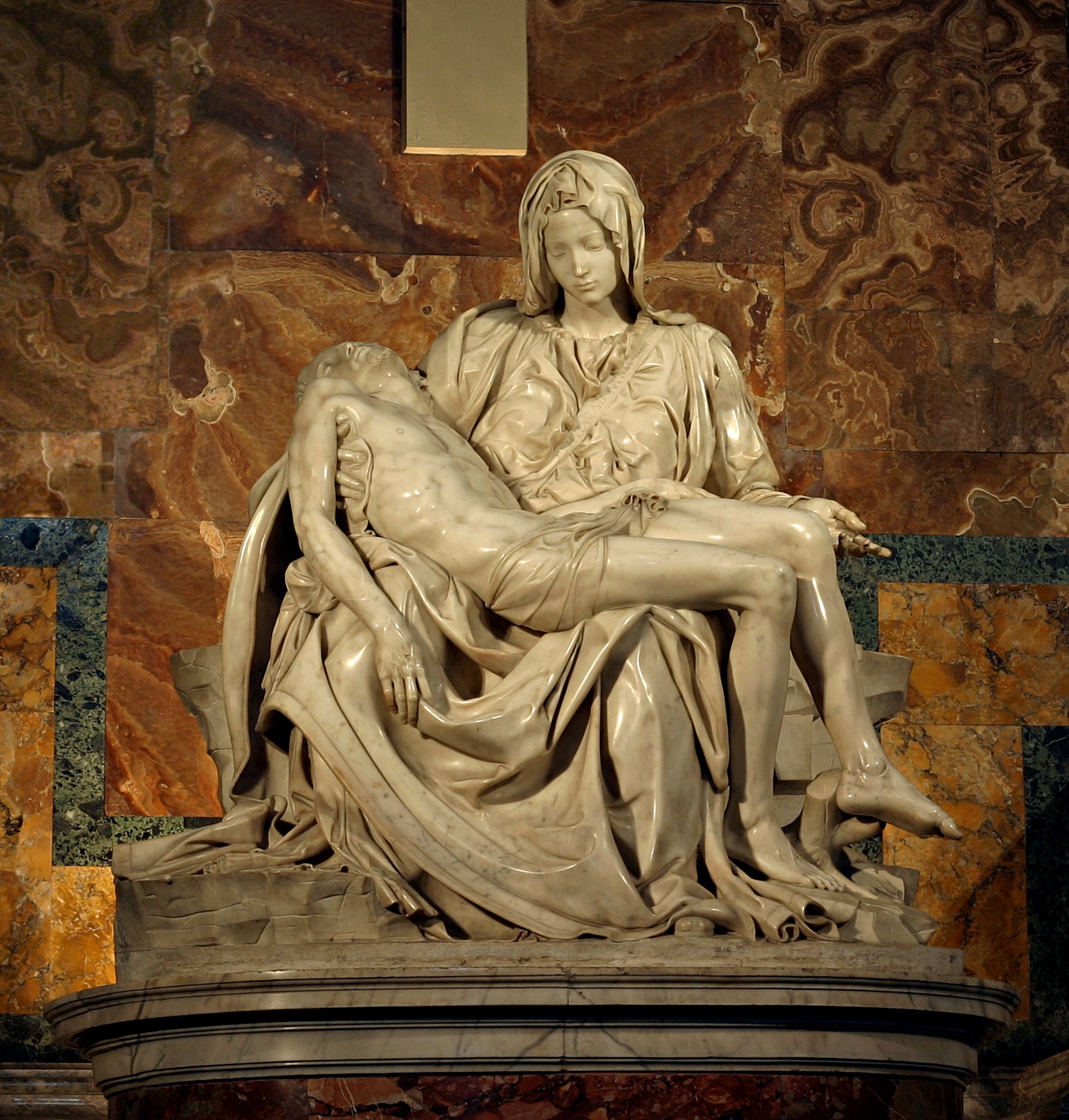
Fractal Tea Cup. Sold on Teavana.com. Medium: Ceramics.

It seems the concept of what a fractal is might be more imprinted in mass culture than some of us have been led to believe. The Benoit Mandelbrot Fractal Art Contest claims one of its missions is to select fractal art “that represents our art form to a world that largely does not know it — or if they do know it, they know only garish, 70s-style imagery.” If mass marketing has gotten a handle (no pun intended) on what fractals are and look like, can mission creep into the public mind be far behind? Is it just as possible that BMFAC wants to convince the world that its narrow definition of a UF layered and processed image is the only legitimate expression of our art form? And I wonder who exactly might benefit if such a meme started to stick in the collective consciousness?

Such a far-reaching but constricted view of fractal art is only possible if our community continues to embrace a Phase One mindset, but emphasizing software over artistic context and content is dead end. Breaking into the fine arts is our only hope for being seen as bona fide artists. Although your latest 1000+ decorative layers of UF epic technical achievement might wow some Fractalbook fanboys, it won’t matter in the long run if your image is still meaningless schlock that looks like a bad Yes bootleg cover. You’ll never be, as Dire Straits once sang, “In the Gallery.” A real gallery, that is. No, you’ll still be languishing in Phase One craft malls, and the shoppers strolling the flea market looking for trinkets won’t be able to tell the difference between your lovely, over-saturated spirals and the pretty, painted rocks in the next booth.

~/~

Tags: , , , , , , , , , , ,