Losers imitate winners

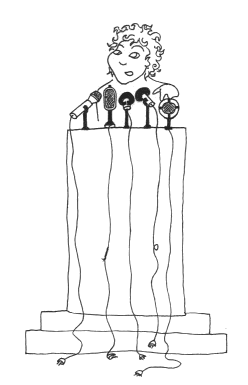
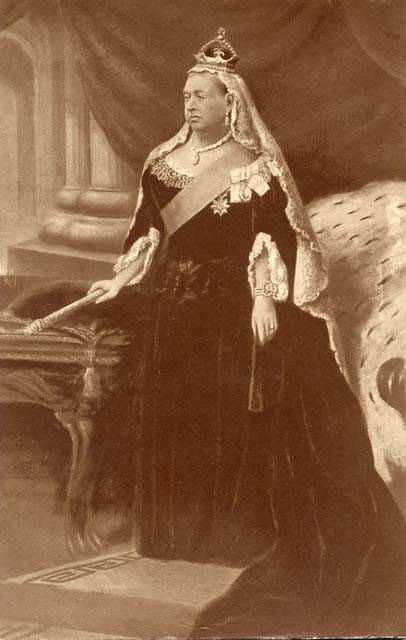
One of these is from the Museum of Bad Art

It occurred to me while browsing some of the greatest art of the 20th century to ask this question: Why don’t we see more art like this today?

For instance, it ought to be very easy to imitate the famous drip paintings of Jackson Pollock with fractal algorithms. In fact, I’ve already done it. And yet, my digital drip paintings have not received anywhere near as much public attention and critical acclaim as Pollock’s. Mine haven’t received any attention or acclaim, in fact. And I think mine are better.

I’m sure I’m not the first person to imitate Pollock, but as far as I can see there hasn’t really been very many attempts. And considering how easy it must be to copy the idea and the implementation of Pollock’s drip painting style, or for that matter, anyone else’s ideas and styles, there ought to be a lot more imitators of great works of art out there.

Or how about the famous Mondrian colored square paintings? The works, when done by Mondrian, received and enormous amount of attention and have gone on to be one of the most widely recognized styles in abstract art. So why aren’t we deluged with all sorts of imitations? Just changing the colors would be an easy variation of this style, but there doesn’t even seem to be much of that.

If these famous, classic works of art are so great, then shouldn’t there be at least a little greatness when other artists produce variations of those astounding themes? In fact, it begs the question: What were those classic examples of modern art famous for? Or, What’s so special about a Pollock drip painting that subsequent imitations can’t seem to imitate?

You’re probably catching on to this now. The classics are famous because they were examples of innovation; they suggested new areas to be explored. And those areas were explored, and from that exploration other artists produced work that may have been equally interesting but lacked the historical significance that came from being the original innovator. The classic works are just as valuable for the historical role they played as they are for their artistic merits. And as I’ve just suggested, later works by other artists may have had the same (or greater) artistic merit but haven’t received the same popular attention because they weren’t they weren’t the ground-breaking examples. The favorite artworks of many people are not always ones that are commonly known or the ones that are held up as textbook examples.

If you’re going to imitate anything, it ought to be the originality and creativity of famous artists. In other words, the best way to imitate classic art is by making something new. Initially people will ignore you and most likely the only attention you’ll get will be insults and ridicule, but those have been the traditional hallmarks of the new and the different. Be suspicious of compliments.

And another thing. If you’re afraid of being embarrassed or laughed at, your work will always be embarrassing and laughable.

Technorati Tags: fractal artdigital artart lessonsMona LisaMuseum of Bad ArtJackson PollockPiet MondrianMana LisaInnovation

Fractal Art Without a Computer?


Could this work be described as …Fractal?
Admiral Otto Von Howitzerhead by Kris Kuksi 2009


Samuel Monnier, writing at Algorithmic Worlds, his new website – gallery – and blog, said some very interesting things about the fractal nature of sculptures done by Kris Kuksi.  Sam said that Kris Kuksi’s scuptures “are very interesting examples of non computer-generated art with fractal characteristics (namely displaying structures on a wide scale range).”

In a more recent blog posting, Fractals In Traditional Art, Sam goes into more detail why the term “Fractal” could be used in this context of non-digital art:

  • The artist pushed the physical limits of the medium to display details as small as possible. You generally do not expect sculptures to have submilimetric features, Kuksi’s sculptures do.
  • The details have as much artistic importance as the global structure of the work. On his deviantart page, Kuksi displays several photographs of each work, to exhibit details invisible on the global view.
  • Self-similarity is present, through characters and objects of various sizes.


Sam’s posting is cautious and doesn’t make broad speculative statements like I do.  He says “I think these three pragmatic criterions give a starting point to determine the fractal character of a work.”  Note the word, “pragmatic”.  It means practical, hands-on, useful for getting something done.  Sam is talking about determining the “fractal character of a work” by looking at it and not by the way it was made.  That’s an obvious conclusion, isn’t it?  Kris Kuksi’s work only looks fractal; it’s a hand-made sculpture, it wasn’t made with a fractal program.  He also says it’s a “starting point”.  Even so, I think I can see the finish line from here.

This is something very new and very dangerous.  I see it as something like the Copernican Revolution for Fractal Art.  Copernicus showed that the Earth revolved around the Sun and not the other way around.  Until his time people intuitively assumed that the rising and setting Sun was moving around the Earth –rising and setting.  Copernicus changed their minds (not everyone right away, mind you) by showing them evidence that the Sun’s apparent movement was actually the result of the Earth’s actual movement.  He presented people with evidence that convinced them to see their world in a different context: a Sun-centered context instead of the old Earth-centered context.

I think this could be the beginning in what could become the complete unraveling of fractal art as a genre.  After this we will all see fractal art from a Visual Context instead of a Software Context.  We will see that Fractal Art revolves around visual appearance and not around the software that made it.  Fractal Art will be defined by visual criteria and not by its association (whether it’s noticeable or not) with fractal software. 

If a piece of art can have fractal characteristics derived from something other than a fractal formula, then there’s really no difference between an image made in a fractal program and one made in a plain old graphics program as long as they both have a similar, fractal style.  Furthermore, fractal art is then really nothing more than this fractal style which is, of course, easiest to produce with a fractal program but could also include any kind of image resembling the output of such fractal programs.  Fractal art is a fractal look and doesn’t have to be something rendered from computing a fractal algorithm.  There can be examples of fractal imagery made in a non-fractal program and similarly, examples of non-fractal imagery made in a fractal program.

In fact, Samuel Monnier’s pattern piling (see his Portfolio on Algorithmic Worlds) is an example of why we should adopt this more visual definition of fractal art than hold onto the traditional, software definition, because his artwork is, in my opinion, as fractal as any two-dimensional image will ever be and (visually) indistinguishable.  In fact, if you don’t adopt the visual definition of fractal art then I guess you have to exclude the kind of work that Sam is making.  Even though it is made with Ultra Fractal, it’s not really the usual Ultra Fractal fractal output. Sam has used Ultra Fractal’s programing features to create work that uses non-fractal algorithms and is therefore, by the usual criteria, non-fractal –unless one makes that decision on the basis of visual criteria.

Just for illustration purposes, a quick glance over the winners of either years of the Benoit Mandelbrot Fractal Art Contests will show you how overly simplistic and possibly meaningless is the term, fractal art in its current form.  What do these images, all chosen as winners in a fractal art contest have in common? and how easily would one distinguish them from artwork in other abstract, algorithmic, or simply digital (eg. made in Photoshop) categories?  The rendering methods that are used to produce “fractal” images contribute enormously to the final result and artists can easily start to focus on aspects of an image that are largely created by the rendering algorithm and not the fractal formula without realizing it, and thereby create work which is better called “render-ism” than fractal.  Add layering to the process and the ultimate result can be something quite interesting, but also quite non-fractal.

Fractal formulas produce a style of imagery, but that style is not exclusive to fractal software.  But if we are to include as fractal art, images that portray the fractal style but lack a traditional fractal “pedigree”, then shouldn’t we also question the presence of fractal art images that have a genuine fractal “pedigree” but lack that clearly defined fractal style and even perhaps exclude them?  Will fractal art survive such a revision, including it’s neighbors as part of the family because they look like them and abandoning some of it’s own children because they, by the same criteria, don’t look like them?  That’s why I think it’s not such a crazy thing to say that fractal art, as a strict and simple category, doesn’t really exist, and probably will become much less distinct in the future, if in fact it doesn’t simply merge with algorithmic art or with the larger, and more general, digital art category.

It could happen because fractal artists will see themselves and their work in more general terms and not identify or associate as strongly with the label fractal art as they will digital art or algorithmic art.  And why will they see themselves that way?  Because they’ll look at their artwork from a different perspective and describe it in visual terms like “I make abstract, decorative type work with multiple layers using things like fractals, masking and other graphical effects”.  I think that currently describes ninety-percent of all fractal artists.  They’ve been revolving around a specific artistic style for centuries (I mean, years) and not around fractals or anything unique to the software they’ve been using.  But like the Earth-centered people in Copernicus’ time, it makes sense to them, it seems natural to them to think that way.  They see the Sun revolving around them and not vice versa.  But a closer look at fractal art –and fractal-like art– I think reveals those beliefs to be superficial and merely a matter of habit and convention.

I think that’s what Samuel Monnier in his observation of Kris Kuksi’s work has discovered, although he hasn’t come (jumped?) to the same conclusions as I have.  If we judge fractal art by it’s visual characteristics, then the genre will be extended to include work previously considered non-fractal because of the non-fractal process by which it was made; but the genre will also shrink to exclude works which were previously considered 100% fractal by virtue of the “fractal” software used to create it –because it doesn’t display any fractal characteristics.

Technorati Tags:

Fractal Multiplication Concepts

Editor’s Note:  This is a guest posting by Rich Jarzombek.

I’m always fascinated by what I call “The Infinite Powers” of fractals. Most fractalists know that the fractal computational process is iterative and therefore could go on to infinity but intentionally terminates when a programmed condition is reached so that an image existing at the time of that terminating condition can be displayed. While I know that fractalists are aware of this “Infinite Computational Power” I suspect that few make adequate use of fractal’s “Infinite Magnification Power”.

Personally, I find great satisfaction in utilizing this “Infinite Magnification Power”. In fact, all of the 1200+ fractals in my website, Realistic Fractals, http://realisticfractals.com were produced at high magnifications, typically several hundred to several thousand times standard (default) magnification. This means that most of my images didn’t exist as even a single pixel in the initial display!

The following example shows the result of one of my earliest ventures into high magnification. The image below was derived from an equation of my own creation. It is displayed at 1.0 initial magnification.


My first impression was that this was an ugly, useless fractal. However, for some unknown reason, I was curious to see what might exist in the area to which the arrow points. After a series of magnification which finally reached a 63,433 times magnification, the following image appeared, which I titled, “A Rose Is A Rose Is A – – -“


When I saw this image my immediate reaction was, “Who woulda thunk it?!!”. The significance is that even within an ugly fractal there may exist a beautiful image if you take the time to explore using the “Infinite Magnification Power” of fractals. As an analogy of this degree of magnification, if this image were viewed at a width of 6 inches, its primary fractal would have a width of 6 miles and contain 4 billion different images of the same size!

The following example shows the result of an experiment to determine the maximum magnification capability of the software based on its computational precision (significant figures). The image below was derived from an equation of my own creation. It is displayed at 1.0 initial magnification.


I then chose to magnify a pinpoint location in the area to which the arrow points. After a series of magnification I reached a magnification of ‘ten to the thirteenth power’ and the image below appeared.


This image is not displayed to show esthetic value but rather to show its sharp detail even at such high magnification. (Any higher magnification will result in a distorted, highly pixelated image due to exceeding the system’s mathematical precision.) If this image were viewed at a width of 6 inches, its primary fractal would have a width of 10 times the average distance of the earth to the sun, and would contain ‘ten to the twenty-sixth power’ different images of the same size!! Due to this analogy I gave it the title, “Alien Horizon”.

Since it is difficult to imagine what ‘ten to the twenty-sixth power’ images means, I decided to compute another analogy: If these images were divided evenly to the entire world’s population of 6.8 billion, and if everyone took only one second to view an image while working on a 24/7 basis, it would take over 400 million years before all the images were viewed! (Unfortunately, this would also be about the same amount of time that “traditional” artists will take to accept the fact that “Fractal Art” is a “legitimate” art form!).

If someone asked me if it were possible that one of that huge number of images might be a perfect replica of the “Mona Lisa” I might have to reply, “Don’t bet against it!”

Sometimes I like to think that every fractal image I initially create is imprinted on an enormously huge microscope slide. Therefore I am looking through a microscope with the ability to move the slide to any position I choose and view whatever is there, and at any magnification I choose!

Wow! Can’t you just feel the awesome energy of fractal’s “Infinite Magnification Power”?!!

Rich Jarzombek

(Note: The images and interpretations were obtained using Tierazon V2.9 software. However the concepts should relate to all other true fractal software.)

I’m sick of Eye Candy

Even my own homemade recipes leave me with an unsettled stomach.  I used to get a thrill out of making some colorful lollipop of an image, but that stuff is for kids.  If you still crave candy, then you’re still a kid too.

Call it Decorative Art, or The Decorative Arts, it’s still the same old eye-candy.  In fact, Decorative Art isn’t really art at all —it’s decoration.  Pretty fractals may be nice to share and talk about and sell to the great mass of decorators out there looking for something nice to cover the living room wall or front entrance, but it’s only art in a broad, general, graphical sense.

Previously I’ve said that fractals aren’t very fertile subject matter by which to express deep thoughts or make bold political statements but I realize now that that’s letting fractal art off a little too easy.  Like a father speaking to a child who’s setting themself easy goals in life, I say, you can be more than that, you can be art, you can be anything a pixel can be.

But I know better than to give advice to someone who’s happy doing what they’re doing and hasn’t arrived at the point where they see things the way I do.  So to all those of you who aren’t happy with eye candy and occasionally get a deeper thrill out of artwork that is something else, that’s good.  And to those who find their stomach turns at the sight of a super sour gumball or a bright orange fruit chew, that’s even better.  It’s good to feel bad about bad things.  And eye candy is bad art.

Bad art?  Yes, I know there is a subjective factor to tastes in art and all that sort of argument that people often pull out to neutralize artistic criticism (except their own, of course), but graphic imagery that merely looks pretty and doesn’t engage the viewer’s thoughts in some deeper way hasn’t ever qualified as art in any serious circle of intelligent people before except in some trivial, functional way like the way a vase of flowers does in the front entryway in someone’s house.

That sort of thing is a Craft and those who make it are Craftsmen, not artists.  It’s perfectly respectable to be a craftsmen; there’s nothing derogatory about the label.  What’s not so respectable is when craftsmen want to call their fractal flower arrangements Art, and themselves, Artists.

It’s not that they aren’t good at what they do, or professionals, or anything else like that.  They’re good craftsmen, some of them are excellent craftsmen (craftspeople), and many are very professional and quite highly skilled in the technical aspects of their craft, but it’s just that what they produce has no other dimension to it than to be decorative –something pretty to look at.  But don’t call it art because that’s being pretentious, shows ignorance and trivializes what art is, and what art is all about.

And art is all about thoughts, feelings –mental action and reaction.  Maybe it’s possible to say something with flowers?  Not likely.  That’s why they’re such a popular decorative item, they’re just something pretty to make a room look nicer, like visual air freshener.

Fractal art isn’t eye candy or visual air freshener.  I guess I could give some sort of pep talk here or rallying cry for more art in fractal art, or lets all try to put more meaning in our fractal art, but really, if you’re happy with what you’re doing making eye candy then you’re not going to do anything like that.  People don’t make art because they’re told to, they make it because they’re sick of eye candy and don’t get a thrill from it anymore.  They make it because their gut tells them to.

Technorati Tags:

Fractal Art, Phase Two

Bold, new, full-color, fractal art

What? You didn’t know even know there was a Phase One? Well, let me begin there, then. At the dawn of fractal art.Phase One, the first stage of fractal art, has been oriented around software. The big developments in fractal art came from developments in the software that made it. True color fractals were a big development in fractal art over the more primitive, 256 color fractals.

More primitive? See, I’m talking like a phase one fractal artist. Good art, or even great art, can be made with 256 color fractal programs. In the same way, bad art or even awful art, can be made with true color fractal programs. Who cares how many colors your program uses? Or more to the point: who cares how many colors your artwork has in it?

That’s the essence of Phase Two thinking. And it’s all about thinking /perspective /approach. Phase Two fractal art focuses on the image and not how it was made. Perhaps in Phase Two fractal art the word “fractal” is no longer relevant because the word fractal only has meaning if the artwork exhibits a fractal appearance. Images made from details of fractals or images processed with filters are really derivative works and whether one wants to call them fractal art is really a pointless matter and unresolvable argument.  And Phase Two artists don’t care anyway how an image was made. Whether it has that parameter file pedigree or not isn’t as important as whether or not it’s…

Art. Yes, that’s where I see fractal art going. Taking an artistic approach and evaluating the image rather than the software that makes it, is an instinctive next step. It’s instinctive I think because that’s how art has always been viewed and evaluated. No serious critic ever categorized oil paintings by what kind of paint brushes they were made with or whether they were painted by men or women. Or by nationality?  Is it American Art?

Art is studied, viewed, collected, practised, and criticized according to the style of artwork — what it looks like. That’s how things will be, and even already have started to be, in phase two of fractal art. I’ve groused about Ultra Fractal, but really what I was criticizing was the excessive layering and masking of fractals. That’s what most people do with Ultra Fractal and that’s why most of what is made with it is so boring. But there are others who use Ultra Fractal for very, very different things and they use layering as an algorithmic tool rather than a way to apply make-up to fractals. The program is as advanced or as primitive as the images one makes with it. In fact, the program is irrelevant; it’s the artwork that’s important.

Phase Two thinking says, “If this image was a painting, what style of art would you say it most closely resembles?” Phase Two thinking calls fractal art that looks nice but lacks expression to be Decorative Art. It calls fractal art that evokes feeling, emotion or vivid thoughts to be Abstract Expressionism. Phase Two thinking enters fractal art through the art door and not the math door. Phase Two speaks respectfully to the Rocket Scientists but explains that beauty, while taking many forms, is the only parameter in art.
Jackson Pollock is the true father of fractal art (even if his drip paintings aren’t fractal). Benoit Mandelbrot is the father of fractal software. This is the Phase Two perspective. Pollock said, “It doesn’t make much difference how the paint is put on as long as something has been said.” Phase Two listens to the art, not the artist.

In Phase Two we don’t call it art until we hear it speak.

Technorati Tags:

Nothing New in the Benoit Mandelbrot Fractal Art Contest

If I just ignore how a craven contest excludes some fractal artists like me while privileging others, I'm sure everything will work out for the benefit of my betters.

I don’t want to hear about why art competitions should be run professionally using fair play to promote excellence and diversity rather than favoring a select group. I’d much rather be openly exploited and cynically scammed.


You say you got a real solution
Well, you know
We’d all love to see the plan…
.
–The Beatles, “Revolution”

Guess what’s new on the 2009 Benoit Mandelbrot Fractal Art Contest front?

Nothing.

Is that what you expected? It’s what I expected.

If you thought Garth Thornton’s resignation from the 2009 BMFAC selection panel, or, better yet, his ethical example and thoughtful public account of what prompted his action would make any difference, well, then you just haven’t been paying attention for years.

If you haven’t done so yet, I urge you to read Thornton’s public post announcing his resignation. You can clearly see who he is and what he believes. His post also provides a contrasting window into some of the BMFAC judges revealing who they are not and what they do not believe.

If the director and his friends who serve as BMFAC judges could be shamed, they would have been from the start. The competition is, as Tim and I have long argued, all about them. It’s always been a publicity stunt to garner personal gain and to further their professional careers. From the beginning, it should have been an invitational exhibition for the director and his circle, a showcase for the particular Ultra Fractal school of fractal art they’ve all been pushing for years, but that would have looked more insular than prestigious. So, a “contest” was concocted — a contest that would allow them to place their work inside what would appear to outsiders to be a juried, international art competition. The catch, of course, is that they were the jury who ended up selecting themselves for nearly half of the previous two exhibitions.

And how could they insure that this international show “that represents our art form to a world that largely does not know it” would really be about the kind of art they actively promote? And, furthermore, how could they also advance the profile and sales of Ultra Fractal, the fractal software many of them either author, sell, teach, code, or otherwise push? One shrewd way would be to set the submission requirements for entries at a large scale that only Ultra Fractal could easily reach. After all, an art contest can only draw from the entries it receives, just as it can be consciously designed to choose judges and make rules to ensure that it gets only the kind of entries it wants.

But, of course, this is a new year, and the contest has made at least one ethics-friendly change. Probably. The rules make clear that the judges’ work will not be included in the 2009 contest, although some readers have pointed out the rules explicitly say nothing about the judges’ art ending up in the exhibition. Semantics — or loophole? Time will tell. The “contest” is the web page, listing winners, alternates, and honorable mentions. The exhibition is another matter entirely, as demonstrated by the 2007 BMFAC where no information about the physical show was ever included on the “contest” web page.

And if the previous contests weren’t slanted enough towards openly fostering UF, what with primarily UF judges picking primarily UF winners, this year’s contest actually includes Ultra Fractal’s author as a judge. Given BMFAC’s history of overt UF bias, this is such an arrogant, in-your-face move that it surely cannot escape notice as a gross conflict of interest, especially after another author-judge of commercial software did the right thing and resigned.

But mum’s the word, and the director isn’t commenting — on anything. Not on the many conflicts of interest tied to the judging panel. Not on the rules ambiguity that could once again slip the judges into the exhibition. Not on why smaller entry sizes would somehow mar the exhibition. Not even on a prominent judge’s resignation and possible replacement. Apparently, the less all of us know, the better.

Not that anyone much cares, though. Obviously, the sponsors don’t care that the contest isn’t managed with the customary professional protocols, especially if they are as hands-on as past sponsors who insisted work by judges be included to insure against the exhibition’s “insufficient quality.” Obviously, some of the judges don’t care that the whole thing is UF-friendly and that they face visible conflicts of interest leading to their own financial and/or personal gain. If the sponsors cared about how the contest was run, they’d intervene. But they haven’t. If the judges in question worried about having conflicts of interest, they’d resign — especially after reading Garth’s recent post and witnessing his moral example. But they haven’t.

And what about you? I have to assume you’ve noticed how BMFAC is run and realize its operation is suspicious. So, I have to assume that many of you probably don’t care either. A crooked contest is better than none, you will tell me, and BMFAC is the only game in town. I’ll put up with shady doings, you’ll say, because participating is the only chance to promote myself in the hope of getting to join the privileged, piffling group literally running the whole show. You OT guys can keep your idealistic revolution for inclusion of all fractal artists and schools, you’ll say, because I want BMFAC judge status and privilege for myself, so then I, too, can lord it over others– just like they do. After all, you’ll tell me, their immoral example is the surest path to success in fractal art marketing: tie everything to your own self-promotion — even to the point of creating callous publicity stunts and calling yourself a “prestigious fractal artist”.

When all is said and done, I predict the 2009 Benoit Mandelbrot Fractal Art Contest will be considered a success. It will have more participants than ever, perhaps even handing out up to 100 meaningless Honorable Mentions this year. Blogs will cite it as a representative sampling of the most important fractal artists in the world, instead of mostly and merely a narrow UF school that features masking and layering. The competition’s judges will profit both personally and financially, as a certain software sells and online classes on how to use that software fill up. The director will be hailed as a noble philanthropist, instead of a career-boosting manipulator.

And, maybe — maybe after a cycle about as long as the Fractal Universe Calendar‘s existence — maybe as the same people and styles of fractal art benefit from a deliberately devised system of inbred favoritism year after year after year — maybe after a fourth or fifth go-around of winding up as the 99th HM — maybe then whispers of a revolution will start to be heard in every Fractalbook forum and journal and chat room.

And, maybe then, you will remember. You once saw the plan.

~/~

Tags: , , , , , , , , , ,

Do You Need Professional Help?


Sure you do. But, the kind of professional help I’m talking about is online software courses. I know that sounds like a common subject line for spam, but this is the real thing and it includes some of the most popular fractal art programs in use today –taught by experts and reasonably priced.

The place is Visual Arts Academy and according to Virginia and Sparrow, who run the place:

VAA started about five years ago, answering a specific need for a venue for two classes based on PhotoImpact. It was an offshoot of the PhotoImpact International bulletin board, with which we are still associated.

Since then, the virtual campus has exploded to include courses on Ultra Fractal, Apophysis, Xenodream, Bryce, Poser (the lingerie dolls on Renderosity) as well as many of the more mainstream digital art programs like Photoshop, PaintShop Pro, and PhotoImpact. There’s also some courses on web design, MS Office and Photography.

Perhaps you know all that stuff and aren’t interested in taking a course by “experts”? Well, you –yes you– could be one of those experts! Let’s call you, “Expert Without a Course”.   Here’s what Virginia and Sparrow say about that:

We are always interested in new classes for a variety of software. We do tend to lean to digital art but would be more than willing to talk with a potential instructor for any class he or she thinks could work in an online setting. We’re also open to different class structures than our usual six-weeks-plus-one format. The instructor and the school split the tuition: VAA keeps an administrative fee and the rest goes to the instructor. Those interested should contact us at admin@visual-arts-academy.com

I think this is exciting. There aren’t too many places where you can find courses for something as exotic as fractal software and here is one which already covers three of the most popular programs and is open to providing more. Based on what I’ve seen in various online forums and mailing lists, there’s a lot of people asking for help and much of it revolves around the same basic things. Yes, there’s already quite a number of online tutorials available (I’ve written one for Sterlingware) and there’s always the option of asking for help in a forum.  But I know from my own experience that a significant number of users really would prefer something more formal and structured — and that’s Professional Help. But first there have to be some Professional Helpers.

Although I’ve never taken any of these courses, I think the fees are reasonable, ranging from $25 for a one semester, several week course to $50 for double semester courses. The fees of course cover the basic cost of running the online school as well as providing some compensation to the instructors for their efforts and the careful attention they give students. If you think you have specialized expertise in the area of fractal art, or in some other area of digital art, then this could be a great way for you to share that expertise in a more organized and formal setting and be compensated for it.


The instructor won’t be in the room with you.  But maybe that’s better.

You probably won’t make enough to quit your day job or anything like that, but I think the way the Visual Arts Academy has set things up is one which benefits both instructors and students. There are some real advantages to this over the more casual forms of online help.

Anyone could conceivably start up their own online school and start teaching students independently, but working through an established online entity like the Visual Arts Academy might make it easier for them as well as their students. Just as Ebay provides a secure and trustworthy environment that attracts individuals to do business with each other, an organization like VAA can bring instructors and students together and handle the basic administrative functions.  These administrative things in any business, online or offline, can become a real headache for people just getting started.

Current fractal art courses at VAA include: Apophysis Exploration, and Apophysis: Beyond the Basics, by Travis Williams; Working with Ultra Fractal, Ultra Fractal Masking Techniques and Ultra Fractal Artistry by Janet Parke; and XenoDream by Joseph Presley. Although not currently offered, Kerry Mitchell used to teach a course on working with Ultra Fractal formulas.

What’s missing from that list? The course that only you, the expert without a course can teach. There’s got to be a million things people can learn about Ultra Fractal, and let’s not forget about that other thing –art– how about something on Post-processing in Photoshop or something a little more general like Design Theory for Fractal Art. Or why not something like Programming With Fractal Math?  If you know how to do something, there’s a good chance that other people will want to know how to do it too.

Don’t think that because you’re going to be charging students a fee to take your course that no one will want to spend the money. $25 to study an exciting area of fractal or digital art for several weeks with someone who has an established reputation in the field is a trifle, even for an online venue. Think of the possible mentoring relationships that could be formed and the influence on the art form it could have in the years to come.

Come to think of it; maybe the one thing that fractal art really needs right now is a school. A place where serious students and experienced instructors can engage in some disciplined training and development. You can tell your friends you’re an online Professor and put Dr. in front of your screen name.

Seriously, this could be a really big thing.

Will the Benoit Mandelbrot Fractal Art Contest Do the Right Thing?

Maybe no one will notice if I say nothing...

Do the right thing. It will gratify some people and astonish the rest.
–Mark Twain

Image seen on afgc.org.

I wanted to pop on briefly and second what Tim said in his last post. I’ve known Garth Thornton since I helped test early versions of Xenodream years ago. I always found him to be thoughtful and straightforward. I’ve long admired his art, and he continues to create stunning work — like this piece seen recently on Fractal-World:

The Google Search Engine by Garth Thornton

The Google Search Engine by Garth Thornton

In short, I’ve long had respect for Garth — but never more than I had this week. He is the only judge of the competition to ever address Orbit Trap’s objections as to how the Benoit Mandelbrot Fractal Art Contest is run, and, certainly, the only one to act based on his scruples after reflecting on how his actions might appear to others. Moreover, he could have resigned silently — out of the public eye. Instead, he made his conscience an open book — even going so far as to post his reasoning for resigning on a public forum. By his actions, he has shown himself to be estimable.

Would that some of the other BMFAC judges faced with financial conflicts of interests do some similar soul-searching. If they don’t want to listen to me, perhaps they should listen to Garth:

[T]he whole point of conflict of interest issues is not to rely on integrity. For a contest, anyone of questionable integrity or clearly lacking in credibility should not be a judge anyway. More generally, whether the context is awarding financial contracts or judging contests, a series of questions may be asked. First, people are expected to declare any personal conflicts of interest. Then there may be consideration given to whether the interests have a material or other effect on the outcome, and whether the person should participate or be party to any discussions, and whether or not they should have a vote. The exact approach depends on the kind of organization. In many contexts it is standard for the person to step aside from the entire process. Both objective and perceived conflicts of interest have to be considered.

Would that the competition be run without such a heavy blanket of secrecy. If Garth had not posted his rationale to the FractalForum but had simply sent a private email, would anyone have even noticed that he stepped down? As it was, how many of the other judges learned of Garth’s resignation by reading it on Orbit Trap? A high profile art competition does not have to operate like the CIA, nor should fractal artists have to scour the Web for months probing for any word about BMFAC’s exhibition — which is exactly what happened in the last contest. Even today, there is not one photo — not even one sentence — about the details of that exhibition on its own web site.

Would that the director relax the massive size restrictions for entering the contest — restrictions that privilege Ultra Fractal and its users while impeding or excluding other programs and artists. BMFAC should be a showcase for all schools of fractal art. If the majority of the judging panel is composed of UF artists, teachers, web hosts, code writers, advocates, and even the software’s author, then please rename the competition and just call it what it is: The Benoit Mandelbrot Ultra Fractal Art Contest. Truth in advertising is preferable to a smoke screen most of us can easily see through anyway.

Would that BMFAC’s sponsors rouse themselves from their slumbers and get the right thing done. Do the competition’s sponsors — Fundación Vodafone España, Universidad del País Vasco/Euskal Herriko Unibertsitatea, ICM 2010 (International Congress of Mathematicians) — approve of how the contest is being managed? Does their silence mean they have no moral qualms — even in the face of a prominent judge’s resignation? Past BMFAC sponsors have not always been so hesitant to assert their influence on the competition’s day-to-day operations. Previously, according to the contest’s director, BMFAC’s sponsors insisted the judges be included in the exhibition, as this memorable passage from Orbit Trap’s archives recounts:

I am well aware that people were not happy about judges’ work appearing in the ICM exhibition alongside contest entries, but we made it clear from the outset that contest entries would not be the only art shown. This year is no different. The sponsors require this as a hedge against insufficient quality being submitted [my emphasis]; it is, after all, their money at risk.

Would that some of the other BMFAC judges facing conflict of interest issues of both financial and personal gain voluntarily review the facts and search their consciences as selflessly and honorably as Garth Thornton did. Or, if such acts of moral courage were forthcoming, would they have already taken place? Perhaps the sponsors need to take action again this year. But instead of ushering some judges into the exhibition through the back door, maybe the sponsors should do the right thing and usher some of judges off the selection panel and out the front door.

Maybe instead of a hedge against insufficient quality, the sponsors should consider another hedge — a hedge against insufficient integrity.

~/~

Tags: , , , , , , , , , , , , , , ,

Man of the Year

I view Garth Thornton’s recent resignation as a judge in the Benoit Mandelbrot Fractal Art Contest 2009 as a cause for celebration and renewed hope in one’s fellow man.  I know that may sound rather lofty and glorious, but what Garth has done is definitely the most encouraging event that I’ve seen in the fractal art world this year.

As an editor of Orbit Trap for the last three years, and as a silent observer of the fractal art world for more years than that, I’ve seen a lot of self-interest, self-promotion, self-indulgence and just plain self-ism (it’s becoming an art form).

Although I have no window by which to look into Garth’s mind and know exactly what his reasoning was, or to speak on his behalf, the initial trigger appeared to be a debate on Fractalforums.com.  The mere fact that Garth was willing to participate in such an open and extremely frank discussion immediately suggested to me that this guy was different from the rest.  I got the impression that it was his nature and everyday way of doing things to be open and responsive to the opinions of others and to be much more community minded than most are.

That alone was enough of an improvement in the area of leadership in fractal world in my opinion to be noteworthy.  But then, to see someone of Garth’s status in the fractal art world actually change his mind about a controversial issue and express it publicly was simply awesome and honestly, left me stunned.

Most forum discussions don’t accomplish much.  You get the usual posturing remarks and the “me versus you” mentality arising, again and again, as the prevailing pattern in online forums.  My opinion is that forums are where people go to commiserate and to build up a network of people who agree with them –they’re looking for a place to relax, not wrestle with ideas.  Few people honestly debate the issues raised and truly give any serious consideration to  the ideas (if any) that are presented.  Garth, evidently, happens to be one of those few people who do.

I think it’s important, for those of you who may not be aware, that Garth has paid a price for his decision.  It cost him something to do what he did.  He’s given up a privileged position that would have given him extra status in the fractal world.  I don’t think I’ve ever seen this happen before, but I hope others who are in positions of leadership in the fractal art world will take this example that Garth has made of acting according to principles of community building and not just short-term self-interest.

The year isn’t anywhere near over, but I doubt I’m going see anyone better or more worthy than Garth Thornton to receive an award like this.

But who knows?  I’ve certainly found Garth’s actions to be inspiring.  Maybe someone else might too.

Is It Official?

The rules page on the official website for the Benoit Mandelbrot Fractal Art Contest 2009 was changed overnight.  The list of the Selection Panel Members (judges) has been abbreviated and now no longer includes the name of  Garth Thornton who yesterday announced his intention to resign on Fractalforums.com.


New Page (above)

Old Page (below)


Garth Thornton Resigns from Judging at the Benoit Mandelbrot Fractal Art Contest 2009

While it may not be official yet, a  response by Garth Thornton to a thread at Fractalforums.com early today gives a fairly clear impression that he intends to step down from his new judging role at the Benoit Mandelbrot Fractal Art Contest 2009.

I have come to the conclusion that there is likely to be sufficient perception of conflict of interest that I should resign as a judge. I have no regrets except for the resulting inconvenience, and apologize to anyone who may be disappointed with my decision.
(Garth Thornton on fractalforums.com)


Here’s more of Garth’s comment. He is responding to previous postings by Dave Makin and Terry Wright regarding conflicts of interest:
 (from fractalforums.com)

Dave,

having trust in a panel is an easy answer. However, I have to disagree with this position, as the whole point of conflict of interest issues is not to rely on integrity. For a contest, anyone of questionable integrity or clearly lacking in credibility should not be a judge anyway. More generally, whether the context is awarding financial contracts or judging contests, a series of questions may be asked. First, people are expected to declare any personal conflicts of interest. Then there may be consideration given to whether the interests have a material or other effect on the outcome, and whether the person should participate or be party to any discussions, and whether or not they should have a vote. The exact approach depends on the kind of organization. In many contexts it is standard for the person to step aside from the entire process. Both objective and perceived conflicts of interest have to be considered.

Terry,

While I’m not in a position to give an official statement, I was told that a maximum of 25 contest entries will be the only exhibits, so I would be surprised if that is not the case. I assume that Rick was speaking hypothetically or referring to past contests.

I’d like to clarify a few points on the way.

First, I think you’ve misstated the summary: my claim did not include that you should just trust me, it was that since I did not regard the financial outcome or the overall effect as significant, trust was not a factor. However, obviously if one does not accept my assertion, it would be a factor.

The second is where you say “could receive financial gain as a direct result of the competition.” I think indirect is the correct term, as there is no sales presence or even advertising at the exhibition or contest website, and no deals being done. A closer analogy might be product placement, which is totally indirect. The implication of direct financial gain covers a range of possibilities, none of which apply here. Calling it indirect still makes your point, without misrepresentation.

The third is the subsequent statement “A reasonable person might further conclude that chances to procure personal gain for both of you are also substantial.” This has some ambiguity, as syntactically it qualifies the chances as substantial, while conveying a suggestion that the gain is substantial. There is also the ambiguity between the two meanings of substantial, “having substance” and “huge”. Thus, readers could take away an impression anywhere between “a tangible chance of making some gain” and “could make a fortune”. I only mention this because on a first quick reading I got the latter sense and had to read it again for the presumably intended meaning. I just want to add that a reasonable person could only conclude that either of us could make a large amount of money from this contest if they are totally out of touch with market realities.

Although I’ve argued that the actual conflict of interest is not significant, I accept that perceived conflict is an issue. It is an honor to be selected as a judge, but that’s not a big motivator for me so it mostly amounts to a service (ok, with some pleasure in assessing the merits and voting for the best.) However, if people perceive a conflict of interest, it devalues the service. There are always a few people who are “wrong, somewhere on the internet,” so satisfying everyone can’t be my goal. Nor can it be a popularity contest, or a vote of confidence in integrity, because that isn’t the question.

I have come to the conclusion that there is likely to be sufficient perception of conflict of interest that I should resign as a judge. I have no regrets except for the resulting inconvenience, and apologize to anyone who may be disappointed with my decision.

It’s possible that I may get around to producing a contest entry, but I had no prior plans to do so and this was not a factor.

Regards,
Garth

Conflicts of Interest in the Benoit Mandelbrot Fractal Art Contest

So whatever gave you the idea I'd eat you and sell your eggs through my produce company?

Don’t you trust us?


I am starting this post with a premise. Either the organizers and sponsors of the Benoit Mandelbrot Fractal Art Contest know absolutely nothing about how to run an art contest, or they have chosen to deliberately disregard established safeguards and universally accepted standards and practices.

I continue to be surprised by how many of Orbit Trap’s antagonists seem to believe that Tim and I are just making up contest regulations out of whole cloth, or are trying to impose our own eccentric guidelines on the beleaguered BMFAC. Take, for example, this recent remark by Ken Childress on his blog (find link via Google):

I didn’t really object to anyone on the panel having images included in the exhibition. Yes, this event is a contest. No, it’s not the kind of contest OT wants to lead everyone to believe must be run.

But it’s not just OT who believes that art competitions should be run using established and agreed upon protocols; it’s nearly everyone else — ranging from federal/state/college art associations to international symposiums on ethics in fine arts and cultural activities. I’m afraid it’s BMFAC’s director and sponsors who either don’t know about instituting methods to shield art contests from abuses, or they have intentionally not implemented such safeguards in order to not be bound by them.

The BMFAC director, in an exchange last week on the Fractint Mailing List, said my previous OT post was “written by someone who knows next to nothing about the contest.” Actually, I’m very familiar with contests in quite a few artistic genres. I served for six years as an Associate Dean in a College of Fine Arts in a moderately-sized (13,000 students) public university. Part of my job responsibilities included overseeing an artists in residence program and competitions in the disciplines of music, theater, film, creative writing, and visual art. One of the first things the college dean insisted I do was to draft conflict of interest policies for the competitions. So, I did some research — research the BMFAC organizers and sponsors either never bothered to do, or, more likely, don’t want any of you to do. Here’s what I found.

From the College Art Association’s “Statement of Conflict of Interest”:

A conflict of interest arises when an individual’s personal interest or bias compromises his or her ability to act in accordance with professional or public obligations. In situations where no public scrutiny or oversight is possible, the risk of a conflict of interest increases.

One way to understand a conflict of interest is to describe the situation as a conflict of roles. A person having two roles — like someone who sells commercial software and who is also judging an art contest that includes submissions made with that same software — may experience situations where his two roles conflict. The conflict can be denied or possibly extenuated, but it nonetheless exists. Playing two roles is not necessarily wrong, but the contrasting roles definitely provide an increased incentive for inappropriate acts in some circumstances.

Furthermore, the idea that BMFAC has any public scrutiny or oversight is laughable. The organizers have been consistently secretive, even to the point that the 2007 BMFAC site contains no information at all about the 2007 exhibition — no announcement, no location, no dates, no photographs, no reviews, no nothing. It took Orbit Trap seven months to discover whether the exhibition had even taken place.

One would have to be blindfolded on a deserted island not to see that BMFAC has a discernable and overriding bias. Over its three years, the majority of the judges have been UF users, teachers, web hosts, code writers, and advocates. The majority of the winning entries shown in the two previous exhibitions were made with UF. The judges’ back-door submissions to the previous two exhibitions — almost without exception — were made with UF. The majority of alternates and honorable mentions were awarded to UF users. Several current or past students, enrolled in UF classes taught by two BMFAC judges, won or placed in previous competitions. The enormous file sizes required to enter the contest heavily favor UF, the most easily scalable software — even to the point where some non-UF using fractal artists cannot render images large enough to participate in this contest designed to showcase, as the 2009 BMFAC rules page states, “art that represents our art form.”

And, in case anyone still has the slightest doubt about what kind of fractal art this competition privileges, this year one of the judges is the author and owner of Ultra Fractal. So, if what I’ve outlined hasn’t convinced you of BMFAC’s overt UF bias yet, maybe you need to back up and re-read Tim’s last post.

Barbara T. Hoffman, in a chapter entitled “Law, Ethics, and the Visual Arts,” which appears in the seminal book Ethics in the Visual Arts, cites the definition of conflict of interest used by the International Council of Museums “Code of Ethics for Museums.” It states a conflict of interest is:

The existence of a personal or private interest which gives rise to a clash of principle in a work situation, thus restricting, or having the appearance of restricting, the objectivity of decision making.

Responsible Conduct Research, based at Columbia University, provides the following account of what constitutes conflicts of interest:

A conflict of interest involves the abuse — actual, apparent, or potential — of the trust that people have in professionals. The simplest working definition states: A conflict of interest is a situation in which financial or other personal considerations have the potential to compromise or bias professional judgment and objectivity.

But the clearest and most detailed discussion about conflicts of interest in the arts comes from a comprehensive study done by the International Federation of Arts Councils and Cultural Agencies. Their report is entitled “Conflict of Interest Policies in Arts and Culture Funding Agencies” (linked here in a .pdf file) and says:

Conflicts of interest arise when a person making a decision is faced with more than one interest against which to judge their best course of action. The conflict typically of most concern is that between a person’s personal interests and their professional interests.

[…]

Indeed, as many of the policies cited later in this report recognise, the mere perception that a conflict of interest might exist is enough to make such a conflict an issue for concern – whether or not it is ‘real’, or whether or not it tempts an individual to act inappropriately.

As you can see, there is an encompassing history of concern over the problem of conflict of interest in the area of the fine arts. This is not just a case of Tim and I wanting to impose “our way” of running contests or of Orbit Trap promoting “conspiracy theories,” as one of this year’s BMFAC judges said recently on the Ultra Fractal Mailing List.

In fact, it does not matter whether you and I think the BMFAC judges are honest and would never act inappropriately. What matters is the recognition that a conflict of interest exists. That perception alone is enough to contaminate BMFAC’s integrity and erode public trust.

The IFACCA survey goes on to say that conflicts of interest become especially troublesome when “people in the arts who are appointed to decision-making bodies” (like judges of an art contest) might gain financially or personally from rendering services and notes that

An obvious type of gain is financial, but other types of gain are equally relevant, such as the ability to gain prestige, wield power or advance a career.

Financial conflicts of interest permeate BMFAC’s selection panel. Two of the judges are authors and owners of commercial software, Ultra Fractal and Xenodream. It is inevitable that the competition will have entries made with these software programs. If entries created with both programs do well, it is reasonable to assume that both authors stand to benefit financially. Whether the authors make a pittance or a fortune is irrelevant because what matters here is the principle. Even if the two author-judges were to miraculously make no money, conflicts of interest, as we’ve seen above, are often about the mere appearance of impropriety. Therefore, I repeat the charge I made in my last post: the two judges who are authors of commercial software should immediately resign.

Another financial conflict of interest is self-evident. Two of the BMFAC judges are or have been on the faculty of the Visual Arts Academy where they are paid (by charging fees) to teach courses in the use of Ultra Fractal. Again, if entries made with UF win, it stands to reason that one or both instructors stand to benefit financially. Even in the unlikely event that enrollment doesn’t rise should UF submissions make another near-sweep of the exhibition, the improper demeanor is enough to be a conflict of interest. These instructor-judges should also resign, or, at the very least, should not be teaching classes in any year when the contest is being held.

I hope you can also see why Orbit Trap protested so vehemently over the inclusion of work by BMFAC’s judges in the last two exhibitions. It was not because, as some of our adversaries claim, that we are bitter whiners who hold grudges and produce bad art — or similar invective tossed at us as a smokescreen for failing to directly address our arguments.

No, we were upset because including the judges’ work was a glaring conflict of interest resulting in personal gain for those individuals. Rather than simply paying the judges, either directly via the sponsors or by charging an entry fee, BMFAC’s director and sponsors gave them a free pass to display in the “contest” exhibition. This action resulted in each of them (follow along with me from the quote above) gaining prestige, wielding power, and advancing their careers — even to the degree where they could anoint their heads with crowns and write their own ad copy declaring themselves to be “the most important fractal artists in the world.”

~/~

OT readers might find an ongoing dialogue I’ve been having about the contest with some locals over at the FractalForum of interest. Things really picked up when Garth Thornton, one of the two current judges who is an author of commercial software, showed up to address the conflict of interest issue. To date, Thornton is the only BMFAC judge to ever come forward and speak to OT’s allegations. You probably owe it to yourself to read the whole exchange, although you will have to join the forum to make comments.

This excerpt serves as the basis for what I said to him:

Your main points seem to be that you and Frederik [Slijkerman] are qualified to be judges because “we know the software’s weaknesses inside out,” any money made from selling software will be insignificant, and that including vendors as judges “will have a minor influence.” In short, although you admit that you might benefit financially, even if minimally, your claim is that your presence as a judge will have little overall effect, and that I should just trust you.

The way any competition earns trust is by being proactive and showing that it is aware of potential abuses by putting visible policies in place to keep any potential improprieties from occurring. These steps have become standard practice in art competitions. Any competition that deliberately foregoes such policies immediately arouses suspicion and appears less trustworthy.

And, for our more anxiety-inclined readers, this excerpt might make you excitable. It begins when Thornton says

I can confirm there is no form of remuneration for judging.

to which I say

I personally believe contest judges should be paid for their time and effort. One reason BMFAC is fishy is that it has no entry fee. Many artists, including me, generally despise such fees, but they are a necessary evil. Such fees are used to pay judges and screeners and to cover the administrative costs of running a contest (like publicity and printing images, for example.) Most significantly, entry fees do not create conflicts of interest; in fact, their presence makes abuses and inappropriate behavior less likely.

I do have a question, though. Could you clarify what you mean by “remuneration?” Are you saying BMFAC’s judges will receive no money? Or are you saying all of the judges receive no compensation at all — compensation like having their own art work included in the 2009 exhibition? I’ve already said on OT that I’m taking on good faith that no BMFAC judges will have work hanging in this year’s show. But some of OT’s more paranoid readers have written to me pointing out that the 2009 rules only say the judges are excluded from participating in “the contest.” Nothing whatsoever is said about the judges not being a part of this year’s exhibition.

Moreover, one of those nervous emailers wonders why Rick Spix is on the UF Mailing List saying things like

“As to having work in the shows, it seems like a good way to pay those folks for a good many hours spent doing the judging thing.”

when the issue is presumably dead and the general assumption from the posted rules is that the BMFAC judges will not be recompensed by displaying their own art in this year’s exhibition?

You could quell these rumors by stating categorically that no art by a BMFAC judge will be displayed this go around. Better yet, to be more convincing, the director should come forward and make a public statement clarifying this matter.

I am curious to see what Thornton will say in response. I do not expect the contest director will see fit to issue a proclamation.

~/~

Tags: , , , , , , , , , , , , , , , ,

Is The Name Of Our Hero Benoit Mandelbrot Being Used To Market Ultra Fractal?

It’s been more than three years now since the original Benoit Mandelbrot Fractal Art Contest made it’s debut.  For those of you who haven’t been following these things, we’ve criticized the Contest over a number of things but primarily for the reason that the contest favors art work made with the program Ultra Fractal rather than presenting a wide range of Fractal Art.  This was a big deal to me because the Contest has a very high profile in online Fractal Art community as well as with the general public and therefore will go along way towards shaping people’s impression of Fractal Art as well as the future direction of it.

The Contest websites for all three Contests (2006, 2007, 2009) say that “We are choosing art that represents our art form to a world that largely does not know it—or if they do know it, they know only garish, 70s-style imagery.”  It’s this official purpose as well as it’s actual effect that initially caught my interest.  I’m interested in the ongoing evolution and popular impression of the Fractal Art genre.


The Mandel-buck Formula (requires layering)

Like I said, it’s been three years, or at least three contests now since it all began. When it initially started many of our criticisms here at Orbit Trap were met with the response that the Contest was new and just starting out. For those reasons, valid or not, I restrained myself from making what is probably the most obvious observation about the Benoit Mandelbrot Fractal Art Contests, that being that it’s all about promoting Ultra Fractal as the apex of Fractal Art and subsequently, the only program of choice for serious, professional artists.

Since then, the only significant change to the contest has been the removal of the judges own, self-selected (and Ultra Fractal made) works from the exhibition, which totaled close to 40% of the actual exhibit. We were told in the past that it’s inclusion was at the request of the previous sponsors, but all of the previous sponsors from both years are here this year and it seems that none of them have requested that. It mysteriously appeared and it mysteriously left.

It’s all a different matter this year because the “bugs” in the Contest’s design that we criticized when it was new have now become intentional features in this 2009 “final release” of what is now likely to be an established, annual institution in the Fractal Art world. In other words, the jury is no longer out and it’s time to reach a verdict, which is: The Benoit Mandelbrot Fractal Art Contest was intentionally designed to be a platform from which to promote Ultra Fractal.

What bothers me most however, is it’s use of the name and reputation of Benoit Mandelbrot for such a publicity stunt.  The name Benoit Mandelbrot is one that all fractal artists will identify with and recognize.  His monumental discoveries in the realm of fractal mathematics are surely acknowledged as the very foundations of our bold new art form, Fractal Art.  It’s precisely this universal and foundational aspect to Benoit Mandelbrot’s reputation that the contest takes advantage of to present its art exhibiton to the public as the Olympics of Fractal Art.  The name and presence of Benoit Mandelbrot gets people’s attention —and respect. It’s no great stretch of the imagination to suggest that that’s precisely why he was asked to give his name to the contest.  Who better to represent the face of fractals and Fractal Art than Benoit Mandelbrot himself?

In a fractal art contest, especially one which claims to be an exhibition that will introduce the public to the genre , one would expect a more universal theme that reflects many styles and methods in fractal art, just as Benoit Mandelbrot is an icon for all of the fractal world in general.  The organizers said, “We want to show diversity of fractal styles” but they have never done that.  I think it’s fair to say that after three consecutive contests with the same rules, that they never will and also that they have never intended to exhibit any diversity in Fractal Art.  All they’ve presented is a diverse number of Ultra Fractal artists.

It stands to reason that the extremely high visibility that Ultra Fractal receives by being the program that produces the majority of the winning entries will attract interest in it and likely increase the sales of it.  Isn’t this why companies sponsor contests and similar high profile public events, or why advertisers compete for exposure at these venues?  Anyone who knows anything about marketing a product can see what a plum position Ultra Fractal has been placed in.  And it’s not even a paying sponsor!

The exhibition of art work by judges who where also fractal artists has had the effect of insuring that Ultra Fractal received the highest visibility and status in the contest.  What could be a better advertisement for any product or tool in an art contest than to show everyone that all the judges use it?

The organization and judging of the contest is so closely associated with people who stand to gain from an increase in Ultra Fractal’s popularity that it begs the question of whether the contest was orchestrated entirely to promote Ultra Fractal by increasing its visibility and status in the eyes of new fractal artists and the public as a whole.  All of that has the potential to translate into more sales of the program ($79 – $139/license) as well as enrollment of students in their fee-based online courses ($25/student).  These are not merely academic matters of artistic style or differences of opinion as to “what is Fractal Art?”, they are commercial interests, business interests, all of which in an online environment needs only advertising and exposure to grow.

Should I go on?  They have a new judge this year.  Guess who?  It’s the author and owner of Ultra Fractal.  I guess the success of previous years shows that they don’t have to be subtle anymore.  If you’ve already got the King, Queen, and Jack of Ultra Fractal in your line-up, what’s the big deal with adding the Ace?

Sorry, but I wasn’t born yesterday.

But some people say that the fractal world is too small to find qualified judges who aren’t associated with Ultra Fractal in some way, either commercially or personally.  Well, I guess that is quite true, but only if  the fractal “world” you’re talking about is made up only of your close friends and professional associates.  There really is more to Fractal Art than Ultra Fractal.  But you’ll only see that by paying a visit to Google and searching on “Fractal Art”.  By attending the Benoit Mandelbrot Fractal Art Contest you won’t see much more than the heavily layered, “non-garish”,  Ultra Fractal school of Fractal Art.

Benoit Mandelbrot has not endorsed Ultra Fractal or any other piece of fractal software, but the way the Benoit Mandelbrot Fractal Art Contests are being run that’s exactly what his name and the good reputation that goes with it suggests and is being used for.  Benoit Mandelbrot is what fractals are all about; the contest bearing his name naturally gives the impression that Ultra Fractal is what Fractal Art is all about.

It would all be different however, if the contest had selected a neutral panel of judges and had not placed any restrictions on what type of fractal imagery could be submitted.  This could have been done (in 2006, or done in 2007, or done in 2009…) by chosing someone with art credentials who’s an outsider to the fractal art world, or at the very least, a wider range of judges who’s demonstrated preferences represent an authentic sampling of fractal art styles and methods.  Had the Benoit Mandelbrot Fractal Art Contests been run and judged by fanatical Fractinct people and selected largely Fractint art work, I would have the same objections, although the commercial aspect to those objections would likely not exist as they do with a proprietary, closed-source program like Ultra Fractal.  This has all been said before here on Orbit Trap, but since the organizers of the Contest are now sticking to the Contest’s original design and make up of the judging panel, I can only assume –the organizers like it the way it is which is the way it always was.

This third iteration of the Contest is a confirmation of the previous two.

Part of the problem, I suspect (as I have suspected from the very beginning) is that the contest is really a one-man show.  One man set the rules; one man chose the judges; and one man did it all to promote Ultra Fractal as the tool of choice for professional artists.

That man is not Benoit Mandelbrot.

Has the 2009 Benoit Mandelbrot Fractal Art Contest Cleaned Up Its Act?

Will I judge my hands to be cleaner if i wash them with soap i programmed myself?

What! Will these hands never be clean?

It’s baaaaack. The Benoit Mandelbrot Fractal Art Contest returns for 2009 with freshly scrubbed rules.

Past co-director Damien M. Jones made the announcement last night on the Ultra Fractal Mailing List:

Good evening listfolk,

I would like to inform you that the Benoit Mandelbrot Fractal Art Contest 2009 is open and accepting submissions. This is a contest to select images for exhibition at ICM in 2010. The submissions period closes October 10, 2009.

For complete information, please visit the contest web site:

http://www.fractalartcontests.com/2009/

Thank you for your attention.

Damien Jones

So has the competition cleaned up its act, or is there still some dirt lingering under its fingernails? Well, no pun intended, you be the judge. Here are my initial impressions:

Have the Judges Been Taken Off the Wall?

It appears that the contest’s directors and sponsors took some of Orbit Trap’s past criticisms to heart. Previously, as we pointed out many times, the contest was tainted by including the judges’ artwork — even to the tune of 50% of the exhibition. To its credit, this year’s competition appears to have remedied this arrangement. From the rules page:

Eligibility: Anyone may submit their own artwork to the contest, except selection panel members and their immediate families.

That’s more like it. Giving credit where credit is due, I applaud this change which certainly makes considerable strides to promote fairness, reduce conflicts of interest, and remove the sense that the whole thing was deliberately undertaken to be little more than a self-serving publicity stunt for the judges.

But I know what the more paranoid among you might be thinking. The rules are clear about the judges being disallowed from the contest — but what about the exhibition? Are they also excluded from that venue? After all, since some of the judges are (self-described) “prestigious fractal artists,” should they not receive some compensation for donating their time so willingly? I agree that, compared to previous years, the formal details of the exhibition are more sketchy and could have been left vague to allow wiggle room for tweaking at a later date. However, on this front, I’m going to take the directors and sponsors at their word and assume they are operating on good faith. Unless I learn otherwise, I’ll presume that no asterisk clauses or extenuating circumstances will arise to allow any of the judges to display their own work in the 2010 exhibition. And, if the judges deserve compensation, I would hope the competition’s sponsors would pony up a fair monetary payment for services rendered rather than provide wall space beside the winning artists.

Follow the Money

But just as one conflict of interest disappears, another rises to take its place. Consider this year’s panel selection members:

Benoit B. Mandelbrot, Honorary Chairman
Javier Barrallo (Spain), The University of the Basque Country
Damien Jones (UK), fractal artist and programmer
Kerry Mitchell (USA), fractal artist and programmer
Janet Parke (USA), fractal artist
Juan Bautista Peiró (Spain), Polytechnique University of Valencia
Frederik Slijkerman (Netherlands), author of Ultra Fractal
Rajat Tandon (India), University of Hyderabad
Garth Thornton (New Zealand), author of XenoDream
Mark Townsend (Australia), author of Apophysis

What would be one of the most serious conflicts of interest for a judge in an art contest? Could it be the opportunity to make a business profit by serving as a judge?

Imagine this scenario. Imagine an art contest where some of the judges are in the business of selling art supplies — you know, like paints, brushes, canvases, frames, mattes, and so on. Imagine further that these judges would be certain to know that some artists entering the contest would be using their products. And not only would they be able to recognize their products in given artworks, but so would many of the other artists and viewers who would examine the prize-winning entries. It stands to reason that the more their products are associated with the winning entries, the more money they are likely to personally make.

Does the above situation sound like a conflict of interest to you?

I would guess that the authors of various fractal software were included as judges in this year’s competition to give the appearance of greater balance. After all, there has been some previous criticism, from Orbit Trap and other parties, that past competitions seemed skewed to a particular software platform. Including the creators of Ultra Fractal, Xenodream, and Apophysis is probably designed to show that this year’s BMFAC has no prevailing bias.

And maybe it succeeds to that end. But it leaves a worse problem in its wake.

Two of the programs, Ultra Fractal and Xenodream, are for sale. Their authors have a clear financial investment in their respective software’s success or failure. The situation would be different if the software was freeware. But it’s not. There’s hard cash to potentially be made from product placement — and this competition provides a world stage for advertising fractal generators. The software that winds up in the winner’s circle will invariably be associated with artistic success — especially from an exhibition built to acquaint newcomers to the field of fractal art. In short, if Ultra Fractal and Xenodream images do end up in the exhibition, two of the panel selection members will most likely make a profit as a direct result. And that, gentle readers, is a classic example of a colossal conflict of interest.

Please understand that I’m not accusing anyone of doing anything unethical here. After all, no judging has yet taken place. Conflicts of interest are not so much about individual personalities as they are about compromising situations. Conflicts of interest establish an atmosphere that opens loopholes, create opportunities for preference and for gain, and, worst of all, allow abuses to more easily occur.

And some conflicts of interest are so visibly inherent as to be unmistakable. Would you think it fair if Olympic athletes were judged by their own coaches — or, more to the point, by the merchants who make sports equipment and apparel? Such coaches and merchants would surely stand to financially benefit if their protégées or products won a medal. But the Olympic community would deem such an arrangement to be outrageous and demand such shenanigans be rectified. So why should the fractal community sit still for a comparable state of affairs?

The bottom line? The two authors of for-sale software should resign from the judging panel immediately.

Additional Ca-Chinging

Another, perhaps lesser, conflict of interest, and one that Orbit Trap has noted in previous BMFACs, also involves making money and has not been washed clean. Two other judges could also make a profit — depending on what software dominates the contest and exhibition. Why? Because both do or have taught courses in using Ultra Fractal at the Visual Arts Academy. Again, if UF racks up the kudos in this year’s BMFAC, then Ultra Fractal will then be associated with internationally award-winning fractal art. UF, however, has one substantial drawback. I’ll let the instructor of the course “Working with Ultra Fractal” explain:

Ultra Fractal is a powerful, feature-rich, and extremely versatile fractal generator that allows the user to explore many types of fractals and to create amazing images. But it has, by nature, a very steep learning curve.

There’s the rub. You want to win those art prizes, but the prized program is designed for someone with an advanced engineering degree. Don’t worry though. One of the BMFAC judges will come to your aid — for a fee.

It stands to reason that the more exposure UF gets as a “winning” program, the more likely cyber-seats in UF classes will be filled.

These “faculty member” judges should also resign either their teaching job or their judging job, but I won’t get my hopes up. Even a dump truck of Lava won’t wash the pie off some hands.

Size Matters, or How Loaded Are Those Dice?

And is there much doubt what fractal software will once more prevail when the BMFAC smoke clears? Let’s do the math with a short assembly of the judges:

Frederik Slijkerman — author of Ultra Fractal.

Damien M. Jones — formerly hosted the UF web site for many years and has been considered such “an evangelist” (his phrase) for Ultra Fractal that he even wrote a lengthy apology to explain his expressed devotion to the program.

Janet Parke — teaches UF classes online.

Kerry Mitchell — has taught UF classes online.

Mark Townsend — created Apophysis, a program originally made for use with Ultra Fractal.

Given the above roster, I’d say things are looking good for UF users again this year. Hopefully, though, we won’t go so deeply into UF cult worship as to have a repeat of the 2007 contest where several students enrolled in judges’ UF classes picked up awards or honorable mentions. That coincidence left a bit of an unpleasant aftertaste.

And if the aesthetic proclivities don’t lean in a UF direction, the submission sizes certainly do. OT complained about the required plasma TV size dimensions in past contests. You’ll be glad to know they’ve gotten even more gigantic this go around:

Artwork that is selected must then be provided in high-resolution format, sized so that the largest dimension is 8000 pixels. If a high-resolution version of the artwork cannot be produced, it should not be entered. Some images may be selected for printing at even larger size (12000 pixels in the largest dimension) so entrants would do well to be aware of the size requirements. This is particularly important for certain types of fractals (e.g. flames) which are difficult to render at large sizes.

12000 pixels? What are you making? A mural?

Well, maybe yes, as it turns out. One of this year’s BMFAC judges is an expert on murals.

Sorry, Apo users. You’re screwed with those flames. Sorry, post-processors, you too — unless you have a system with a quadrillion gigs of RAM. And for users of stuff like Ferguson or Gintz software — you know, software authors who somehow didn’t make this year’s all-inclusive judging cut — well, you can render large but your graphic processing functions are somewhat limited. So, by design, that pretty much leaves an entry pool of UF and (to a lesser extent) Xenodream images — that is, the rare programs that can make works to massive scale but also heavily process them.

OT has argued before that there is absolutely no reason to insist that all fractal art must have gargantuan dimensions and be printed the size of a barn door to be artistically successful. No, this insistence that bigger is better is a precisely calculated, exclusionary provision contrived to limit the playing field rather than level it.

So, To Conclude

My initial impression of this year’s BMFAC is that it has only partially cleaned up its act. The judges have been handcuffed outside the gallery door, but the helping hands of BMFAC still need some conflicts of interest and agenda items scrubbed off with industrial, anti-bacterial soap.

And other questions remain for later discussion. For example, how will the judges handle mixed media collages made in UF5 that are submitted to this “fractal art contest”?

And what kind of overriding aesthetic about fractal art is being perpetuated with this contest? That question has crucial implications for all of us who engage in some form of fractal art. Jones makes clear in the rules that he wants to avoid all stereotypical “garish, 70’s style imagery.” I guess I’d sleep better if I didn’t wonder whether he’s replacing that tired trope with another stereotype of his own — a stereotype that, in its own way, is just as narrow and “garish” as those spirals that were once de rigueur for the now defunct Fractal Universe Calendar. Artwork that, in his words, is

uniquely fractal; artwork that uses fractal tools to produce less-fractal imagery is not as desirable (but is not disqualified). We want artwork that will look good when printed large (i.e. has lots of good, interesting fractal detail).

Admit it. You know what he wants. He wants it to be big. He wants it to have detail. He wants it to appeal to Janet Parke. And he wants it replicated over and over and over by her students until it becomes the only critically recognized expression of what fractal art can be.

He wants your multi-layered UF monstrosities.

~/~

Tags: , , , , , , , , , , , , , ,

Wedream(ed)incolor


It’s the job of the Coroner’s office to make an official pronouncement of death

I’m filling in at the Coroner’s office while he’s away on vacation.  That is, the Internet Coroner’s office.  That’s where the virtual, online dead go.  I was told to just “tag ’em, bag ’em and put ’em the fridge till I get back”, but I thought I’d leave a few notes about this one particular cadaver that came in recently since  I’m sure most pathologists aren’t too well acquainted with the fractal art world and will appreciate some expert help regarding the cause of death.

He’s going to need some help with this one.  I can see the Coroner staring at the body and wondering, “Why would such a young blog with such a bright future and so many friends end up DOA?”

Well Doc, basically, blogging is all about writing stuff that people want to read.  The internet puts thousands of high quality newspapers, magazines, even movies and not to mention specialty websites and also online encyclopedias like the Wikipedia in easy reach of everyone with internet access.  You have to write about things that no one else can (or will) write about.  It’s that “niche” thing.  And for that you have to be a bit of a freak.  They didn’t have a single freak.

Normal people write about normal things and freaky people write about freaky things.  On the internet, most visitors are by default disinterested.  Like I said, they’ve got plenty of great places to go (and online games too).  Good blogging attracts and holds the interest of complete strangers who don’t know who you are (or don’t care) but they’re interested in what you have to say because it’s rare and special.  In fact, a good blog will appeal just as much to its enemies as it will to its friends.  Maybe even more.  Wedream(ed)incolor had way too many friends, a sure sign of early onset terminal conditions in a blog (more commonly referred to as “hyper-irrelevancy”).

Good blogging is fresh, insightful commentary on topics that are rarely discussed (or better yet –taboo).  It’s not a group thing and most people aren’t really interested in giving raw, honest commentary about things (and posting it on the internet for everyone to read and react to).  It’s the same as art criticism or any sort of criticism; you have really get excited about it because the social fallout wouldn’t be worth it otherwise.  How many people actually get excited about writing criticism and not just reading it?  Yeah.  They didn’t even have one of those over there.  It’s like kidneys; it’s good to have two, but you’ve gotta at least have one.

A blog made up of self-conscious backslappers trying to produce something worth reading was just bound to fail.  Of course, some of them never even posted anything once.  That’s a definite warning sign of blogging cardiac arrest.

I’ve been through all this before: blogging just isn’t for everyone.  Commentary (public and published) might attract a lot of readers, but it doesn’t attract a lot of writers.  Of course, I would have thought that Orbit Trap’s own experience would made that fairly plain, but I guess everyone has to experience these things for themselves.  Morgue’s are full of those.

“If you  build it… they will watch!”  Too much work by any single person on an internet site doesn’t inspire others to join in and help out, it inspires them to stay out of the way and not touch.  If you want to be a real masochist then try asking for donations as well.  Better still, accept the fact that good blogging requires a strong vision and intense focus and that’s not likely to be found in a group of people like it is in a single person.

What else should I mention to the Coroner?  Oh.  Some of the next of kin are likely to come around and insist on doing CPR  despite the obvious stiff and bluish condition of the cadaver.  “It’s the summer!” “It’s just getting started!”  “Everyone’s just busy with other things at the moment!”  “Orbit Trap poisoned it!”  It’s a traditional custom of mourning in the fractal art world: a last ditch attempt to resurrect a social project that lacked a society.  They like to think that they did everything they could, although they didn’t actually do anything at all when it was alive.

Maybe a forum would have been a better idea?

Infinite Jest?

Slimazoids Visit Gnarlinspike Badlands

Slimazoids Visit Gnarlinspike Badlands by Garth Thornton.

Posted to Fractal-World.

One of the hardest parts of my job is figuring out what other people will think is funny. You’d think that would be easy, but my own sense of humor is far from the mainstream. I can’t assume others will laugh at the same things I find funny.
Scott Adams, Dilbert cartoonist

Tap. Tap tap. Is this thing on?

Oh. Hi. Hey. Thanks for coming. Say. If you’re like me. Have you ever wondered…

What’s easier artistic material? Tragedy or comedy?

As a writer, I’ve always found comic themes more difficult to pull off than tragic ones. Maybe that’s because most of us are more likely to agree on what constitutes a tragedy. But evoking laughter in a reader — well, good luck.

And I wonder if amusing a viewer with a visual image isn’t twice as difficult. After all, the perceiver of the image generally has only visual cues for clues. Often, there’s no narrative set-up. No underlying context. No cathartic punch line.

Garth Thornton, one-half of the creative team behind Xenodream, walks the fence very effectively in the image above. The caption provides the context for appreciating the joke — that is, there is a deliberate, conscious attempt to steer viewers to see Thornton’s humorous point-of-view.

And, really, there’s nothing wrong with guiding viewers to intended interpretations. There have been discussions back in Orbit Trap’s salad days over whether images have inherent political content — or if such a subtext is created only by the act of titling. Some fractal artists insist on not titling images, or are prone to using only numerical titles. Such practices, they argue, do not pressure viewers into making assumptions about thematic content and allow the broadest latitude to form individual interpretations.

My response would be that viewers are always free to forage in images and come up with their own idiosyncratic, thematic angles. Titles and captions don’t contaminate interpretation; they merely suggest one possibility that occurred to the artist. And why shouldn’t artists provide viewers with possible road maps, especially if artists hope to imply political, social, technological, horrific, and, yes, even comic overtones.

But humor, because it is so inherently subjective, is extremely hit or miss. And all the more so if visual clues come off as vague or garbled when “read.”

I’m certainly not the first artist to dwell on this subject. From “‘Snot Funny: Humor and Art” by Kate Alexander:

It is difficult to think of humor and intellect as going hand-in-hand: just like the divisions of mind and body, humor is considered base, and mutually exclusive to higher cognition. After all, humor is very corporeal: laughter is the physical response to something funny. If you have any doubts of this, just consider these questions: did Jesus laugh? Can you imagine Muhammad telling a joke? Or Buddha, mid-meditation, passing gas and giggling?

This very issue has repercussions in art as well. The function of art has, for several centuries now, been expected to fulfill some philosophical purpose. Art is supposed to make us think. This especially overwhelmed art in the wake of the Conceptual Art movement, as artistic skill was thrown out the window, and the “idea” reigned supreme. It is thus that we separate the high arts from the low arts: art that is “funny” is not respectable.

[…]

But, some might say, if the separation of high art and low art did not exist, art would be indistinguishable from mere “entertainment:” a Peanuts comic strip would be as aesthetically valuable as a Bruce Nauman; Will Ferrell would be more of a mover-and-shaker than Sol LeWitt; Andy Samberg’s crude SNL digital shorts would be as artistically legitimate as a Jean-Luc Godard film. I myself try to fight the elitist reputation of art historians, but all I have to say is: yikes.

The profiling couldn’t be any clearer. Tragedy is high art. Comedy is lowbrow. The plank to the back of the head in Laurel and Hardy. The poke in the eyes by Moe Howard. The snickering you try to stifle when a friend clumsily misses the last stair step. These are the pulled fingers of low culture. The true intelligentsia prefers a more royal approach: We are not amused.

Yes, it’s far easier to show angst and anger in one’s art — or just title an image with some ominous, obtuse phrase to ensure maximum heaviness. Like Nascar Bazaar. Or throw out reason entirely and just make shit up on the spot like Janet Parke. How about: Tressione. Or: Asundriana. Well, are you laughing — or bowled over by the ponderous connotations — or just beginning to feel the first flushes of weepiness?

It’s far easier to imply something serious than it is to venture into comedy’s minefield. After all, exactly what kind of a reaction do you intend? Which of the following do you hope your freshly minted comic image brings forth: mild amusement, a touch of mirth, extreme rib-tickling, presidential smirking, ironic elbowing of shared insights, sarcasm leading to furious fist-pumping, slapsticky pratfall guffawing, parody or insult or blunder or pranking? Look at all the wrong exits your poor viewer can take. Maybe that’s why titles or captions can sometimes serve as a kind of pre-set, interpretive GPS system.

Still, it’s so easy to get lost in the comedy forest:

The Lion Just Woke Up

The Lion Just Woke Up by Maria K. Lemming

Pretty funny, huh? Or, is it? It depends, I suppose, whether you feel the lion is:
1) sleepy, and has a groggy, foggy look that suggests a bit of whimsy, or
2) startled, and thus p’unked upon awakening to find you inexplicably hanging about the lair, or
3) hungry, making you potential and available cat food and the whole situation definitely not funny.

Or, how about this — an image that shares some stylistic attributes with the previous one, yet does not necessarily lead to the same responses:

Hurry to Dress

Hurry to Dress by Elenyte Paulauskas-Poelker

Is this funny? I guess it’s your own call. Poelker’s image always makes me smile, but I’d be hard pressed to explain in depth why I think it’s funny. Something about its mix of implied chaos, a frenzy found in that captured moment, and the abstract, contorted body desperately trying to squeeze into clothing. Maybe you find all of this too familiar and therefore depressing. I don’t know. Can’t you see I’ve wandered into dangerous waters here? I mean: if you have to explain the joke, then…

Finally, mixing math and humor tacks on another grievous level that can result in blank looks rather than laughter. After all, “fractal humor” is probably a sub-genre of the broader “scientist humor” field. Often, such jokes rely on a rudimentary understanding of some genre-specific jargon and arcane knowledge. Here’s a case in point. First, study the image, which appeared in the “Fractal Humor” section of the FractalForum message board:

Malformed Child

Malformed Child by Dave Makin.

Posted to Fractalforums.com.

Now, follow along carefully as Makin lays out the joke for you:

This is z^2+c where z and c are a 3D system i.e. not fully 4D.

It looks like the malformed offspring of a quaternionic Mandy and a hypercomplex Mandy [smiley].

Well, kids, isn’t that funny? Isn’t it? Or, as they say, did you have to be there?

Tags: , , , , , , , , , , , , , ,

Xaos 3.5 is here!

Cool fractals made chillingly easy (Parameter file: “fract0.xpf“)
Xaos Website


So simple

What’s new in 3.5? Glad you asked.

XaoS 3.5 has been released for download. This version contains a new Portuguese translation, several bug fixes, and some UI improvements for the Windows version.

So maybe I over-reacted. I find their use of version numbers is a little strange. 3.2 added language support for Romanian. 3.3 added a formula parser.

And what about 3.4?

In addition, 3.4 includes several fixes and improvements to the native language support and translations. The most significant of these is that accented characters are now displayed correctly on modern systems.

I’m going out on a limb here, but I think they’re reserving the big 4.0 version number for the introduction of Esperanto.

The formula parser is the big deal now with this program. Before you were limited to the dozen or so hard wired formulas and their 6 variations in different planes. Most of the formulas were interesting to look at for a little while and probably made for a nice introduction to fractals but there were only a few that you could really do much with. The formula parser changes all that although (like most formula parsers) it can be a little slow.

But now at least there’s an unlimited number of formula options by which to make use of Xaos’ great rendering capabilities. Xaos has the best random color palette generator of any fractal program that has ever been made and probably ever will be made. Combined with it’s simple edge detection filter (which was used to give the above sample images their line drawn look) it multiplies the creative possibilities of what may appear to many fractal artists as a rather simple fractal program.

I don’t know who or how many people use Xaos in serious way to make fractal art. My impression has always been that the number is few. Most fractal artists seem to prefer Ultra Fractal and Apophysis. But I think Xaos, despite it’s simple and small-town look, is an algorithmic art program of the highest quality and one of the most creative tools that a fractal artist can find. One should never underestimate the importance of color and Xaos is virtually a magic wand of creative coloring. A few taps of the shortcut key “P” on your keyboard and you’ll see what I mean.

In addition to all that, Xaos has some other well-known but still worthwhile creative tools. Fast Julia mode (push “J”) enabled me to create the above images from a rather simple user-defined formula (“COS(Z^2+C)/C”). In fact, here’s the parameter file for the above image (the white one is just the black one inverted in a graphics program).

;Position file automatically generated by XaoS 3.5
; – a realtime interactive fractal zoomer
;Use xaos -load to display it
(initstate)
(filter ‘anti #t)
(filter ‘palette #t)
(filter ‘edge #t)
(palette 3 3071 0)
(formula ‘user)
(usrform “COS(Z^2+C)/C”)
(usrformInit “”)
(juliaseed -0.97127736087806896001 0.56929235238298683524)
(incoloring 9)
(julia #t)
(plane 6)
(view -5.60 34.9 83.1 83.1)

Note that there’s a place for user formula initialization. Uh, I don’t know what that means. But there’s another custom parameter to experiment with when you’ve exhausted all your formula permutations of SIN, COS and the other cousins of trigonometry.

The beauty of Xaos is that the program places creative power at the touch of a single finger. That’s what good, algorithmic programming does. It lifts us little folks up onto the shoulders of giants.

Direct Download link for Xaos 3.5 (for Windows)

Rich Jarzombek’s Technique

Editor’s note:
(Rich Jarzombek’s unique fractal artwork was originally reviewed on Orbit Trap back on April 28th as the posting, Realistic Fractals by Rich Jarzombek. Just recently, Rich sent me a more detailed explanation of the technique he uses by describing how he made one of the images found on his website, Realistic Fractals. Nothing’s better than hearing an artist describe in their own words how they work, and when they include step by step illustrations of their creative technique that’s the sort of thing I figure would be of interest to all of Orbit Trap’s readers. Rich kindly gave me permission to post it to Orbit Trap, so here’s Rich Jarzombek’s guest posting.)

The only fractal software that I use is Tierazon. I do all of my work in an allotted screen area of 320 x 240 pixels. On my screen this measures about 3.75 inches (9.5 cm) wide.

I started by choosing one of my few favorite ‘parameters’ (settings that primarily control color). I then created a unique mathematical equation and inserted it into Tierazon. This produced Image #1.


I didn’t see anything interesting in Image #1; so, out of curiosity, I decided to see what existed surrounding the outside of Image #1. Image #2 was found directly adjacent on the left side of Image #1.


Then I decided to see what existed in the upper right hand corner of Image #2 (where the arrow is pointing). This resulted in Image #3 (which is a 10X magnification).


I noticed that this area had perfect left/right symmetry with a lot of different detail. I then somewhat scrolled down along this line of symmetry using a 25X magnification and found Image #4.


At the center of Image #4 I felt that I could see a ‘realistic’ image. I confirmed this by making a 50X magnification of the center area and produced Image #5.


Having decided that I found an acceptable image, I then had the software recompute Image #5 but at a larger pixel size (640 x 480) for much greater detail and resulting in the “Final Enlargement”.


I then used this image in a ‘photo editing program’ in order to ‘color enhance’ the image so that it would be easier to interpret by a random viewer. This became “Two Man Circus Act”.


You will note that a transparent blue tint has been applied to the background but the underlying fractal image is unchanged. Also. transparent ‘flesh-tones’ tints have been applied to the faces but the underlying fractal image (eyes, noses, mouths, etc.) is unchanged.

The technique that I’ve described above is a generalization of what I do for almost all of my fractals.

Rich Jarzombek

Technorati Tags: , , , , , , ,

Thumbnail-itis

Over the years, while browsing online galleries, I have from time to time experienced something that I have casually labeled Thumbnailitis.  It’s a condition that occurs when you see what you think is a very appealing image –in thumbnail form– but when you click on that thumbnail you are suddenly confronted with a full-size image that is not at all appealing and is actually somewhat ugly.  Going back and taking a second look at the appealing thumbnail, I then become much more deeply confused because once again I see something appealing but now also can see it’s similarities with the big ugly image it was clearly derived from it.

The thumbnail looks great, but the full-size image is unexpectedly disappointing.  Although I’ve experienced this often enough as I’m sure many other viewers have, I realize that it’s probably just the opposite of what one would expect.  One would expect the thumbnail image to be a degraded form of the larger image and not the other way around.  Of course, that’s the way it usually is, but it’s odd how thumbnails can sometimes look better than the originals.

Just why would that ever happen?  I’ve considered some reasons for this and I think it has something to do with how people make fractal artwork.

1. Too much detail and no central focus.  When a thumbnail is created it almost always results in loss of detail and blurring of the image.  The result is that smaller elements in the image merge into the background and only the largest are noticeable.  It’s the sort of thing people often try to accomplish with masking except the process is cruder (and much faster).  The result is a greatly simplified and subsequently more focused and less chaotic image.

2. Some images just look better when they’re smaller.  It’s hard to believe, but I think it has something to do with my first point in that our perception of the image is better when we can see it all in a single glance and without turning our head or moving our eyes much.  This happens in offline art galleries; people will sometimes take a few steps back to view a large work of art instead of moving forward to see more detail.  That’s why some of the Great Masters look better as cheap souvenir prints bought in the gallery gift shop than they do as the original hanging in the gallery.

3.  Some images have a great color scheme but really ugly content.  The thumbnail boils that ugly stuff down to just a few tiny, but really glorious, gradients and color combinations.  This is one that always tricks me into clicking on a thumbnail.  There’s something about good color that just excites the visual mind and makes it a tough act for the details of the full size image to follow.  Similarly, some images make better palettes than they do artwork.  The thumbnail contains all there is that’s worthwhile about the image.

4. The Proverbial Art-Hammer.  The process of creating a thumbnail is both creative and to some degree destructive.  The transformative effect usually produces a less interesting image but sometimes the result is better because it does things to the image that careful, fussy artists would never do, that is, blur the entire image all at once with one click.  It’s like one of those wierdo photoshop filters that makes you wonder why anyone would want to make (much less ever repeat) such a simple, degrading effect, until one day you try it on something without really thinking and the result is polished and professional.

Well, there you go.  Thumbnails can occasionally teach us something.  I once saved a thumbnail of mine because it looked so good.  I had to do a screen shot of it because I couldn’t duplicate the effect by simply resizing the image.  The thumnails created by the image viewer for file browsing were made with such a low quality process that no other graphical function could produce the same brutal effect.

Maybe someday thumbnails will be a category of digital art all their own.

Still More 6 Reviews Using 6 Words

Jonah by Catenary

Jonah by Catenary

Nicely named. Shows guts. Suitably claustrophobic.

a006 by Alice Kelley

a006 by Alice Kelley

With this ring I thee iterate.

Communing with the Spirits by Philip Northover

Communing with the Spirits by Philip Northover

So much for your dingy afterlife!

The Boyfriend by Dennis Halbin

The Boyfriend by Dennis Halbin

“Have my daughter home by 10:00.”

ka39 by Yasuo Kamei
ka39 by Yasuo Kamei

Could your tank be too acidic?

The Trumpet Player by Elizabeth Mansco

The Trumpet Player by Elizabeth Mansco

Yeah, play that crazy horn, man.

and, because OT cares or needs to fill more space, a bonus review:

Furnace by Aexion

Furnace by Aexion

Is it getting hot in here?

~/~

Fractal Universe Calendar Update:

Keith Mackay, former editor for the Fractal Universe Calendar, posted on another blog that the 2010 edition will be the final one published by Avalanche Publishing and noted that “the calendar and ‘contest’ are dead.” To our knowledge, though, there has been no official word from either the most recent editor or from anyone at the publishing house.

Tags: , , , , , , , , , , , , , , , , , ,

Beyond the Valley of the Fractal Dolls

And will it make my breasts more self-similar?

Does this fractal make me look infinitely fat?

Detail of Fractal Nude Study by clifftoppler. Link contains nudity: here.

I am doll eyes, doll mouth, doll legs…
Hole, “Doll Parts”

I want a doll! I want a doll!
Neely O’Hara, Valley of the Dolls

I know this blog usually wrestles with weightier subjects like contests and calendars and kings, but I’d like to move on to a more pressing topic. It’s a question, really, and one I’ve asked myself now and then ever since I rendered my first render.

Why do some people like to kidnap naked women and entrap them in fractals?

Oh, I know what you’re thinking. Artists, analog and digital, have been doing something similar for a very long time. Pull up that footstool as you remember both your history and your semantics:

The nude has become an enduring genre of representational art, especially painting, sculpture and photography. It depicts people without clothes, usually with stylistic and staging conventions that distinguish the artistic elements (such as innocence, or similar theatrical/artistic elements) of being nude with the more provocative state of being naked. A nude figure is one, such as a goddess or a man in ancient Greece, for whom the lack of clothing is its usual condition, so that there is no sexual suggestiveness presumed. A naked figure is one, such as a contemporary prostitute or a businessman, who usually wears clothing, such that their lack of it in this scene implies sexual activity or suggestiveness (See also: nudity and sexuality). The latter were rare in European art from the Medieval period until the latter half of the 1800s; in the interim, a work featuring an unclothed woman would routinely identify her as “Venus” or another Greco-Roman goddess, to justify her nudity.
–Wikipedia (which understands leaving things uncovered), “Depictions of Nudity.” Link contains nudity (duh): here.

The unusual businessmen found in the wild by Wikipedia aside, I remember most of the above staging and parsing from art history. But what’s the special attraction of imprisoning using naked nude women in fractal and digital art? Next slide please:

The human body contains variations of all geometric shapes such as the cylinder, the sphere, the cone, the cube, etc., making it an ideal subject for exercises in rendering and demonstrating artistic ability and creativity. The body is viewed as a design form of shapes, highlights, and shadows.
–Museum of Art and Archeology, “Addressing Nudity in Art.” Link that does not contain nudity but just a bunch of words instead: here.

Right. Math. Art. And that other technical stuff. Sounds good. Just be very precise about highlights and shadows as you increase the size of your Poser model’s conical breasts. You’re covered then and only see design forms and nude pixels. Surely there’s nothing else for discriminating art appreciators to see. Right?

Wrong. Some people see naked people and are offended because your artistic creation:
1) has naked people in it,
2) is impure and indecent and immoral,
3) is sexist,
4) is stupid,
5) is non-representational (no one but a Poser replicant looks that good),
6) is embarrassing to all concerned,
7) is NSFW and I’m at work right now,
8) has way too much image compression, dude

but none of the above is what I think when I see a naked woman nude figure trapped within the confined deep space of a rectangle — fractal spirals twinkling like galaxies beside her flesh highlighted features — Sierpenski triangles sleeting like cosmic rays through her flesh exposed skin surfaces. Instead, I think

*************************
ADVERTISEMENT

We interrupt your pleasant blogging experience to bring you this important message from SOMA.

Hi there. I’m David X. Machina. I’m not really a blogger. I just play one on this blog. I’m the titular head director of SOMA: The Society of Museum Ambiance.

SOMA has one monomaniacal goal: To keep ads out of art museums. Physical museums have been operating under our guidelines for some time. True, physical museums have lobbies, curio shops, and city busses packed with gratuitous, self-promoting ads. But, so far anyway, I’ve never been in the MOMA, about to enjoy viewing Starry Night, only to have a television screen suddenly appear in my peripheral vision and display a certain and inexplicably popular ad for Axe deodorant. Can we all agree that seeing that guy with fire hoses for armpits would probably ruin the mood for experiencing Van Gogh?

And yet something similar happens nearly every time I enter online community galleries that showcase digital art. I am aggressively bombarded around the borders of my vision with saturation advertising. How can I focus on viewing art when flash ads featuring the mortgage rate in every state and country are blinking around the edges of my perception? Or if I’m trying to view a piece called “Still Life with Fruit,” why must I have vertical Google ads on either side? The right side is trying sell me organic strawberries, and the left side is pitching unauthorized whiskey-making equipment. In contrast, physical museums never barbarically intrude into my senses and pollute my aesthetic experience in such a manner (unless you count tour guides).

Even movies and DVDs are not so brazen. In these mediums, commercials fill the screen before the feature starts or is played. Concerts and stage plays are not rudely interrupted when the “art parts” are occurring. So why do so many online community art galleries use the very model clinically tested to always undercut the sublime for the sell — television?

Renderosity is the worst. Are you as tired as I am of all of those sultry, Poser-derived, replicant-skinned, Xena wannabes slinking around the edges of every screen? What a sorry collection of seductive sorceresses, pallid vampiri, curvaceous buccaneers, gypsy cheerleaders, armored harpies, gothic sunbathers, bikinied demon-destroying hellcats, and Cleopatra impersonators.

And how come so few Poser artists spent time in medical school and yet so many are more skilled at breast augmentation than the finest plastic surgeons?

And I'm cold.  Would you be a good boy and turn down the fan speed on your computer?

Hi there. I’m Venus. I hope everyone with testosterone out there can see through yet another spurious claim by Orbit Trap. Now, please excuse me as gravity pulls me right over on my face.

Detail of Coffee Break by Alyah. Link contains nudity: here.

Banish them all from your visual field. Join SOMA today*. We will gladly waive the membership fee**. All you have to do is tighten your resolve or perhaps pay annually for a premium membership. So the next time your will weakens, and digital gallery art begins to dissolve under the peripheral influence of the chief’s shapely daughter and her bison-hide lingerie, just go all Zen and begin chanting SOMA’s motto like a mantra:

Succubi Today?
I’m Gone Tomorrow!

Together, we can hold the line for a better cyberspace filled with chain web sites of our own ads-free, digital Louvres. And, no, I don’t want fries or a buxom mermaid stripper in a pirate outfit with that art.

We now return you to your regularly scheduled blogging.

* Side effects of joining SOMA include peaceful contemplation, ruminating on life’s mysteries, cathartic epiphanies, and erectile dysfunction which is caused by everything.
**Although you can still send donations to the Tim and Terry Slush Fund/Ponzi Scheme for Wayward Poser Replicants. No amount will be considered too small.

ADVERTISEMENT
*************************

these poor women look so cold. I feel sorry for them — adrift, clothingless, caught in the framed confines of a fractalized void. I want to just surf into one of Renderosity’s countless Poser merchant shops and purchase a parka — maybe some L.L.Bean-tinged boots — at least a space helmet and some oxygen tanks!!

I mean if these Poser merchants can so completely objectify women by literally selling their digital hair, skin, breasts, and other shank-to-flank body parts, then how about rendering up and draping some of these goosebumped models with a warm Snuggie made out of fiberglass, steel, insulation, neoprene rubber, and Kevlar.

And I don’t mean to single out or pick on clifftoppler. I actually like some of his work (like this richly textured scan). His was just the most recent example of the naked-woman-ensnared-in-a-fractal pic that came across the transom of the UF List. It’s the particular sub-genre that baffles me — not the individual practitioner.

In the end, we can and probably should debate the multi-faceted moral, cultural, sexual, and digital underpinnings of this stylistic phenomenon of fractal nudism. But, first, we must have empathy for the tragic souls condemned to drift infinitely, insensate, iteration after iteration, through self-similar space — and maybe send them some battery-operated heated ski gloves and tube socks once the world economy recovers.

Because we always knew that in space no one can hear you scream — but who knew — that in fractal space — no one can see your clothes.

Tags: , , , , , , , , , , , , , ,

How is it that…

…the image that was chosen for the cover of Avalanche Publishing’s 2009 Fractal Universe Calendar can also become the cover image of the May 2009 Journal of Managed Care Pharmacy?


May 2009 Cover of the Journal of Managed Care Pharmacy at amcp.org


2009 Fractal Universe Calendar Image Gallery at Fractalforum.com

It’s not a big deal or anything and the artist, Keith MacKay, as author of the work, and I would naturally assume also the holder of the copyright for it, is free to do whatever he likes with the image but to me it raises even yet still one more question about the mysterious Fractal Universe Calendar: What exactly is Avalanche Publishing paying for if artists are free to re-publish their selected calendar images elsewhere? Could the artists publish their own calendars and include their winning images in them?

It sure looks like a pretty strange set up to me, although, fortunately, one in which the artists are getting the upper hand for a change. Normally I would expect any commercial publisher to require some degree of exclusivity when they pay for the use of an image, especially when those images are such specialized creative artwork like that of the Fractal Universe Calendar. I mean, if those images can be sold to other publishers then that would reduce the value of them, I would think.

…and especially when that artwork is the front cover of the calendar!

But then the whole Fractal Universe Calendar has been one long series of secrets anyhow. Why don’t they just put this sort of information on their website so everyone knows how the whole thing works? That’s what makes this double published image so intriguing to me: obviously there’s a lot more (that is, a lot less) to the deal between Avalanche Publishing and the contest winners and their selected images than one would expect if the image chosen for the front cover of the calendar can appear on the front cover of a magazine –in the same year. What rights does Avalanche Publishing get for the four hundred or so dollars that they pay for their images?  Evidently, all they get is the right to publish the images once in their calendar (and the mini version of the calendar if they decide to print one).  Artists reserve the right to do whatever they want with their images even submit them as cover art for magazines in the same year.

Hey, that’s a nice deal!

Reinventing the Real

“You’ll only find dirt, digging where other’s have dug”
–Long John Silver, Treasure Island


Pebbles by Jonathan Hunt, 2008. Made entirely in POV-Ray

There is a definite use and function for digital photorealism, but it is almost exclusively the domain of the craftsman and not the artist. Artists don’t get a thrill out of copying the world around them like dedicated craftsmen do. Artists get a thrill out of the mental excitement that comes from the portrayal of new thoughts and feelings. Photorealism can be used for that; the surrealist paintings of Salvador Dali are what I would consider the best examples of artistic realism. As a painter Dali was average. As a surrealist painter Dali was one of the best.

What fractal art has going for it as an art and not as a craft is that it’s different. Trying to imitate other things might attact an audience for a time, but in the long run there’s little to come back and look at and chances are very good that your work will soon be overshadowed by an even greater imitator. Or equally likely — obscured by a cloud of imitations.

Graphical computer algorithms like fractal formulas and other image generators are powerfully creative because they are original. They can generate imagery that a human would never even think of. If you want to discover buried treasure then pursue the algorithmic nature of fractal art. If, however, you just want to dig a better hole than the last person, then keep digging — the competition is intense.


The Wet Bird by Gilles Tran, 2000. Also made in POV-Ray.

Things have changed very quickly in the computing/digital world and now graphics often have a near (close, but not perfect) photographic appearance making one uncertain at times whether they are viewing a computer-made image or a photograph of something real. It’s strange then, that the old style — primitive — computer graphics of 256-color, or even 8-color, indexed pngs and gifs of the “old” days (1990’s) would have any sort of appeal to someone like me or anyone with any knowledge of computer graphics who one would expect to admire only that which is current and represents the latest technology.

I think however, that it reveals something about art that is very relevant to the digital art world but is something that has yet to be grasped by many who enjoy digital art: Photorealism can be boring!

Imitating reality is pointless in a world of easy realism (i.e. photography) and in a world which, as stupid as this may sound, realism is common and hardly eye-catching because we see it everywhere, everyday.


The Office by Jaime Vives Piqueres, 2004. Yes, this too was made in POV-Ray.

I mention this particularly because I’ve gotten the impression from browsing online digital art galleries, that many people seem to feel that the apex of digital imagery is the imitation of real things — photorealism — and that anything that looks “rough” or “primitive” or “poorly anti-aliased” is shrugged off as unprofessional, unskilled or ugly.

I think digital art is stuck in a very limited (and boring) role of trying to “beat photography” and come up with images that provoke the response, “Wow! I can’t believe that’s not a photograph!”. Although occasionally this may be a rewarding pursuit, it’s a creative dead end. What that means for the future I believe, is that the more interesting and more creative digital work will be produced by people who pursue the types of imagery that have never been seen before and don’t currently have categories or convenient labels. Faking photographs won’t make that happen.

The Blog that Drove the Universe out of Town


“I love the smell of blog posts in the morning”

It’s been almost three years since Orbit Trap appeared in August of 2006. Initially, I had expected it to have an enormous influence on fractal art simply by virtue of being a collective venue ready to showcase and demonstrate new ideas and fresh directions in fractal art. The hostility that erupted when concepts like politics and art criticism –concepts which are commonplace in the larger world of art– were introduced in the context of fractal art, made me realize that the fractal art world, despite being a high-tech art form, was in fact a primitive, medieval oligarchy and a free and open 21st century venue like Orbit Trap was not welcome by the reigning Dukes and Duchesses.

Criticizing Ultra Fractal… a big no-no! I posted my reasons for not using it and war broke out. Over the years (yes, years!) I reviewed and praised a number of fractal artists who use Ultra Fractal exclusively and yet Orbit Trap is still seen, in brute simple terms, as being anti-Ultra Fractal. Why? Because in fractal art’s medieval environment you’re either a vassal of the king or a vassal of his enemies. I chose to just speak my mind about Ultra Fractal, to just post my personal opinion, but that itself was an idea way ahead of it’s time in fractal land, although it’s a common activity, and a well-respected one, in the rest of the art world today.

Then came the contests.

Frankly, in my opinion, anyone who couldn’t see that the Benoit Mandelbrot Fractal Art Contest or the Fractal Universe Calendar was run in a blatantly unfair way was either stupid or lying. What shocked me the most about the response to Orbit Trap’s exposés of these contests was how many people who seemed to have nothing to gain spoke up to support the very entities that had been ripping them off every year by crowding them out of the winners circle. So many of the poor peasants came out to defend their beloved ruling elite. How could there be so many suckers? Is there no one out there with half a brain?

Well, that’s the current fractal art scene: a small ruling group and a huge peasantry composed of boot-lickers and flatterers. But no! That was the old fractal art scene. Something has changed.


The Witch is Dead!

The Benoit Mandelbrot Fractal Art Contest is in hiding, possibly MIA or KIA. At least for the time being it’s been neutered, but who knows? Those people don’t talk to anyone except themselves. Orbit Trap is the only place you’ll get an unbiased perspective on fractal art and what’s going on, even if we have to guess sometimes. And now, the big event, if you haven’t noticed, is that the Fractal Universe Calendar’s annual contest, as announced by Tina Oloyede in a belated response to Orbit Trap’s enquiries, will no longer operate as a contest as it has for all these years but will instead just contact a few artists directly to ask them for artwork. Of course, that was what they really doing all along, but the big deal is that the medieval pagentry and pomp is gone and the fractal art world’s longest running contest has now left the Middle Ages and entered the social equivalent of the 16th century Renaissance. And that, in my opinion, is the biggest news of the last three years in the fractal art world. They didn’t even make that announcement that on their own website! It was made in the comments section (yes, the comments section) of an Orbit Trap posting.

Although, I suppose, the fact that all this came about in response to the persistence of what is really nothing more than just another freely hosted blog on Blogger run by what is commonly seen as “two whiners” in the fractal world, is perhaps something of equal merit. How is it that Orbit Trap could run that venerable and established contest out of town? Maybe telling the truth about them month after month made them feel so uncomfortable they just had to do something?

If so, that would be a very modern and encouraging response. Maybe this Orbit Trap thing has helped advance fractal art more than I’ve realized.

Odds and Ends #3

It's a secret.  Don't ask.

Don’t ask (because they) don’t tell.

[Image seen here.]


Where secrecy or mystery begins, vice or roguery is not far off.
Samuel Johnson

What’s up in fractaldom lately? Who knows? It’s a secret.

Let’s do a run through of a few of my ongoing bugaboos.


The Fractal Universe Calendar

Uh-oh. Something has changed. But what exactly? And why will neither the editor nor the publisher make plain what’s transpired?

The main Fractal Universe Calendar (FUC) site has definitely been revised. How? Any mention of a 2011 calendar has been excised. And I didn’t imagine that such notations were still recently there because a Google search of “fractal universe calendar 2011” turns up the following cached strings:

A fractal calendar for the year 2011 is now planned, and [editor] Panny Brawley will…

[…]

…these pages in anticipation of a calendar being published next year for 2011.

[…]

The submission process for the Fractal Universe Calendars is currently CLOSED. We anticipate that it will reopen in early 2009 for the 2011 calendar.

These are all gone now. In fact, both the entire FAQ page and the Submit page have been scrubbed.

The text on the home page now reads:

The annual Fractal Universe ® wall calendar has been published by Avalanche Publishing, based in California, for the last few years as one of its best-selling lines. The calendar has been professionally printed and distributed, and on sale each year to the public via the Avalanche Publishing official webpages and in retail outlets across the United States, Canada and United Kingdom.

A calendar for the year 2010 is currently being published, and the images have now been selected. Thank you to all those who took the time to submit their images, and congratulations to the successful artists!

The submission process for 2010 is therefore now CLOSED.

Later in the year a gallery of images to be included in the 2010 gallery will also be displayed on this website.

See? No mention of a 2011 calendar at all. Is Avalanche Publishing really going to deep-six “one of its best-selling lines”? Or has the selection process now gone underground — to word of mouth, as it were? Is another contest forthcoming for 2011 — or will art be directly solicited by the publisher?

Ssssh. Apparently, it’s a secret.

So, in the interest of OT’s readers, I sent the following “enquiry” via the FUC’s Contact page:

Dear Editor and/or Publisher:

I have a few general inquiries:

1) Will there be a 2011 Fractal Universe Calendar?

2) Will submissions for it be handled as they were in the past using an open call under a competitive framework?

3) Or will submissions be only solicited directly from artists?

4) Will the editor/editors’ work be included in the 2011 calendar?

5) If a competitive format is used, will the names of the “judges” (publishers who make the final selections) be made public?

6) Of the artists included in the 2010 calendar, how many were selected from open submissions and how many were directly solicited?

7) Why have I never received a reply from anyone at either the Fractal Universe Calendar web site or Avalanche Publishing for questions I have submitted previously over several years?

Thank you for your time, and I look forward to hearing from you at your earliest convenience.

Sincerely,

Terry Wright

Orbit Trap
http://orbittrap.blogspot.com

Since I’ve never received a reply for any of my previous queries, I won’t hold my breath expecting a response this time.

After all, such matters deserve to be a secret. Don’t they?


The Benoit Mandelbrot Fractal Art Contest

Good news. The two sites (2006 and 2007) for the Benoit Mandelbrot Fractal Art Contest (BMFAC) have been restored. I guess Damien M. Jones, co-director of the competitions, has uncorrupted his server, an odd technical malady described in a previous OT post. Jones even gave a long, somewhat arcane, rather woe-is-me-flavored explanation of his server meltdown on the Ultra Fractal Mailing List — including this enigmatic tidbit:

My role as a web site host is no longer required, and I cannot fulfill that role adequately in any case (especially not for those sites that have moved on).

Nothing stays the same forever. Nor should it.

Jones notes that moves for some sites he was hosting on Fractalus, like the Ultra Fractal site, were “on the horizon.” But what this observation means for the UF List or the restored BMFAC repositories is anyone’s guess. And I might consider shopping around for a new virtual home if I was a fractal artist currently squatting on Fractalus.

Since the BMFAC sites are back open, and since Jones seems in a talkative mood, it never hurts to once more ask: Does the site restoration mean that a 2009 contest will be held? Will judges again be UF heavies and given pass keys to the back door of the exhibition? Will anything about the 2007 exhibition ever be mentioned on the 2007 BMFAC site? Because, as we know…

Nothing stays secret forever. Nor should it.


Troll Update

OT’s trolls appear to be giving up or just giving in to apathy lately. They’re just no fun anymore in their semi-retirement.

WelshWench seems content to talk about her blog makeover(s) and world travels. The last time she got irked enough to blast us, nearly a year ago now, all she could muster was a name-calling list. What should we say in return? I know you are but what am I?

And there’s no sport left in Keith Mackay’s idreamincolor forum, where I was banned after one post, and which has given up the ghost. And his wedreamincolor group blog hasn’t seen any action for over two months — all the while keeping Dzeni’s crowing post about her successful vote-spamming phone book cover campaign at the top.

Fortunately, when the chips are down, we can usually rely on our el supremo troll, Ken Childress, to bail us out and lower himself to the occasion. But even he’s been in suspended animation lately after turning his OT sucks blog into a personal photoblog to parade nature shots of his backyard and such. But, shaking off his recent torpor, he’s finally roused himself for a few new across-the-bow shots. And, sure enough, some of his like-minded locals, who’d been keeping mum about all the snow and flower pics, drifted back for some latent grousing. Responding to my previous post, Keith Mackay observes that

Picking a fight with a journal entry that is over a year old would be bizarre for most people, but not for them. It’s good for ratings and they know it. That blog is built on meanness and that’s what people like to see. That’s why the trash on reality TV is so popular. The bigger the fight and the more anger that you see, the more viewers that you get.

I am not just speculating about this. The number of views on my web site has gone up in the last 2 days and I haven’t done anything there to cause that.

Then Mackay comes back unapologetic three days later to add:

Actually, I have to take that back. I figured out why there were more views on my site and it wasn’t because of OT.

To which Toby Marshall helpfully adds:

Still doesn’t change the fact that muckraking sells…

Wait, guys. I’m confused. After all, Rick Spix said in the initial journal entry referenced last post that:

I reckon I can relate with all the Orbit Crap bs. Ya gotta understand that they are a VERY MINOR thing and almost nobody has even heard of them.

See why I’m perplexed? If no one has ever heard of us, then can we really be said to be successfully muckraking? But if we are effectively pandering in reality-TV sleaze for ratings, then aren’t some people actually bothering to read this blog? What a quandary.

And wasn’t I talking about transference last time — that is, the tendency of our adversaries to act out the very behavior they are projecting on us? Weren’t Spix’s remarks fraught with more than a little meanness? And what do Childress & Co. mean by muckraking? Would an example be like when one’s photoblog of nature pics stalls, so you (once more) hit OT up side the head, and, sure enough, the regulars drift back for another round robin of snarky personal comments? Would that be muckraking?

Childress needs new material, too. He returns, again, to his tired complaint that we are authoritarian and delete comments, although the only example he cites is himself. He claims we cut him off because “they could not handle my questions and refutations of their posts.” Close — but no cigar. Actually, we just got tired of refuting his remarks — the same ones — at length — over and over again. That brick wall was getting slick with the blood from our heads. Even so, we’ve left up many of Childress’ novelette-length rehashes. They’re still available for browsing in the archives. And we certainly gave Childress a longer rope than his compatriot Keith Mackay gave to me — a fact Childress consistently chooses to ignore — making Childress’ righteous anger over censorship to be situational.

But wait. Hold the (cell) phone. It seems Childress has revamped the comments policy on his blog to read:

Comments may be deleted if I think they cross the line as to what I find acceptable.

Meaning, I guess, “if I don’t like them.” But that’s okay because Childress can still claim the moral high ground over us since:

I will indicate that a comment has been deleted if I have the need to delete a comment.

Such a disclaimer, of course, absolves Childress of any ethical fuzziness. Why just delete a comment when you can also publicly embarrass the person who made it?

Childress also has political problems with OT:

Oh, and the political comments give you an insight into just how the OT mind works. I know OT is dying to tie fractals with political commentary. But, it just doesn’t work very well. Certainly, OT has never been able to successfully manage it.

Childress neglects to point out that politics only came up because Spix said in his entry that OT put forth “overly spun ala K Rove ‘opinions’ and allegations.” I was only playing off Spix’s allusion to Bush’s former advisor. In truth, I have previously written on OT about fractal art and politics — and anyone can view a (very non-censored) comment by Childress on this issue and my reply to him. I’ll let readers decide which of us argues the topic more convincingly.

Besides, there are more than a few examples of fractal political art. I suggest Childress wander over to Guido Cavalcante’s Fractalmix blog and look at these two powerful images about global warming. In fact, I believe both were even made with Ultra Fractal — the very program Childress serves as an apologist for promotes.

You can check the blurb for yourself to see that last point is no secret.

~/~

Update:

I have received a reply to my inquiries about the status of the Fractal Universe Calendar from Tina Oloyede, who has not been an editor for the venture for several years but currently manages the calendar’s website. Her answers shed considerable light on matters pertaining to the questions I asked above. I have replicated her answers below as a service to OT’s readers because I believe this is a significant development in an issue this blog has been discussing for years. Oloyede’s complete remarks can be found in the comments to this post.

1) Will there be a 2011 Fractal Universe Calendar?

Yes.

2) Will submissions for it be handled as they were in the past using an open call under a competitive framework?

No.

3) Or will submissions be only solicited directly from artists?

Yes.

4) Will the editor/editors’ work be included in the 2011 calendar?

Probably not.

5) If a competitive format is used, will the names of the “judges” (publishers who make the final selections) be made public?

N/A

6) Of the artists included in the 2010 calendar, how many were selected from open submissions and how many were directly solicited?

N/A – the publisher has always made the final decisions in the past as to which images will be included in the calendars.

7) Why have I never received a reply from anyone at either the Fractal Universe Calendar web site or Avalanche Publishing for questions I have submitted previously over several years?

I can’t give you a specific answer, but apologise on behalf of the editing team that this has occurred to you.

This may possibly have been due to technical problems with the website, or perhaps web server spam filtering.

~/~

Tags: , , , , , , , , , , , , , ,

Digital Art is Mass Media


A Typical Fractal Gallery

Digital art is not displayed or presented in the way in which paintings or photographs are. One doesn’t exhibit digital art, one broadcasts it. The digital medium is so different from the traditional paper and canvas medium that concepts like copyright, which were established in the offline, pre-internet world, have different meanings, and sometimes no meaning at all in the digital environment of the internet.

One of the common themes I’ve observed in my 10 years in the online art world is that of artists lamenting how easy it is for people (those evil, thieving people) to “steal” their artwork. As a hobbyist, I find myself just as much in the role of the art-viewer as I do in the role of art-maker. Furthermore, as someone who’s over 40, I can relate to the old world where all art and culture was offline and either printed on paper or framed and hanging on a wall. But I can also relate to this “new” online world where everything from seemingly everywhere is continuously available on my computer screen at no apparent cost and without any of the usual physical interactions required to gain access or permission to it. Cost seems somewhat abstract; on the internet I don’t feel like everything’s free so much as it feels like everything’s already been paid for. Just like television, or the radio.. or like any other broadcast medium.

I came across an online history of the World book a few years ago. Like many other attempts to bring together everything important that’s ever happened in the World, I found it to be more religious than scholarly and also rather hard to read. But one brief biographical note by the author stuck in my mind: after graduating from university he later moved back to live near his old university. But not to pursue a graduate degree or anything like that, but simply because he found life to be unbearable unless he had access to a university library. As someone who used to spend his Friday nights browsing through the book shelves during my university years, I can really relate to that hunger for a vast, high-grade information source. But today, anyone who has an internet connection has, more or less, that vast information source right on their computer. It might not always be the best, but the internet has the wide range of materials and specialized kind of items that only a university library used to have. Inside the library it’s all free, because the university has already paid for the books. Internet access is like owning the whole library. Of course, copyright law doesn’t see it that way.

This is the source of frustration for digital artists who want to display their work and yet at the same time, enforcing their legal right to copyright protection, derive some income from the reproduction and sale of their work. Reproduction is the key concept; in the online world there is no such thing as reproduction as there is in the offline, printed world. Or actually, on the internet, the digital world, everything is a reproduction, just as broadcasting a television signal creates the potential for an unlimited number of “copies” of a television show when viewed by millions of people on millions of television sets. When we watch television, our TV set “creates” a copy of the show.

In the world of the print medium I grew up in (which I believe still exists today) publishers would speak of the number of copies they had printed and book sellers would speak of the number of copies of a book they sold (or not sold). I don’t remember any television producers speaking of the number of copies their viewers had bought. The television industry spoke about the size of its audience, and not numbers of copies made. In Mass Media, copies are an abstract and irrelevant concept for the simple reason that you can’t control who’s viewing, or “copying”, your show and subsequently you can’t sell it (you can ask for donations, though!). Mass media producers sell their audience’s attention to advertisers who use those brief opportunities to influence the audience’s consumer behaviour by trying to get them to buy their products. It doesn’t work that way with books or other printed matter.

It costs money to print books and that’s why you have to pay money to have them. If you take a book from a bookstore without paying, it’s stealing and the bookstore owner loses money. If you download a fractal artist’s entire life work from their online gallery and view it again and again, the fractal artist doesn’t lose any money, but under the laws of copyright, it’s still stealing. It’s almost a victimless crime. It’s almost an anonymous victimless crime. It’s almost an anonymous, imperceptible, invisible, victimless crime. And virtual too!

Enough. Here’s the conclusion: In Digital Art it’s all about resolution. Broadcast in Low-Res, Print in Hi-Res. Don’t worry about Low-Res copying or unauthorized use because it won’t hurt your print sales and will quite possibly be beneficial to them. Yes! It pays to be robbed –on the internet!. Your Hi-Res files are the real thing; the Low-Res files are like your business cards. (You might want to put your name on them since people might forget). If you make great artwork, then people will pay to have a print of it and that can only come from the Hi-Res file which you –and only you– need to posess and control. There you go, we’re all happy again!

Now, if all you make are Low-Res images and you post them without your name, like I do, then you’ll never make any money –ever. But the potential for great fame still exists. And that’s still an achievement worth considering. I’ll bet there’s a lot of big, rich artists today who would trade all their money just to be famous.

Sharing the Love

Let's read the most evil blog ever as we enjoy our lemonade.

They love! They share! They share and love and share! Share, share, share! Love, love, love!

[Image seen on FiveThirtyEight.]

Somebody gets to be smart and somebody gets to be dumb.
–Karl Rove

Every now and then, it’s fun to type “orbit trap blog” into Google. I like to think that what turns up is a kind of found mailbag. And here’s what the cyber-postmaster delivered today.

The hit in question comes from a Fractalbook conclave. I guess that’s about as close as online “friends” get to sitting in rockers on the porch, sipping lemonade, and sharing. The time is March of 2008. The context is Orbit Trap’s coverage of the Fractal Universe Calendar (FUC). The site is former FUC editor Keith Mackay’s deviantART journal. Mackay has just announced to the world that he will no longer serve as a FUC editor. Richard “Rykk” Spix then responds:

Dang! Sorry to hear you aren’t doing it anymore. I reckon I can relate with all the Orbit Crap bs. Ya gotta understand that they are a VERY MINOR thing and almost nobody has even heard of them. And that they are just no-talent types with a huge case of sour grapes and an even larger sense that they are somehow “entitled” to place their “work” in these collections merely because they have a website and have Googled a few big words. In their self-delusional (the worst kind of delusions) hubris, I think they interpret lack of comment on their screeds as agreement with their claims when in actuality it’s that nobody wants to bother with getting flamed by them and arguing with brick walls that spin every true/pertinent thing said into some non-sequitor bit of hyperbole rather than debate point by point. They probably have deleted 99% of the answers on their threads and pass it off with lies that nobody supports the dissenters of their overly spun ala K Rove “opinions” and allegations. You’d think if they DID have any supporters, those comments would be emblazoned all over the site, eh?

If they get hits on their site it’s certainly not from anyone really interested in the “blindfold the child and pin-the-tail-on-the-donkey” bits of “schtickism” their PC’S mindlessly crank out FOR THEM in the stereotypically garish “Digital Art” colorings that the PC came up with due to whatever merge mode – or that the filters they use delegate that they haven’t figured out how to modify – but it is more related to how people slow down on the interstate to vicariously rubberneck car wrecks. They look, maybe comment on the lack of skill/attention of the drivers and then proceed along their way shaking their heads.

The Bush Adminstration ratfucking strategy most employed by Karl Rove was: accuse your adversaries of doing the very things you are actually doing yourself.

Like attacking someone’s work or character rather than addressing his or her ideas and observations?

Like claiming someone deletes posts and censors comments?

The only posts Orbit Trap has ever deleted were several written by Keith Mackay — and those were removed at his request. If you think we censor reader responses, then test that theory. Send us your thoughts. Assuming your remarks adhere to our comments policy, you’ll soon see them on this blog — just as clearly as you can see Rick Spix’s opinions above.

I sent one comment to Keith Mackay’s (now defunct) idreamincolor forum. Not only was my comment deleted, but the entire discussion thread quickly vanished. I then received an email from Mackay telling me I had been banned from his discussion group.

So kick back in your porch rocker. Have another glass of lemonade. Share the love with your Fractalbook “friends” as you denounce others for the very actions you are in fact committing.

It’s not only ironic. It’s postively Rovian.

~/~

Tags: fractal, fractals, fractal art, fractal blog, keith mackay, richard spix, rykk, sharing the love, positively rovian, cruelanimal, orbit trap

Odds and Ends #2

Fractalus Agonistes?

Fractalus: Too Big to Fail?

[Photograph seen on guardian.co.uk]

Have you been keeping up with fractal art current events? Let’s see…

Speak, Damien

Damien M. Jones, Fractalus overlord and co-director of the Benoit Mandelbrot Fractal Art Contest (BMFAC), emerges from his cyber-cave to clarify why various sites and pages (like two BMFAC repositories) hosted by his server have recently gone missing. Here, from the Ultra Fractal Mailing List, Jones explains that

Nearly two months ago, my host upgraded their power grid to bring online a massive generator to provide continuous power even in the event of a major power outage. Normally this is a good thing, but my server decided to use this as an opportunity for the hard drive to begin to fail. It has been slowly becoming more and more corrupted. The first drive affected was the database drive; a non-essential table was corrupted and the database shut down, and I have backups of all of that data. This meant that any web sites relying on the database (my personal gallery and the contest web sites) were offline. This week, the corruption spread to the drive from which DNS is handled, and that effectively shut down all sites and services.

Good to know. This certainly explains the erratic service, but….

…why didn’t Fredrik Slijkerman reference this technical difficulty when he recently announced moving the Ultra Fractal site from Fractalus to a server in the Netherlands? In fact, why would Slijkerman go to the considerable bother of moving the UF site if he was only facing an outage of a few days?

And, don’t hard drives fail for the usual reasons, like age, heat, vibration, static electricity, power surges, and so on. What was the correlation between adding the generator and the breakdown of the drive — other than Jones coyly alluding to an “opportunity” for the drive to begin malfunctioning? After all, such installations do not normally cause corruption. If there’s some fairly rare connection between activating a generator and producing a power surge, for example, then why not just make that plain?

Then again, one could point out that all of these service interruptions have roots in the fact that Jones owns his own dedicated server precisely because he wants to have total control over everything, including the DNS settings for all web addresses on Fractalus. As a result, he’s free to spin any story he chooses. Since no one else is involved, who’s going to question whatever explanation he provides?

But let’s be grateful for tiny mercies — like having him say anything at all — especially considering the near-total shroud of silence blanketing BMFAC for going on two years. So, while Jones is in a conversational mood, here are a few other questions for him:

— Is BMFAC dead in the water or will it be afloat again in the near future? And will the format be the same with exhibitors and judges hung side by side? Or will you instead run the competition like — you know — a standard art contest? After all, you said you would in a “conversation” we had on the Xenodreamers YahooGroup in October of 2007:

ME: You said on Orbit Trap that people were unhappy that the judges’ work was included (not a dead issue to everyone, is it?), but that the sponsors insisted so that the contest would not run the risk of having “insufficient quality.” Knowing that people were unhappy, why chance the same hazard again this year? The question has become moot anyway. Now that you and the panel members passed out a whopping 71 awards honoring quality this year, doesn’t that mean you can comfortably scrap including the judges’ work (40% of the exhibition, by the way) next year and keep the contest strictly for the contestants?

YOU: Actually, yes.

–Why was there virtually zero publicity about the 2007 BMFAC exhibition — including on your own self-hosted BMFAC main site (still missing in action as of this writing)? I know of only two web references to the 2007 BMFAC exhibition: an obscure page here and Orbit Trap (and I had to write that second one myself eight months after the show closed). Would you mind pointing OT’s readers to other web pages celebrating the last exhibition? Maybe I just missed them.

That’s all of the questions I have for Jones at the moment. Readers, though, should feel free to leave others for him in the comments.

O Fractal Universe Calendar Where Art Thou?

Last year:

Submissions Announcement: March 15th
Submissions Deadline: May 10th

This year:

Um…nothing.

The main Fractal Universe Calendar (FUC) site contains no information (yet) on submissions for the 2011 edition. Yet, last year’s deadline is less than a week away. Which makes one wonder:

–Will there be FUC contest this year?

–Will it be run as an art competition or will submissions be solicited directly from artists — instead of the current mutant mishmash of both?

–Will work by the editor(s) again be automatically included as a form of payment, and will the editor(s) again be allowed, after initial screening, to submit additional work on to the publisher-judges?

–If a contest framework is again used, will the final publishers/judges identify themselves?

–Would Avalanche Publishing like another round of pesky letters and bad publicity posts from certain, unmentioned bloggers?

Of course, Tim and I asked these same questions to multiple people in multiple ways last year and received no reply whatsoever. I guess I won’t bet the fractal farm that this year will be any different.

And speaking of contests…

The Fractalforums and UltrafractalWiki Spring 2009 Fractal Art Competition

Should we be glad that a new fractal art competition has sprung to life? Tim has written eloquently on OT about the emotional and aesthetic hazards of art contests and cogently noted that

The death of contests is good because contests take artists with talent and creativity and turn them into approval addicts. After just a few contests most artists already start to exhibit the symptoms of mental degeneration that accompany similar dependency disorders: restlessness; anxiety attacks; obsessive grooming; checking their mail every five minutes.

I have to agree. I’ve seen this derangement syndrome pop up plenty over the years in the fractal (non)community. That being said…

At least there are no editors or judges here muscling in their own work. Voting is open to any registered member.

And, although any contest with “Ultrafractalwiki” in its title creates instantaneous trepidation of (yet another) fractal art competition that privileges Ultra Fractal, the FractalForum mods insist that “UF is NOT required!” Moreover, this contest allows art to be “wild” — meaning “anything is allowed, photography, paintings, buildings and so on.” Such open-ended criteria is certainly an upgrade from the swirly spirals of FUC and the “tame” art of BMFAC that must not stray too far from the fenced-in pens of accepted fractal-ness (meaning: adhere strictly to the judges’ UF-based aesthetic).

I have only one concern. I tend to distrust the results of art contests where the people rule. I prefer contests where dispassionate judges — preferably well qualified and never included in the final exhibition/production — render an admittedly subjective verdict. Fractalbook, however, seems to have more trust in its community members than I do. Invariably, these vote-by-members contests turn into popularity-centered “Hot Lists” plagued by vote spamming drives. I’m never sure if the “winners” are the best artists or merely the most efficient-at-cyber-smoozing marketers.

The case of the Museum of Computer Art‘s (MOCA) annual “Donnie” contest seems to illustrate this complex. Early on, the “Donnie” was run in an open voting format for one year, and the result was a fiasco. The vote stuffing became so fierce that the director had to step in and “adjust” the tallies to better insure a fair representation. But, for me anyway, the damage had already been done, and I felt that particular contest had been impossibly compromised. After that lone incursion into open voting, the “Donnie” self-corrected, returned to using a judging panel, and is generally considered to be a rigorously juried and first-rate digital art competition.

But maybe the FractalForum folks can avoid the pervasive pitfalls of creating a fractal art version of The People’s Choice Awards. This particular board does seem to be a lively place with plenty of shared information, thoughtful discussions, and, of course, a heap of fractal art to see…

…even if an occasional member appears to have an aggressive dislike of a certain, unmentioned blog.

~/~

Update:

Did I speak too quickly and hopefully about the FractalForum competition?

On May 3, on the Ultra Fractal Mailing List, Dave Makin posted the following:

For anyone wanting to vote on the contest entries at
www.fractalforums.com
all you need is an account there, log in and then rate the images in the contest galleries.

Makin went on to outline the merits of the FractalForum and touched on the many fractal programs discussed (including custom software) and the variety of topics covered. All done very respectfully, of course.

And then, less than 48 hours later, the FractalForum has over 20 new members.

How do I know? I’m a member. I looked.

I’m guessing that’s probably a record influx in such a short time frame.

All of which makes me feel like writing the following letter:

Dear FractalForum Mods,

What do you really want? You’re holding a double-edged sword here. One end says publicity like this is good. More people show up and join the forum. Maybe they’ll like what they see, stick around, become active participants, and contribute to the life of the community you’re building.

But there’s always the other end of the sword. Maybe they all swooped in to swamp the contest voting to ensue victories for UF artists and images. In that case, your fresh contest becomes — as the young girl in Signs who cannot ever finish a glass of water says — “contaminated.”

And, if that’s the case, your out-of-the-blue new members are squatters. They don’t care about the well-being of your community. They’ve joined strictly to push their private agenda.

And, Mods, you could quickly end up with a repeat of an incident that rocked quarters of Renderosity. Some years back, when Renderosity still had its Hot Lists (of “best” images decided by **V**s — that is, member voting), several fractal artists began playing with Terragen and started posting in the Terragen gallery. Before you could say vote spamming, those fractal Terragen noobs zoomed straight to the top of the Terragen Hot List — much to the ire of many longstanding Terragen artists.

A similar situation could be brewing here. Your forum members in good standing could suddenly find their hard work and friendly community beset by a cyber locust plague who will decide for all of you that only crops made with their chosen software are worth eating.

I explained above why allowing a public vote in contests can easily lead to this predicament. I hope I’m wrong about vote spamming in this case. But if I’m right, Mods, then you have a decision to make. And it has long term implications for the kind of home you want to build — and for the kind of behavior you expect from people who come knocking at your door.

P.S. One more thing. Looking over the list of FractalForum members, I saw several who have multiple IDs but identical IP addresses. Is some protocol in place to prevent such people from voting twice?

Thanks for hearing me out.

Your blogging bud,

Terry

~/~

Tags: , , , , , , , , , , , , ,

Realistic Fractals by Rich Jarzombek


Senorita’s New Attire by Rich Jarzombek.  Click for larger image.

The general field of Fractal Art abounds in pictures that may be largely described as beautiful random designs or geometric shapes. It is rare to find Fractal Art pictures that strongly portray substantive images such as people or specific objects. However, it is the intent of Realistic Fractals to restrict itself solely to the creation of such substantive images.
(from http://realisticfractals.com/introduction.html)


Arab Granny and Child by Rich Jarzombek.  Click for larger image.

Each Realistic Fractal picture was created by its own single mathematical expression. No overlays of multiple fractal pictures are used. Most of the pictures are shown in the ‘as is’ condition directly from the fractal generating software. In some cases, selected areas of the fractal pictures may be slightly ‘enhanced’ using other software in order to permit easier visual interpretaion. However, in these cases, the original basic fractal image is left unchanged.
(from http://realisticfractals.com/introduction.html)


Near East Prelate by Rich Jarzombek.  Click for larger image.

Realistic Fractals consists of Art Galleries created with Fractal Art pictures which have a strong visual relationship to each picture’s title. These pictures are sorted into three types of galleries: People Gallery, Objects Gallery and Religious Gallery.
(from http://realisticfractals.com/index.html)


Bishop’s Invocation by Rich Jarzombek.  Click for larger image.

Rich Jarzombek says:
At present my fractal art interests are in creating equations which, when inserted into Tierazon, have a ‘relatively high probability’ of generating images that are easily perceived as ‘real people’ or ‘real objects’. I do appreciate and respect traditional fractal art forms. From the standpoint of ‘artistic beauty’ they far surpass my crude images. Hopefully, I simply am attempting to show that there may exist a new (?) potential in ‘fractal art’ for the benefit of viewers who might prefer more ‘realistic’ images.

In mid 2007 I designed my own website, Realistic Fractals, which I’ve sorted into People, Objects, and Religious galleries. Each of my fractals is based on its own unique mathematical expression that I created and inserted into Tierazon. In some cases I ‘color enhance’ selected areas of the fractals for easier interpretation while leaving the original underlying single fractal image unchanged. No overlay of multiple fractals, photos, nor other artwork are used.


Bee Keeper by Rich Jarzombek.  Click for larger image.
(Bee Keeper?  Or grizzled old salt decked out in a Sou’ Wester?)

Who is this Rich Jarzombek?  Is he the latest young new face at Renderosity or Deviant Art?

Oh, no.  He’s a self-proclaimed “Old Geezer”, 80-something, retired Chemical Engineer and a Grandfather too.  He claims to have no formal art training, but that’s pretty normal in the Fractal Art world.

Rich, I suspect, is just another one of us folks who’ve discovered something exciting about fractals and pursued it with a passion that comes from imagery itself, plain and simple.  However, he’s headed off on a unique path because that’s what happens when you don’t hang around the losers and back-slappers that cling to the virtual walls of the Cloning Facility at Renderosity and Deviant Art, oozing useless tips and dripping with venom.  That’s right.


Parting of the Red Sea by Rich Jarzombek.  Click for larger image.

I haven’t made any images quite like this in Tierazon myself.  But one thing I’ve learned about fractal programs is that they’re very similar to musical instruments in the sense that they can be made to produce things that the author of the program may never have anticipated.

It just goes to show that you’re never too old to do something new.  And sadly, for all those youngsters at Renderosity and Deviant Art, caught in that fractal House of the Rising Sun, wearing that “ball and chain” it shows you’re never too young to become old and stuck in your ways.  Ain’t that the truth…

Curiouser and Curiouser

And don't let the door hit your software on the way out!!

Ultra Fractal: Bailed or Booted from its Home?

[Photograph seen on Recession Profession.]

Hmmm. Odd events are piling up.

First, as I previously reported on Orbit Trap, every scrap of information pertaining to the Benoit Mandelbrot Fractal Art Contest, both the 2006 and 2007 iterations, were suddenly deleted recently from their web home on Fractalus. Fractalus, of course, is hosted by fractal artist and BMFAC co-director Damien M. Jones. I would think, at the very least, the competitions’ winners* deserve some kind of explanation as to why their successful entries are no longer being showcased. To date, Jones has provided no reason as to why both competitions were inexplicably expunged.

And now, to further muddle the mystery, there was this recent entry by Frederik Slijkerman, the creator of Ultra Fractal, on the Ultra Fractal Mailing List:

Today the Ultra Fractal web site was moved over to a different provider, which was supposed to be a smooth transition — but unfortunately there were a few hours during which downloads and support via e-mail were not available.

Also, the formula database is temporarily off-line.

Like the BMFACs, the Ultra Fractal site was hosted by Jones at Fractalus.

One has to wonder why sites are suddenly evaporating or jumping ship from Jones’ Fractalus domain.

It would almost seem like some kind of deliberate purge is taking place. But surely not. The idea that perhaps Slijkerman disagreed with Jones over some little something is ludicrous. And it’s preposterous to presume that Jones would inexplicably find Slijkerman irrational and a rampaging security threat and surreptitiously give him and UF the boot. Really, such a scenario is completely…um…absurd…and…

Wait. Something’s coming back to me now. Some vague memory of an email Jones once sent me. I think it’s actually in the OT archives. I believe it went something like this:

Wed, 11 Jul 2007 20:55:11 -0400
From: Damien M. Jones
To: Terry Wright
Subject: Re: Eclectasy Hosting

Terry,

I wrote Lynne [Edel] earlier today to let her know that I would no longer be able to provide you with access to my server. She is the owner of the eclectasy.com domain. I know that she is not responsible for your actions; however, I knew that I would not be granting you further access (except as necessary to download a copy of your content) and that would likely mean eclectasy.com would need to be moved.

[…]

She did ask why I had taken this step, and I indicated that your recent Orbit Trap postings have destroyed a lot of the trust I had with you.

One such hosting boot from Jones is curious enough. Another would be curiouser — especially when added to the curious evaporation of the Benoit Mandelbrot Fractal Art Contest sites from Jones’ server.

*By winners I mean the BMFAC contest entrants who were actually selected for physical exhibitions and not BMFAC’s judges who also hung their own works in the same shows leading some people to suspect both contests were deliberate self-promoting publicity stunts designed to suggest to the undiscerning that the judges had also been chosen to appear in juried international art competitions.

Tags: , , , , , , , , , , , ,

More Thoughts on Good and Bad Fractal Art

And I've commented until I'm just skin and bones...

Too much “good” fractal art is killing me.

[Photogragraph seen on silive.com.]

I liked Tim’s last post. I think he’s right. And I figured why not carry on this conversation a bit more.

Maybe so-called good fractals truly are bad because they’re made for the wrong reason. In a way, fractal art got off to a “bad” start. Fractal images were first shared on Usenet with its threaded comment structure. Consequently, fractal art (unlike, say, digital photography) initially only had one primary outlet for mass distribution. So images were posted with comment threads in mind. This led to institutionalizing the following criteria: The longer the comment thread, the better the image. So, almost by design, fractal art became about making art to please others more than creating art to please yourself. Vision isn’t what you see but how you see others seeing you. This model still holds sway and is embraced by Fractalbook today — only with many more bells and whistles.

Worse, certain fractal artists cooked up contests that skirted ethics and deliberately rewarded their own work and that of their friends. What then happened? Their aesthetics eventually became the rubric for “good” fractal art — first with the Spiral Swirlies School (Fractal Universe Calendar), then with the layered fractal pancakes that privilege more recent versions of Ultra Fractal (Benoit Mandelbrot Fractal Art Contest).

But truly good art rarely wins the People’s Choice Awards — that is, generates the longest, gushing comment thread at deviantART or Renderosity, serves as a FUC headstone/eyecandy for a month, or wins that “big” contest like BMFAC. In fact, truly good art is often deemed ugly. Such a designation, of course, labels such art as bad, at least in the conventional wisdom and in the eyes of the undiscerning. So, it’s shunned. After all, to acknowledge it, even as strange or different, would call the established order into question.

But isn’t that what good art is supposed to do?

I guess I feel that fractal swans aren’t choked because they are either over- or under-processed. They’re choked while still cygnets by slavishly adhering to the BMFAC/FUC rules, aesthetics, and codes of artistic conduct. UF propagates the status quo, even makes replication of the prevailing “good” model easy, since only a few of the fractal programming wizards write the cardinal codes. The UF serfs gobble up the UF List crumbs, then fire up their photocopy machines. But, like copies, each successive tweaked dupe loses something and adds to an ongoing digital landfill glut. But what’s more important? Making stunning, relevant art? Or keeping the pecking order in check? Everyone knows the drill. Emulate the (self-proclaimed) “most important fractal artists in the world” and they’ll probably put their hands on you and let you into the temple. Just as long as you understand you’ll always be a “grasshopper” that must never dare to question or challenge the masters.

And, as experience shows, if you don’t deliberately imitate your “betters,” the result is a foregone conclusion. You wind up a perpetual “loser.”

How to break the cycle? Easy. Make the art that pleases you rather than the art you think other “good” artists want to see.

Tags: fractal, fractals, fractal art, fractal blog, benoit mandelbrot fractal art contest, fractal universe calendar, mississippi school of anti-fractal art, choking the swan, cruelanimal , orbit trap

Can Bad Fractals be Good Art?


Pantheon

Good software makes images that are too slick.  It’s hard to get good software to make smudgy, jagged, off-color stuff.  Purebred imagery is predictable.  Artists often make junk and crazy mistakes but it’s a process of trial and error that leads to new styles.  Good software and professional skills is a toxic combination that gets everything right the first time and inevitably leads to the best fractals — a dead end.

I’ve given the fractal world many bad examples to follow and, unless my disciples are all off in the desert hiding, no one seems to be following my liquid path down the drain.  But success and popularity are difficult obstacles to overcome.  The encouragement of others is sometimes all it takes to keep someone going down a fruitless path to a heartless goal.

If you want to help someone produce better art, not necessarily better fractals, challenge them with negative criticism and encourage them to give it up.  When the lights of success and encouragement go out, only the glow of your art will be left.

There is something that I call “Raw Style”.  It’s imagery that looks better when it isn’t anti-aliased and when it’s not cooked and simply presented “as-is”.  As fractal software has progressed, it’s become easier to process things and to do more to it.  One would expect this to be a good thing, and it is if what you want to do is make better fractals, but it’s bad because users quickly fall into a routine of tidying and polishing everything they make like obsessive-compulsive cleaning maids.  Imagine what news photography would be like if before anyone took a photo of someone, the subject’s mother appeared and combed their hair and straightened up their shirt collar before the photo was taken — every moment would be ruined.  Good art is often ready-made; but we overlook it because we don’t expect it.


The Great Seal

I’m not saying you shouldn’t tweak and process fractals.  What I am saying is that you should ask yourself “Why?” and try to avoid it because it leads to much better fractals and really bad art.  Fractal art is the domain of the Ugly Duckling; stop choking your swans.

The death of contests is good because contests take artists with talent and creativity and turn them into approval addicts.  After just a few contests most artists already start to exhibit the symptoms of mental degeneration that accompany similar dependency disorders: restlessness; anxiety attacks; obsessive grooming; checking their mail every five minutes.

The anti-art tendencies of contests are easy to spot: judges who don’t like art choose the best fractals and exhibit (no pun intended) an ingrained aversion to the bad ones.  A good fractal art contest will present a very pronounced dislike of good fractals and show a real affinity for bad ones.  But people like that don’t run contests — they run from contests.

A few rules of thumb: Great art is always unpopular because anything that’s so intensely specialized and focused alienates at least 90 percent of its audience.   It’s almost a law of mathematics.  But it’s a good thing because it means that your own gut feelings about your work are probably more important and a more accurate measurement of it’s value than the other 9 out of 10 people who may look at it — if we can only stop deceiving ourselves.  The majority is always wrong because whenever a lot of people think they all see the same thing it shows they aren’t really looking very closely.

Art is all about taking the trivial more seriously.  We can start by making bad fractals.

R.I.P. — Benoit Mandelbrot Fractal Art Contest?

And, no, my gun is not shaped like a minibrot.

And how long would you say have these alleged fractals been missing?

[Image seen on self-delighting soul]

I stumbled into a bit of a mystery this afternoon. What happened to the fractals displayed on the Benoit Mandelbrot Fractal Art Contest websites?

Not only the fractals but everything else is MIA: winners, also rans, losers, judges, intractable sponsors, lists of rules, photos of the directors hanging with Mandelbrot, everything. All gone. Sites for both the BMFAC 2006 and BMFAC 2007 contests have gone dark.

What went down? Anyone in our newly established non-existent community know the scoop?

Here are some off-the-cuff possibilities followed by snappy rejoinders to each:

Possibilities:

a) The sites are temporarily down for maintenance.

b) The sites are being moved to a new location.

c) The known-to-be-insistent sponsors severed funding and insisted the sites be shuttered.

d) The bandwidth expenses for hosting the nearly 50 honorably mentioned images from the 2007 contest became too much to fiscally handle.

e) The BMFAC judges finally became so shamed from participating in such a blatant venture of crass self-promotion that they revolted, hacked the sites, and brought them down.

f) Although the contests had no entry fee, submissions to the Mississippi School of Anti-Fractal Art have fallen off so much that self-publicity from the BMFAC was no longer “profitable” enough for a few of the judges/teachers to use the buzz to fill classes, and thus the contest sites collapsed in upon themselves like a spent black hole.

g) God actually does exist, noticed the gross travesty of BMFAC, and smote their web presence.

h) Pressure and negative criticism from a certain unmentioned blog eventually forced the BMFAC to go gently into that good night.

Rejoinders:

a) Possibly, although the rest of Fractalus (BMFAC’s former server) seems to be humming along just fine.

b) Maybe, but wouldn’t the previous sites have a message indicating a move is in progress or has been made rather than showing surfers blankness?

c) Doubtful. The BMFAC sponsors were always shadowy straw men. They were vilified as being responsible for the contest rules that let the judges into the show through the back door as a “hedge against insufficient quality,” but the 2007 rules (same as the 2006 rules) were announced long before any sponsors were named.

d) Could be. Having 50 rather than the more traditional 5 honorable mentions certainly ups the page hits. But since both the 2006 and 2007 contest sites hosted the images of all entries, this supposition is unlikely.

e) Yeah. Right. (Rolls eyes). When recursive pigs iterate.

f) Well, six courses in “Fractals and Flames” are still listed and apparently going strong, although one of the BMFAC judges is no longer currently listed among “the faculty.”

g) Be nice to think so, but I suspect God has bigger fish to fry — like whipping up plagues of locusts for former Bush Administration war criminals.

h) Chances are slim. According to defenders of the unethical practices of the status quo and a few roving trolls, no one actually reads or (shudder!) would ever take this certain unmentioned blog seriously.

Tags: , , , , , , , , ,

Is Ultra Fractal Really a Fractal Program or Is It a Bold New Spaceship By Which To Explore the Algorithmic Heavens?

Consider this:

And about these continuous and pointless attacks against Ultra Fractal, maybe you should just start displaying some fractal images that obviously cannot be realized in Ultra Fractal. I haven’t seen any on your blog so far. The ease with which it is possible to implement ideas into algorithms and then works (especially with the new object oriented programming) makes it for me without any doubt the best tool available for algorithmic art. Anyway, a constructive approach would be less boring for your readers.

That was a comment by Samuel Monnier, an unrepentant Ultra Fractal user, commenting on a recent posting here at Orbit Trap.  In keeping with the Space exploration analogy which I used in the title, Sam has the “Right Stuff”, the thing which Tom Wolfe said separated the mediocre astronauts from the ones selected by NASA to go on the elite space missions to the Moon.

What I think Sam is getting at (besides suggesting that Ultra Fractal is being attacked pointlessly) is that he has found Ultra Fractal to be a tool which allows him to easily create Original Algorithmic Art.  Sam (and a few others) are using Ultra Fractal to do extremely un-fractal things.  Isn’t that exciting?

More from Monnier:

I’ve been using Ultra Fractal for about ten years. I’m mainly interested in producing images which display structure at every scale, everywhere, unlike most more traditional fractal images, which display structures at small scale only in some very limited regions. The goal is that the viewer should be able to enjoy the work when looking at it from far as well as when looking at it with a magnifying glass. To this end I developed a private algorithm, taking advantage of Ultra Fractal’s versatile formula editor.
(from http://www.ultrafractal.com/showcase.html)

“A Private Algorithm.”  This sounds exciting.  Actually, anything with the term, Algorithm, in it sounds exciting; Fractal is starting to get a little too small-townish for me, lately.  Private Algorithm sounds more experimental, cutting edge and next-generational.  Like carrying out atomic bomb tests in your basement.

Monnier continues:

The algorithm I wrote is inspired by the one used to produce Brownian clouds. The idea is to draw a pattern, and then sum it at smaller and smaller scales. This gives the image structure on a wide scale range while preserving some kind of homogeneity, as the patterns you will see with your magnifying glass will be roughly the same as the ones you see from far. Each image is a whole little world that is rather difficult to imagine from the low resolution pictures displayed here.

The possibility to use classes in algorithms introduced recently with Ultra Fractal 5 allowed [me] to substantially increase the diversity of patterns this algorithm can create.
(from http://www.ultrafractal.com/showcase.html)

“The idea is to…”  Sounds rather creative and speculative, doesn’t it?  Not the usual Mandelbrot this, or Julia that or tweak-fest tricks.  Could this sort of thing explain why Sam’s artwork is so different than the usual Ultra Fractal trash that fills up that annual garbage can of fractal “art” called the Fractal Universe Calendar?

Enough words and talking, let’s look at some art:


20080720 by Samuel Monnier, from the Ultra Fractal Showcase
Click for larger view

Strangely, this is one of my all time favorite images, I cannot exactly say why. It is based on a Truchet pattern. The Truchet pattern is constructed from randomly oriented decorated square tiles. In this image, their orientations were chosen not quite randomly in order to create this strange alphabet. Note the symmetries of the “text” between the dark and light regions, and how the fine texture reproduces it.
(from http://www.ultrafractal.com/showcase/samuel/20080720.html)

“…to create this strange alphabet”  Hey, far out.  You really have to take a look at the larger image to see what Sam’s talking about.  Which brings me to the question, What is Sam talking about?

It ain’t no fractal.  Or maybe it is — mathematically speaking.  I guess what I mean is that this isn’t the sort of image one expects to see from a fractal program.  This is the sort of thing I would expect to see from a non-fractal algorithmic art program or coming from a series of photoshop filter mutations.

I think it’s important to note that Sam says it’s one of his all-time favorite images.  Why is it one of his all-time favorites?  I know why.  Because it’s from a distant star and not just the same old sort of thing that we commonly see down here in the everyday fractal world — that place we’ve come to call home after all these years.

It’s time to head to the stars, boys and girls!  Fractals are great but there’s a great big universe of algorithms out there to be explored.  Maybe Ultra Fractal is the ship to take us there.  Maybe it’s time to stop using layers to make wispy, flowery stuff to fill that annual eyesore and start making bold new structures like Sam.

I used to say that the best way to tell if a program was any good or not was by looking at what was made with it.  That’s why I made those “pointless” attacks on Ultra Fractal, because every time I found some glossy, cliche fractal image on the internet it almost always turned out to have been made in Ultra Fractal.  That’s also why the work of Samuel Monnier and Paul DeCelle stood out in such stark contrast — they they’re work is creative, original, algorithmic art.

In my personal artistic opinion I think the programming capabilities that Ultra Fractal has that allow it to make these sorts of “non-fractal” images is something that should be pursued more; it’s more high-class than the traditional fractal stuff.  The fractal image layering and image importing features have very limited artistic potential (unless you like that sort of thing, of course) when compared to using Ultra Fractal as a programming platform for algorithmic experimentation.

Of course embarking on these sorts of algorithmic voyages requires the programming and theoretical skills (math) which the average Ultra Fractal user doesn’t have, but I’m sure when new users see more of this type of artwork it will generate a lot more interest in learning how to write formulas for Ultra Fractal to the point where such specialized skills become a routine part of the creative algorithmic art process.

Yes, some day Space Travel will be common place and perhaps Ultra Fractal will change it’s name to Ultra Math or Ultra Formula or 2001: An Algorithmic Odyssey.

200 Weeks of the Fractal Window Weekly at Renderosity

Scratch by Simon Kane

Scratch by Simon Kane (SimonKane)

I’ve moaned plenty in the past about the fractal art areas of virtual art communities like Renderosity and deviantART. Sometimes, in such places, observing and discussing art becomes tangled with mutual admiration and friend-gathering. That’s why OT has christened such online haunts as Fractalbook.

But when these communities make efforts that live up to their mission, such actions should be noted, just as the creative efforts of individual artists and editors should be commended.

Recently, the Fractal Forum at Renderosity put together a retrospective of 200 Weeks of the Fractal Window Weekly. Whatever your fractal art tastes, I urge you drop by (or register to do so since some links in Renderosity open only for users who are registered as members). It’s always insightful to get an overview of work that’s been shown at an established “gallery” over a period of years. Personally, I enjoy examining pieces of widely differing élan, so I figured why not post a few that I especially enjoyed. I agree with Tim who said in a recent post that “fractal art is evolving into a number of unrelated styles.” Such forking of the paths can sometimes be seen in this collection.

Before beginning, though, I see that the FWW editors, Barbara Din (DreamWarrior) and Vivian Wood (Tresamie), took some thread flak for their choices. I hope they won’t take the criticism too much to heart. The act of presenting such a retrospective should probably provoke some worthwhile public discussions. But I’m glad the editors took the risk and made the effort. I notice some evolving styles on display but find no prevailing bias.

The image above by Simon Kane may be my favorite of the collection. Line, form, and motion collide here with a force that startles and causes the viewer to second guess depth perception.

Once Upon a Time by Elizabeth Mansco

Once Upon a Time by Elizabeth Mansco (mansco)

Elizabeth Mansco has a painter’s sensibilities and is sometimes drawn to narrative suggestion — traits, not surprisingly, I find attractive. The fluid forms, waves of light, and washes of colors are very sensual here. And the embedded texture of shadowy Sierpenski triangles is striking.

Poissons by Paul DeCelle

Poissons by Paul DeCelle (PaulDeCelle)

I enjoyed these UF takes on the work of Lars-Gunnar Nordström by Paul DeCelle so much that I’ve written previously about themtwice. They were, arguably, the most interesting fractal art series I saw last year.

The first three images I’ve selected were made using Ultra Fractal. Contrary to rumor, I don’t detest the program. But its best practitioners do reveal a certain refined UF style and one much different from the more conventional aesthetics of the Fractal Universe Calendar.

Reaching Out by Aad Kleingeld

Reaching Out by Aad Kleingeld (kleinhoon)

Whoa. It’s Tetsuo — The Radiator Hose. You don’t need those leftover 3-D glasses from watching Coraline to feel the disjunction and perceptual pull from Aad Kleingeld’s gnarly XenoDream creation.

Find Them in Hidden Places by jennyfnf

Find Them in Hidden Places by jennyfnf

The careful construction of this processed Fractal Explorer image by jennyfnf caught my attention. Harsher geometric forms brush against bursts of line light and play off mysterious smoke forms and cascading, patterned edifices. The overall effect is strangely dreamy.

There’s much more to see and explore while poking around in this retrospective. If the less socially stunted or more outright paranoid among you choose to scroll down to brave the comments, well, just remember what I said earlier about not taking whatever gets said to heart.

Tags: , , , , , , , , , , , , , , ,